RA1 – Te whakaora o ngā kauri: Rongoā solutions for kauri dieback
Scientific research supports the efficacy of traditional practices such as rongoā
Kauri dieback disease, caused by the pathogen Phytophthora agathidicida (PA). PA threatens the survival of one of Aotearoa’s most iconic tree species – the kauri. While modern science has sought solutions through synthetic chemical treatments and invasive treatment methods, Te Whakaora o ngā Kauri project explored how rongoā Māori (traditional Māori healing practices) could contribute to the fight against this devastating disease. Te Whakaora o ngā Kauri exemplified a project that deliberately sought to use mātauranga Māori (Māori knowledge) and science, and apply them together using kaupapa Māori research approaches to develop and test innovative, holistic treatments for kauri dieback.
Background | Whakapapa
Traditional medicine systems worldwide that originate from within other cultures have been recognised for their contributions to health care. The World Health Organisation (WHO, 2023) acknowledges that traditional and complementary medicine can offer several benefits when used alongside conventional treatments.
The rising use of complementary and alternative medicine (CAM) like acupuncture, chiropractor, massage therapy, and homeopathy / naturopathy, reflects a broader societal shift toward holistic health approaches which are finding greater use particularly among clients who are middle-aged, affluent, well-educated, of European descent, and female (Pledger et al., 2010). This is further supported by ACC data showing that in June 2024, 40% of people who were accessing rongoā treatments were not Māori (Te Whatu Ora, 2024). However, CAM is prevalent across various demographics who use it to manage hard-to-treat conditions. A comprehensive review of New Zealand healthcare professionals’ attitudes toward CAM revealed that approximately 25% of general practitioners practice some form of CAM, typically acupuncture, and 82.3% of GPs refer patients to CAM practitioners, indicating a significant integration of these therapies into conventional medical practice (Liu et al., 2021).
Rongoā Māori has long been recognised and afforded recognition as a legitimate CAM for human healthcare. We hypothesise that the rongoā properties that are found in plants and other living things (like spermaceti whale oil) can also be used to treat disease within the plant kingdom and therefore, have agency within the fight against PA.
Growing research supports the benefits of certain native plants in treating both human and animal ailments. If people accept alternative medicine for themselves, then surely a truly holistic perspective should also acknowledge its potential benefits for animals, ecosystems, and conservation efforts.
Mātauranga – Understanding Rongoā
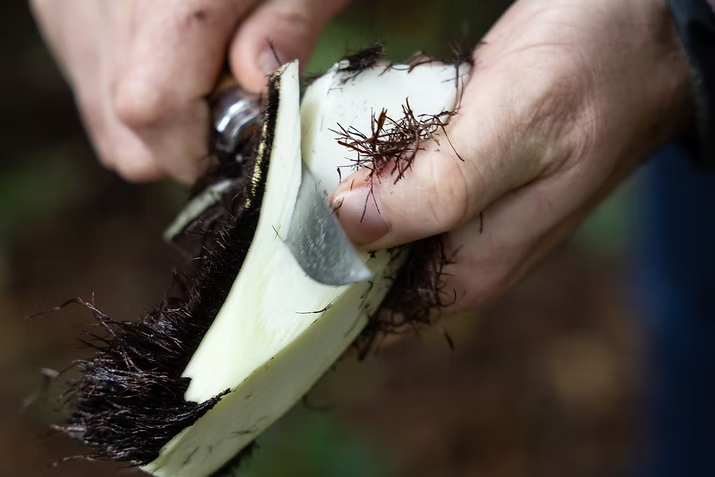
Rongoā Māori is the body of knowledge relating to holistic healing practices that combine the properties of native plants and other materials for human health in combination with other cultural practices (such as mirimiri/massage) and formalities (especially karakia).
Scientific Foundations
In 2017, the NZ Biological Heritage National Science Challenge funded the project ‘stopping kauri dieback in its tracks’ which was led by Dr’s Monica Gerth (Victoria University of Wellington) and Amanda Black (Lincoln University). The project focused on understanding how infectious spores detect and navigate towards kauri, and how that can be disrupted. Specifically, it aimed to identify chemical signals in native plants that attract or repel zoospores and test whether plant-derived attractants/repellents could be used to control the spread of zoospores through soils, and/or prevent infection at the root surface. In 2019, Dr Gerth’s team published their discovery, that compounds in kānuka (Kunzeaericoides), a plant used in the Rongoā Approach for infected kauri, inhibited the motility of Phytophthora agathidicida spores. This inhibition reduces the likelihood of infection in kauri roots (Lawrence et al., 2019). Other independent published research also demonstrated how the roots of kānuka release compounds that can kill bacteria in the soil (Prosser et al. 2016).
Similarly, the Whakaora a ngā Kauri project looked to our unique Aotearoa ecosystem to find ways to combat PA. However, Whakaora a ngā Kauri did not follow the traditional science research methodology of reductionism – the approach of explaining complex phenomena by breaking them down into their smaller, more fundamental parts and analysing them individually, or in other words, attempting to understand a system by studying its components in isolation. Instead, this project took a systems-based holistic approach using Māori expertise of medicinal properties derived from biological and non-biological sources, forest ecology and Māori cultural processes to explore methods aimed to enhance the overall health and resilience of the tree and the surrounding environment.
Scientific research supported the efficacy of traditional plant-based remedies in plant disease management, supporting investment in further exploration of the Rongoā Approach created by Tohe and Hori (discussed below) and since adopted by others, Māori and non-Māori, across kaurilands.
Origins of this Research | Ngā Takenga Mai o Tēnei Rangahau
In 2016, Te Tira Whakamātaki (TTW) Kāhui members Tohe Ashby (rongoā expert) and tohorā (whale) expert Hori Parata were discussing kauri dieback, reflecting on the traditional Ngāti Wai cultural narrative about the familial and reciprocal relationship between the tohorā (paraoa, sperm whale) and the kauri. This, when combined with knowledge of rongoā attributes of parts of the sperm whale inspired them to consider a whakapapa-based (or relational) and interspecies relationship (taxonomy) approach to identify potential solutions for kauri dieback.
Drawing from their combined expertise in traditional healing practices, Tohe and Hori hypothesised that products derived from beached sperm whales, alongside the healing properties of native forest plants, could offer a natural solution for combating PA.
Key Team Members

Dr Jamie Ataria
Primary Investigator
Independent
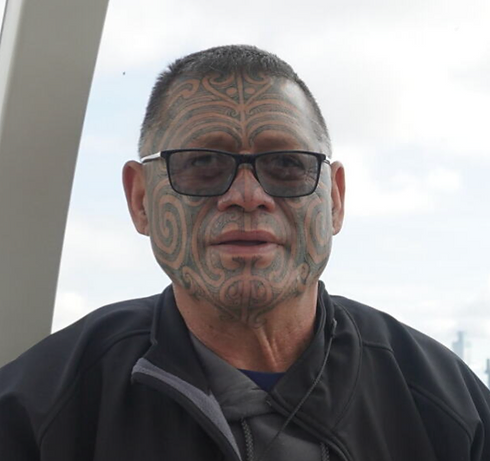
Tohe Ashby
Tohunga Rongoā | PI
Ngā Tirairaka o Ngāti Hine

Hori Parata
Tohunga Tohorā | AI
Ngāti Wai
Jason Cooper
Project Support
Ngā Tirairaka o Ngāti Hine
The Idea | Whakaaro
Building on this idea, in 2017 Tohe Ashby, his team, and one of his rongoā students began field trials of a rongoā-based approach to kauri dieback. Their method combined two natural remedies with a suite of cultural and spiritual practices. The two remedies were:
- A solution made from medicinal plants including kanuka, that was sprayed onto soil around the kauri tree – noting here that kauri roots are shallow and tend to lie near the surface, and
- A balm used to treat cankers on infected trees that contained, among other things, whale bone and spermaceti oil.
These trials formed the foundation for Te Whakaora o ngā Kauri, evolving into a more formal research programme that aimed to further investigate and validate this rongoā-based solution through both scientific study and mātauranga Māori. The secondary goal was to revitalise cultural practice surrounding rongoā by training kaitiaki from across kaurilands, to create and apply appropriately the rongoā to their trees – thus decentralising capability concentration and increasing the capacity of other kaitiaki to apply this methodology.

Developing the Research | Whakawhanake Rangahau
When developing projects for Oranga, clear instructions were given to TTW that ”rongoā solutions for kauri dieback’ was to be funded. This is mentioned explicitly in both the Kauri Dieback Science Plan and NRT Scoping Panel Report – support that was largely due to early signs of success coming from Tohe’s field trials. TTW researchers understood they did not have the skills or experience to develop or lead such a project, and that any project to investigate rongoā solutions needed to be vested with a tohunga (expert). The NRT Scoping Panel then asked the TTW Kāhui for assistance and contracted Dr James Ataria, via TTW, to support the research development and implementation.
Project one: Te Whakaora a Ngā Kauri: Rongoā solutions for kauri dieback was developed by Tohe Ashby and Hori Parata, with research support from ecotoxicologist Dr James Ataria, project management support from Jason Cooper and cultural guidance from the TTW Kāhui. It built upon the work noted earlier, as well as emerging evidence that bioactive compounds found in native plants have antimicrobial, antifungal, and immune-boosting properties. At its heart, this project aimed to explore Māori knowledge and how kaitiaki could develop, trial, and actively participate in alternative approaches to improving forest health and combating kauri dieback.
Project two: He puhapuha he rongo ā kauri was developed by Dr Jonni Hazeline Koia, a molecular biologist with a track record in biomedical and molecular cell research including research exploring the potential of traditional Māori medicine plants (rongoā rākau) as anti-diabetic agents. Dr Koia’s project aimed to test the hypothesis that the cellulase-rich microbiome of tohorā gut content can degrade the cellulose cell wall of PA, potentially serving as a natural anti- PA agent to combat kauri dieback and explore its use as an alternative to toxic fungicide sprays in forest entry stations. In addition, she proposed investigating the extracellular cellulases of a 20-year-old white rot fungal strain (D2B) and other white rot fungi in kauri, noting their ability to degrade cellulose may offer a potential anti-PA action against kauri dieback.
The two projects were subcontracted out to those research teams and given approximately 27% of the Oranga budget, around 3% of the total Ngā Rākau Taketake budget. TTW supplied logistical and administrative support to the teams, as required or requested.
Checks and Balances
Importantly, both of these projects included a ‘fast-fail’ caveat in their contracts. Our Critical Friends (including RA5) provided recommendations on the viability of project success and the final decision on continued funding was vested with the funder. They determined that Project 2 should be suspended due to regulatory barriers in accessing tohorā gut content and ongoing disruptions at the host university affecting the white rot work. Conversely, early success in Project 1 gave the funders and governance groups confidence to continue funding.
The Research Approach | Whakaaro
The impetus for employing rongoā Māori in combating kauri dieback stems from the recognition of mātauranga as a valuable resource in environmental management. However, understanding how and what rongoā might offer kauri dieback management requires further explorations. This research explored:
- Whether rongoā Māori could offer a viable, non-chemical treatment option for kauri dieback and kauri ora (improved ecosystem health).
- How kaitiaki might be supported to be active participants in the management of and fight against kauri dieback.
- Whether rongoā-based applications altered soil microbial communities
Research Aims
Building upon the foundations of rongoā Māori and extensive practitioners experience of experts like Tohe Ashby, the research aimed to:
- ✅ Identify Traditional Remedies: Investigate native plants and natural compounds with potential efficacy against PA.
- ✅ Empower Māori Communities: Engage kaitiaki Māori (Māori guardians) and communities in active participation, ensuring culturally appropriate interventions.
- ✅ Develop Cultural Indicators: Create mātauranga Māori-based indicators for monitoring forest health and early disease detection.
- ✅ Integrate Soundscapes for Healing: Provide rongoā practitioner and tikanga Māori perspectives into the RA-2 research examining the impact of ihirangaranga (vibrations and frequencies), in promoting kauri tree wellbeing.
Expected Outcomes
- Development of rongoā-based treatments: Refining and validating rongoā formulations using native plants to mitigate P. agathidicida impacts on kauri health.
- Scientific validations & ecological impact: Demonstrating the effectiveness of rongoā treatments in reducing disease symptoms and improving soil microbial health.
- Empowering Māori-led conservation: Training kaitiaki and practitioners to apply rongoā solutions, strengthening Indigenous leadership in forest restoration.
- Alternative, non-chemical disease management approaches: Advancing sustainable, non-toxic treatment options that align with ecological and Māori principles.
- Policy and governance influence: Informing national kauri dieback strategies by integrating rongoā Māori into conservation and biosecurity efforts
Research Methodology
Dr Ataria designed the research into three distinct but mutually dependent phases combining rongoā Māori principles with scientific inquiry. The multiple phases ensured that rongoā-based solutions were rigorously tested, widely shared, and positioned as viable, culturally grounded alternatives for kauri dieback management.
Phase One: Development of rongoā-based treatments
- Formulation of Traditional Remedies: Identifying and preparing rongoā treatments using native plants with known antimicrobial properties. Specifically:
- Soil and Root Treatment: a water soluble solution made from native plants containing bioactives known for their rongoā attributes, and hypothesised to have a negative impact on PA, to be sprayed onto soil surrounding kauri infected with PA.
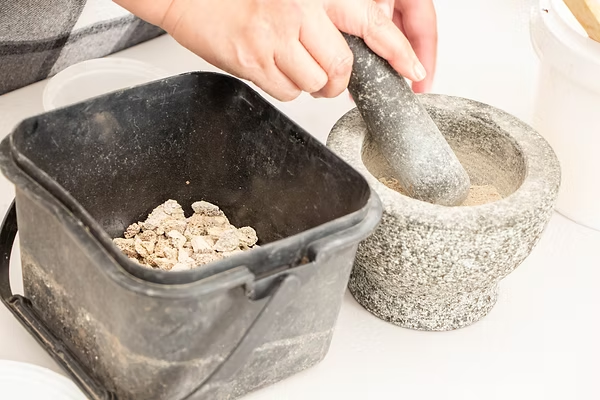
- Topical Application: a treatment derived from bone and spermaceti oil (a known rongoā) from stranded and deceased sperm whales to be directly applied to wounds / cankers of PA infected kauri trees.
- Companion Planting: a selection of plants whose root systems are known to have a sterilising effect in soil to be planted around the root zone of kauri infected by PA.
- Cultural Monitoring and Process/Protocols:
- Undertaking the physical intervention steps listed above within a Māori cultural context involving karakia (ritual incantations) to align treatment process with Māori healing traditions.
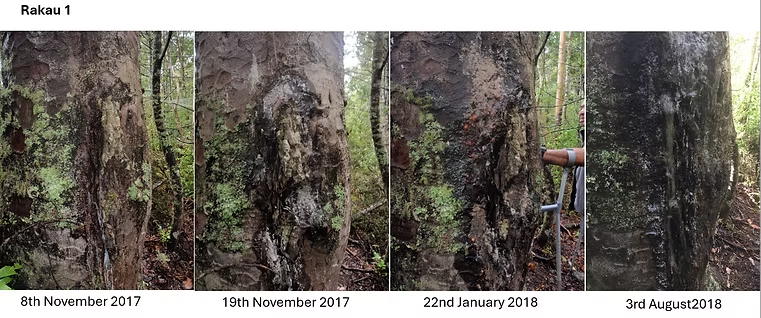
- Utilising expertise in forest ecosystems to monitor the success of the treatment process by observing the degree of sap leakage from collar-rot lesions, the degree of leaf chlorosis (loss of green colour in leaves) and canopy defoliation and general state of the bark. Broader forest health indicators included the presence of ecological diversity that are normally associated with healthy kauri forests (i.e.., certain forest ecology is dependent on healthy kauri).
Phase Two: Establishment of field trial sites
- Securing Permissions & Community Engagement: Establishing relationships with Māori landowners and mana whenua authorities to gain consent for accessing infected kauri sites, ensuring cultural and ethical alignment with rongoā application.
- Application of Rongoā Treatments: Applying the rongoā formulations to infected kauri trees in designated field sites.
- Companion Planting: Introducing plant species with antimicrobial-like properties to improve soil health, tree resilience, and overall forest health.
- Forest Monitoring: Monitoring and evaluating shifts in trees, the surrounding forest, and microbial communities to determine whether rongoā treatments influenced pathogen suppression and forest ecosystem health.
Phase Three: Knowledge transfer & capacity building
- Kaitiaki Training & Wānanga: Delivered targeted training, via wānanga, for environmental practitioners and kaitiaki to prepare and apply rongoā treatment methods within their own regions, and monitor its performance.
- Decentralising Rongoā Application: Expanded efforts beyond the initial field trials, enabling kaitiaki to lead rongoā-based interventions across kauriland forests.
- Scaling Up Infrastructure: Developed infrastructure to process larger volumes of rongoā materials, including trailing specialised equipment to improve efficiency and throughput.
- Establishing a Rongoā Production Space: Created a dedicated physical space for kaitiaki to produce rongoā treatments and facilitate ongoing wānanga and knowledge-sharing, and support other kaitiaki activities e.g., pest control.
- Strengthening Partnerships for Long-Term Sustainability: Built strong, enduring relationships with Māori landowners, researchers, and conservation agencies to ensure the continued application, research, and expansion of rongoā-based approaches in kauri dieback management.

Addressing Potential Criticisms
The impetus for employing rongoā Māori in combating kauri dieback stems from the recognition of mātauranga as a valuable resource in environmental management. However, understanding how and what rongoā might offer kauri dieback management requires further explorations. This research explored:
Q) Does rongoā Māori have scientific evidence to support its use in disease management
A) Yes. While rongoā Māori is grounded in mātauranga Māori, this project also incorporates scientific research to validate its effectiveness. Laboratory studies have already shown that compounds in kānuka inhibit PA spores (Lawrence et al., 2019). The knowledge of our Rongoa experts reaffirms those scientific findings and further contributes to the pool of knowledge via the testing of rongoā treatments in controlled field trials, soil microbiome assessments, and laboratory experiments to measure their impact on kauri dieback.
Q) Is it ethical to use whale products in this research?
A) Yes. No whales are harmed—all whale ingredients are sourced from naturally stranded whales, in alignment with Māori customary rights to utilise those resources. All whale bone and spermaceti oil has been gifted from Iwi Māori who exercise customary rights over stranded whales and the extraction of those resources follows strict tikanga (cultural protocols), legal and health and safety guidelines. Māori have long upheld reciprocal relationships with tohorā (whales), ensuring their role in conservation and healing is respected.
Q) Are there regulatory barriers to using rongoā treatments?
A) There are regulatory considerations, particularly around native plant extracts and whale-derived products, but the project actively engages with government agencies, landowners, and regulatory bodies to ensure compliance. This research aligns with Māori landowner authority and Indigenous data sovereignty, ensuring that it is carried out ethically and lawfully.
Q) Isn’t rongoā just a spiritual practice rather than a science-based treatment?
A) Rongoā Māori is both a science and a holistic healing practice. The project applies kaupapa Māori research principles, combining mātauranga Māori and contemporary scientific methods. It conducts field trials, and monitors soil microbial changes to provide measurable evidence of impact while respecting cultural traditions. It supported work to test natural compounds in the lab.
Q) Can rongoā treatments be applied at scale to address kauri dieback?
A) Yes. The project included a scaling strategy to ensure rongoā-based solutions can be widely used. This included:
- Training kaitiaki (environmental guardians) across multiple rohe (regions) to apply treatments locally.
- Developing infrastructure to produce and distribute rongoā treatments efficiently.
- Integrating treatment into existing biosecurity measures, such as forest entry protocols and soil health management strategies.
Q) Will this research create tensions between Māori knowledge holders and scientific institutions?
A) No. This project is Māori-led, ensuring that decision-making stays with rongoā experts, kaitiaki, and mana whenua. It follows Indigenous research ethics, ensuring that mātauranga Māori is protected and that research benefits Māori communities first. Partnerships with scientists are based on co-design and collaboration, rather than the appropriation of knowledge or application of such knowledge outside of its cultural context.
Q) Why is this research important?
A) Kauri dieback threatens the survival of one of Aotearoa’s most iconic tree species. This research explores rongoā Māori as a legitimate, sustainable, and scientifically supported solution to help protect and restore kauri forests. By integrating traditional healing with modern science, the project represents an innovative and culturally grounded approach to conservation.
Q) How much did this research cost?
A) As noted on the previous page RA1 received 27% of the Oranga budget which equals $1,089,495. This was initially split across the two projects, noting that project two was cut after one year. It was subcontracted out to various parties including independent researchers, community groups and a university.
Q) Did it produce adequately for the investment made?
A) The Biological Heritage Challenge worked on the formula that every $250,000 investment should produce one peer-reviewed paper or report. This figure was selected because a post-doctoral fellow costs or is charged out by universities and crown research institutes at about $220-250,000 per annum, and a funder would expect one publication for that investment. RA1 delivered peer-reviewed papers/report for $217,899.00 each, which is in line with what we and the funder expected.
Outcomes and Outputs | Ngā Hua me Ngā Putanga
This project exemplifies how mātauranga Māori can accelerate science to address urgent environmental challenges. It not only provided a science-backed, nature-based solution for kauri dieback but also strengthened the cultural and spiritual connections between people, whenua (land), and ngahere (forest), ensuring that rongoā Māori continues to thrive as both a healing practice and a conservation tool.
Te Whakaora a Ngā Kauri is proof that rongoā Māori in not just tradition, but a powerful, scientifically validated tool for the future of Aotearoa New Zealand’s forests.
This research has:
- Developed Rongoā-based Treatments – Refining and validating rongoā formulations that showed promise in mitigating the symptoms and impacts of PA on kauri health, including plant and whale-based formulations.
- Scientifically Validated Treatments – Supported lab-based research that confirmed the compounds in kānuka reduced pathogen activity in controlled trials and observed changes in forest ecology and soil microbiome health, suggesting long-term ecological benefits.
- Empowered Māori-led Conservation – Trained kaitiaki and practitioners to apply rongoā solutions, strengthening Indigenous leadership in forest restoration, creating a cost-effective mechanism for ongoing management of PA infection.
- Provided Alternative, Non-Chemical Disease Management – Advanced sustainable, non-toxic, non-invasive treatment approaches to kauri dieback management that align with ecological and Indigenous principles.
- Supported the Revitalisation of Cultural Practices – Supported the reclamation and transmission of mātauranga Māori, ensuring that rongoā knowledge and practices are maintained, strengthened, and passed down to future generations through wānanga, training, and active application in conservation efforts.
- Influenced Policy and Governance – Increased engagement with government and scientific agencies, promoting collaborative strategies for forest protection. Informed national kauri dieback strategies by integrating mātauranga-based solutions into conservation and biosecurity efforts.
By integrating these traditional and scientific approaches, this research provided tangible evidence that rongoā Māori could offer a viable, non-chemical treatment option for kauri dieback

RA1 Outputs
Peer-reviewed publications:
- Lambert, S., Waipara, N., Black, A., Mark-Shadbolt, M., Wood, W. 2018. Indigenous Biosecurity: Māori Responses to Kauri Dieback and Myrtle Rust in Aotearoa New Zealand. In: Urquhart, J., Marzano, M., Potter, C. (eds) The Human Dimensions of Forest and Tree Health. Palgrave Macmillan, Cham. https://doi.org/10.1007/978-3-319-76956-1_5
- Lambert, S. & Mark-Shadbolt, M. 2020. Indigenous biosecurity: past, present and future. In K. Barker (Ed.) Routledge Handbook of Biosecurity and Invasive Species. (55-63). London, UK: Routledge.
- Lambert, S., & Ataria, J. 2024. Retaining Indigenous knowledge authority within a scientific dominated context: A Māori contribution to protecting forest wellbeing. Under Review
Published Reports:
- Mead, A.T.P, Smith, V, Ataria, J, Wilson-Leahy, T.P, Ogilvie, S, Watene-Rawiri, E, Potter, H and Shadbolt, M. 2022. When The Crown Controls Mātauranga: A Report on a Survey of Crown Policies, Programmes, Legislation, Funding, and Impact Assessment Relating to Mātauranga Māori. Biological Heritage National Science Challenge: Christchurch. ISSN 2815-9853
- Marae Framework Report – Mana Whenua & You: A Researchers Guide on How to Engage with Māori and Te Tiriti. 2024. www.ttw.nz
Media:
- 8 videos including ‘Mana Whenua & You: A Researchers Guide on How to Engage with Māori and Te Tiriti’
- 1 documentary Te Wao o Nui
- 2 opinion pieces including one in The Guardian
- 10+ media interviews
Presentations:
- Over 20 presentations were made by this team and their allies, a selection is provided below:
- Ashby, T. Tipene-Thomas, J. & Parata, H. 2021. Rongoā Approach to Kauri Ora. Kauri Ora Community Hui: Webinar
- Ashby, T. Parata, H. Cooper, J. and Ataria, J. 2023. An indigenous solution to a plant pathogen impacting an iconic tree species in Aotearoa-New Zealand. Platform Presentation at the 2023 International Congress of Plant Pathology. Lyon, France 21st-25th August.
- Ashby, T. and Parata H. 2023. Getting rights right: a round table exploration of Indigenous rights and participation in plant pathology. Indigenous Roundtable facilitated by Hanareia Ehau and Robin McDiarmid. 2023 International Congress of Plant Pathology. Lyon, France 21st-25th August
- Clark, D., Parlee, B., Mark-Shadbolt, M., Lambert, S. 2021. Biosecurity as reconciliation. 13th Canadian Science Policy Conference.
- Lambert, S. 2019. Introduction to Indigenous Biosecurity, Indigenous Biosecurity Roundtable NAISA Hamilton, New Zealand, June 26-29
Communities engaged and trained:
- Ngāti Wai, Ngāti Hine, Ngā Mana Whenua o Tāmaki Makaurau, Te Rarawa, Patuharakeke, Pawarenga, Rongomaiwahine, Ngāti Porou, Taranaki whānau and many others
- Over $1 million leveraged to support community responses to kauri forest protection.
References (in order) | Ngā Tohutohu
WHO (World Health Organization). (2023). Traditional medicine. WHO.
https://www.who.int/news-room/questions-and-answers/item/traditional-medicine
Te Whatu Ora. (2024). Rongoā Māori. Health New Zealand Te Whatu Ora. https://www.tewhatuora.govt.nz/health-services-and-programmes/maori-health/rongoa-maori
Prosser, J.A., Woods, R.R., Horswell, J., Robinson, B.H. (2016). The potential in-situ antimicrobial ability of Myrtaceae plant species on pathogens in soil. Soil Biology and Biochemistry, 96, pp 1-3, ISSN 0038-0717, https://doi.org/10.1016/j.soilbio.2015.12.007.
Pledger, M. J., Cumming, J., & Burnette, M. (2010). Health service use amongst users of complementary and alternative medicine. The New Zealand Medical Journal, 123(1312), 26–35.
Liu, L., Tang, Y., Baxter, G. D., Yin, H., & Tumilty, S. (2021). Complementary and alternative medicine—practice, attitudes, and knowledge among healthcare professionals in New Zealand: An integrative review. BMC Complementary Medicine and Therapies, 21(1), 63. https://doi.org/10.1186/s12906-021-03235-z
Lawrence, S. A., Burgess, E. J., Pairama, C., Black, A., Patrick, W. M., Mitchell, I., Perry, N. B., & Gerth, M. L. (2019). Mātauranga-guided screening of New Zealand native plants reveals flavonoids from kānuka (Kunzea robusta) with anti-Phytophthora activity. Journal of the Royal Society of New Zealand, 49(sup1), 137–154. https://doi.org/10.1080/03036758.2019.1648303