
Reframing Data as a Taonga
Māori Data Sovereignty
In te ao Māori, data is more than just information, it is taonga.
It is intrinsically linked to whakapapa, identity, and kaitiakitanga (stewardship). Unlike Western data systems that often treat information as a commodity to be collected, analysed, and used for economic or institutional gain, Māori data reflects living relationships between people, place, and knowledge passed down through generations.
Because of this, data sovereignty is a critical issue. When Māori communities lose control over their data, they risk losing the ability to protect their mātauranga, tikanga, and tino rangatiratanga – their authority to make decisions for their people and places. Historically, colonial systems have extracted and misused Indigenous knowledge, without consent or reciprocity. This reinforces the need for strong, culturally grounded protections that ensure Māori remain the rightful custodians of their own information.
Developing processes and tools to safeguard Māori data is essential for maintaining tino rangatiratanga. Without clear governance structures, externally imposed systems can strip data from its cultural context, reducing mātauranga to fragmented pieces of information that no longer serve the people or places they come from. That is why Te Tira Whakamātaki, in collaboration with Dr. Hauiti Hakopa developed Reframing Data as a Taonga: A Māori Data Sovereignty Framework.
Funded by the Department of Conservation (DOC), through the Predator Free 2050 Mātauranga Māori programme, this framework provides practical tools to safeguard Māori data and uphold Māori governance across Predator Free 2050 initiatives.
Grounded in He Whakaputanga, Te Tiriti o Waitangi, UNDRIP, and best practice templates, the framework supports hapū and iwi to define how data is collected, accessed, shared, and used, on their terms. It is designed to restore and protect the mana of mātauranga Māori while ensuring data remains useful, contextual, and connected to the people and places it comes from.
By embedding tikanga into data systems, Māori communities can ensure their information is never reduced to disconnected fragments that are exploited, but instead remains a tool for empowerment, a taonga tuku iho, a treasured legacy passed forward for future generations.
Māori Data Sovereignty Resources
To support Māori communities, researchers, and institutes engaging with the Predator Free 2050 kaupapa, the Reframing Data as a Taonga framework includes a suite of tools that help uphold Māori data sovereignty in practice. These tools are all available for download below. They are free, adaptable, and grounded in tikanga, kawa, and kaupapa Māori approaches.
The Framework
A comprehensive document outlining the values, principles, and structure needed to ensure data is treated as taonga, tied to whakapapa, identity, and kaitiakitanga. The framework centres around the establishment of a Kāhui Rangatira to govern data and mātauranga at the community level, supported by protocols inspired by He Whakaputanga, Te Tiriti o Waitangi, and UNDRIP.
Included within the framework are two powerful visual guides that help make the framework practical, accessible, and culturally responsive:
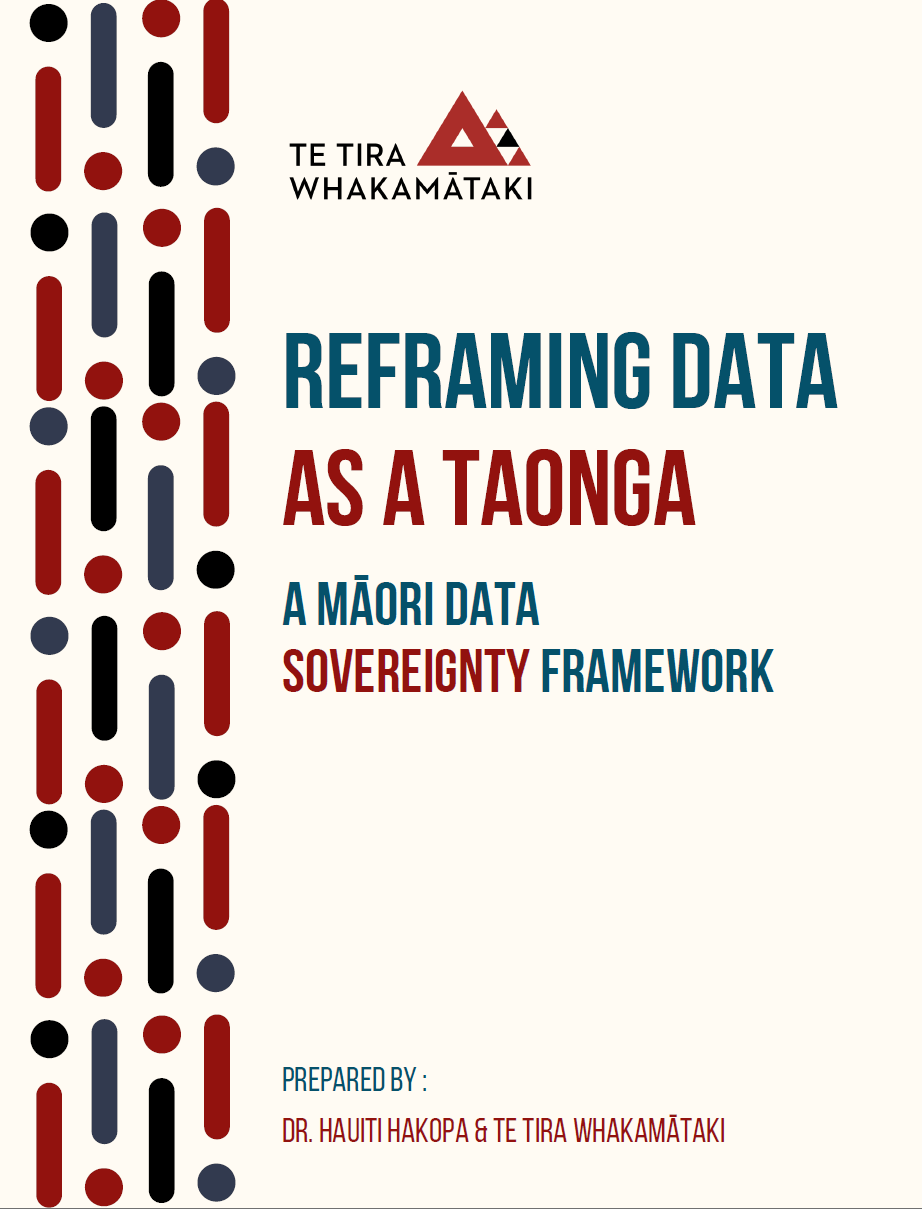
Whare Tūpuna Metaphor Diagram
This document maps the key components of Māori data governance to parts of a whare tūpuna (ancestral house), showing how values like tino rangatiratanga, kaitiakitanga, and tikanga work together to protect and uphold data as a living taonga.

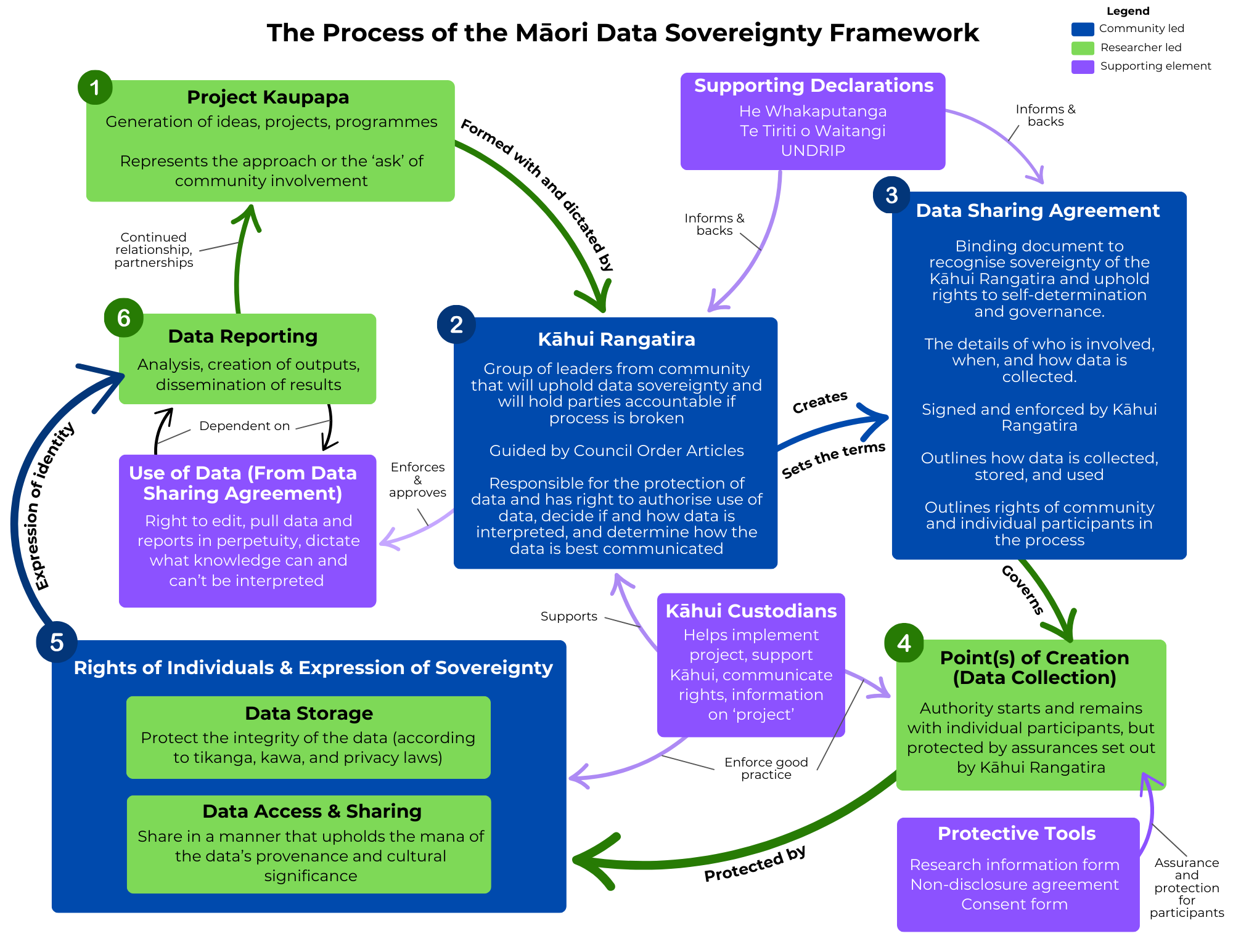
Flow of the Māori Data Sovereignty Framework Diagram
This diagram illustrates the process of applying the framework, from project design to data collection, access, and reporting, clearly showing the respective roles of community, researchers, and protective tools
Tuhi Rangi – Kāhui Rangatira Council Order (Te Reo and English)
A foundational template to establish a Kāhui Rangatira, the community-led governance body that exercises tino rangatiratanga over all data and mātauranga. This living document sets out key principles including kaitiakitanga, taonga tuku iho, and community-driven consent. This document is available for download below in both Te Reo Māori and English.

Data Sharing Agreement Template
Outlines the terms for how data and mātauranga can be collected, accessed, stored, used, and shared. Importantly, it ensures that Māori communities retain full authority over their data and sets clear expectations for outside researchers, agencies, or institutions. Ensuring any sharing is done with mutual benefit, transparency, and in accordance with He Whakaputanga, Te Tiriti o Waitangi, and UNDRIP.

Research Information Sheet
A participant-facing document that provides context for the project, outlines rights, and explains how data will be handled, and what to expect from the research process. Grounded in tikanga and transparency, this sheet ensures informed decision-making before consent is given.

Consent Form Template
Used to secure informed, voluntary consent from individuals sharing their stories or data. This form outlines confidentiality protections, participant rights (including withdrawal and review), and data handling commitments. It reflects Māori sovereignty over personal and cultural information.

Non-Disclosure Agreement (NDA) Template
A legally binding agreement that protects the confidentiality of Māori knowledge and data shared during research. It affirms the sovereignty of hapū and iwi over their mātauranga and ensures external parties cannot disclose or misuse shared information without consent.

RSNZ Journal Article
Access the peer-reviewed article outlining this Māori data sovereignty framework.