100% Pure New Zealand For Sale
Written by: Micheal Heimlick (Te Tira Whakamātaki)
Justice Minister Paul Goldsmith announced this week that the Coalition Government would amend the Climate Change Response Act to prevent anyone from bringing lawsuits against companies operating, and therefore polluting, in Aotearoa New Zealand. You should know about this, and if you’re not angry, you’re not paying attention.
The reason given isn’t public wellbeing, environmental protection, or justice. It is business certainty. The Minister says as much in his own press release:
“Ongoing litigation in the High Court… is creating uncertainty in business confidence and investment that the Government must address.”

The “ongoing litigation” he is referring to is the yet-to-be-heard case brought by Mike Smith, reinstated by a unanimous Supreme Court in February 2024. That case asks whether the major emitters Smith sued have a legal duty to protect our communities from the effects of greenhouse gas emissions. Together, those companies contribute approximately one-third of Aotearoa New Zealand’s total emissions.
The Supreme Court’s decision to hear this case was celebrated widely. Many of us were eagerly awaiting its outcome. Now we will never know what that decision could have been. We won’t see what a panel of our peers thinks about corporate responsibility. Instead, communities will continue to bear the consequences of rising emissions while the most responsible companies are shielded from one of the few remaining avenues for accountability, even as they receive public subsidies and make increasing profits. The message embedded in this decision is clear. When corporate interests feel threatened, the rules can be rewritten around them.
So, is the system broken? Not exactly. I’d argue it’s working exactly as it was designed to — and that’s the problem. Since colonisation, our systems have been built to help companies make money first and foremost. They were designed to serve the economy and put it over people, place, and health. Governments used to hide this, but now it seems like they are increasingly willing to defend it openly. One law for elite corporations, another for everyone else.
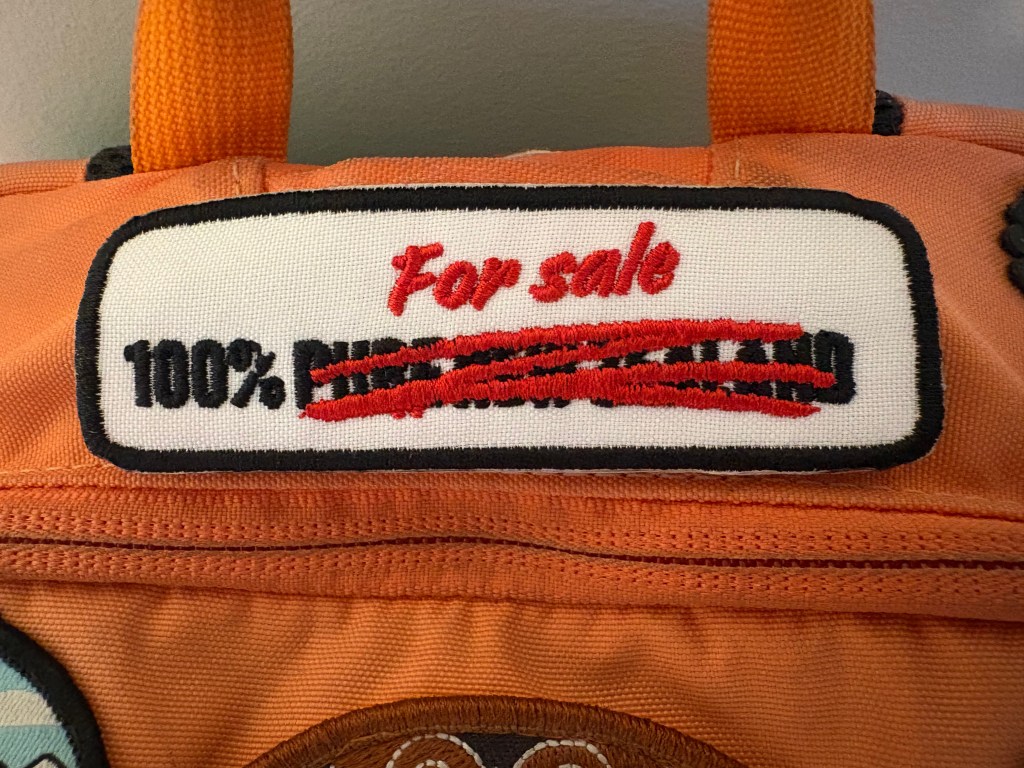
I even have a patch that I made for my backpack that plays on the 100% Pure New Zealand slogan that’s famous across the world. I thought it was just cheeky fun at the time but it’s playing out in front of my eyes. New Zealand really is up for sale (let me know if you want this patch – we can make some).
The frustrating part is that a system focused on accountability would actually bring more certainty, not less. It would privilege renewable energy, bring energy security, reduce pressure on our health and infrastructure systems, and create genuine prosperity. But these companies want their money now. And this decision is unequivocal evidence of that.
I’m literally holding one of my three kids while I write this. He’s one year old, smiling at the colours on my keyboard, and has no idea about the significance of what I am describing. One of my core responsibilities as a father is to provide a better life for my children and I’m increasingly puzzled about how to do that under a government that can just rewrite the rules overnight without any real fear of consequence.
Of course they are asserting this is designed to help bring down the cost of living and grow the economy through ‘certainty’. But I don’t want a few extra dollars in my pocket (where are those, by the way?). I want my health. I want my kids to swim in the rivers, drink from the lake, and run in the forest. I want them to have the legal ability to challenge those who threaten those things. This change completely dismantles that and, with it, our collective ability to seek justice and influence our country’s direction.
This story broke this week, but is already gone from major new pages. This cannot be allowed to disappear into the news cycle, because it affects every single one of us.
Call your local MP and let them know that this is not okay.
Use your voice.
And don’t forget stories like this when you go to vote this November.

Published: May 14, 2026