
We Are Not Your Human Capital. We Are Country.
By: Melanie Mark-Shadbolt, TTW
This week, the Coalition Government announced a further 8,700 public service jobs will go by 2029. Added to the nearly 9,500 already cut since they came to power, that is close to 18,000 jobs, in the name of streamlining, efficiency, and a pivot to AI. Finance Minister Nicola Willis called it modernisation. Public Service Commissioner Sir Brian Roche went on RNZ to explain the human impact. The people losing their jobs, he said, were “human capital.”
Let that phrase sit for a moment.
Not people. Not whānau. Not the analyst who stopped a bad policy before it hurt someone, or the Treaty practitioner holding a relationship together, nor the case manager who knew your name and your situation without having to look it up. Human capital. Units of productive input, assessed against cost, and found to be excess.
In 2023, an Australian property developer said publicly what many in his class were thinking privately: that unemployment needed to rise sharply to remind workers “that they work for the employer, not the other way around.” That is the logic underneath the language of efficiency and optimisation. People are not people. They are inputs. And right now, New Zealand is being governed accordingly.
This week’s conversation about what is actually being dismantled here is necessary and long overdue. But there is something being missed. This is not just a Wellington story. And it is not just about the people losing jobs inside the system. It is about what happens on the outside, in the communities expected to absorb the weight.
It is not less work. It is displaced work.
As Crown agencies lose staff and budgets, organisations like Te Tira Whakamātaki are being asked to fill the gaps. Increasingly we are being asked to provide advice, cultural guidance, community engagement, emergency thinking, Māori expertise, strategy support, and relationship brokering, for FREE.
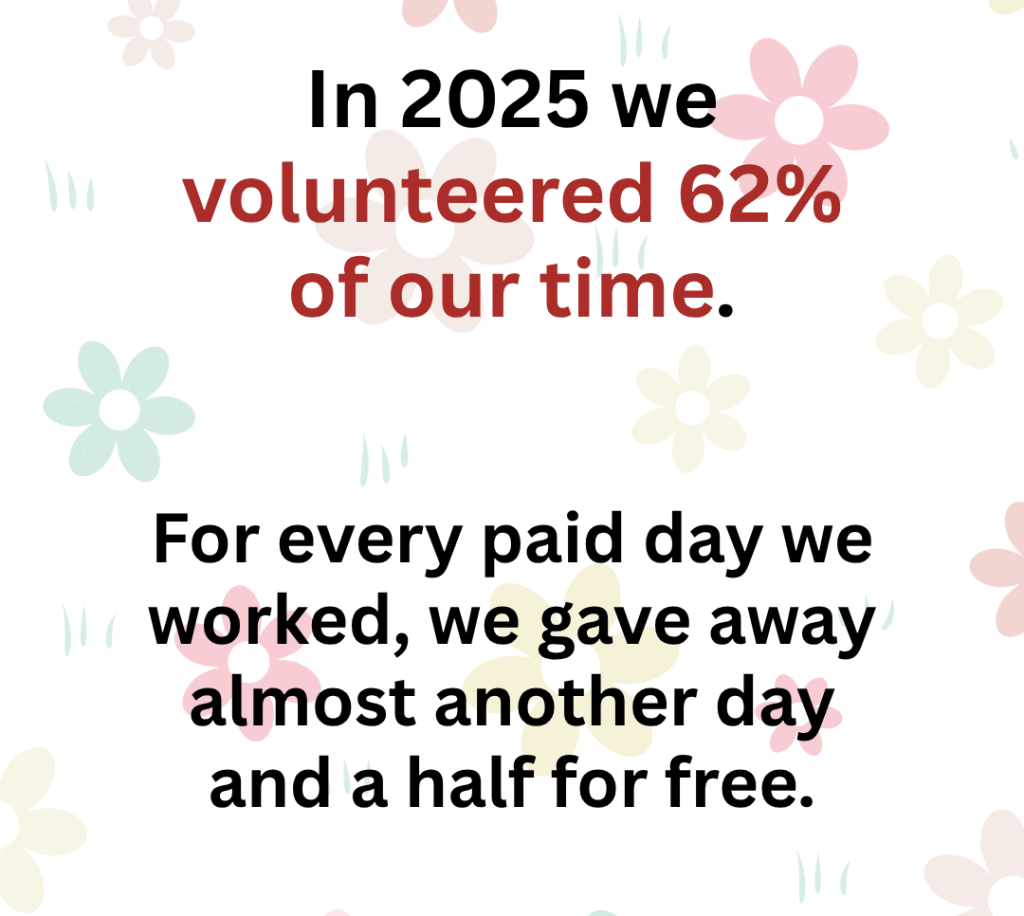
In some areas, the unpaid work being pushed toward us has doubled or tripled. At Te Tira Whakamātaki, we already operate with upwards of 60% of our time given as volunteer effort – unpaid, unglamorous, and largely invisible to the Crown. That is not a gap-filler. That is the foundation our organisation runs on, and the Crown is now leaning harder on that foundation while doing nothing to strengthen it. It has got to the point where Crown agencies are now asking us to help fund their own events, because they cannot afford to run them. Let that land for a moment. The Crown is asking the organisations it has historically underfunded to subsidise its own operations.
This is the same government that has cut Māori health funding, destabilised social enterprises, gutted the research sector, and reduced community investment across the board. These were not oversights. They were deliberate choices. And now, having hollowed out the very organisations best placed to fill the gaps, it expects those same organisations to quietly pick up the work, for FREE.
The not-for-profit sector is not a reserve tank waiting to be drawn down when the spreadsheet doesn’t balance. Our volunteers cannot afford the petrol to get to their volunteer jobs. Our people are working second and third jobs to survive. The same cost-of-living crisis hitting public servants is hitting the community sector just as hard, and we were already running on goodwill and grant rounds.
That is not efficiency. That is cost-shifting. And eventually, the shifted cost has nowhere left to go.
Before you nod along thinking “yeah, but too many bureaucrats” — read this.
If you voted for smaller government and are feeling quietly pleased, I want to speak to you directly. Because this is not abstract.
The police officer who used to hand paperwork to an administrator now drives back to the station to do it themselves. That is time off the beat to push a pen. The Minister deciding how many surgeries to fund is now guided by AI-generated analysis – not by someone who has actually spoken to the nurses and doctors standing in a packed A&E at midnight, watching the wait time stretch past ten hours. The policy that lands badly in your community, the one everyone locally could have told you would fail – there is nobody left inside the system whose job it is to say so before it ships.
Back-office jobs are not waste. They are the invisible infrastructure that holds the frontline together. Remove them and the frontline does not get leaner. It gets slower, more error-prone, and more reliant on systems that were never designed to carry that weight.
It is hard to design policy for lives you have never had to live.
The people making these decisions have no skin in the game. They will not be waiting ten hours in A&E. They will not be choosing between petrol and groceries. They will not lie awake wondering whether the bank will hold on another month.
It is not a crime to have been fortunate. But it does matter, when you are making decisions of this scale and consequence, whether you have ever had to depend on the systems you are cutting. Whether you have ever sat across a table from someone whose life just fell apart. Whether you have ever led a community through a crisis with no budget, no staff, and no guarantee of tomorrow. That experience is not just a credential. It is a form of knowledge, and right now, it is entirely absent from the room where these decisions are being made (Cabinet).
These are not statistics. These are families.
I know a family in Wellington. Both parents worked in the public service. Three kids. Mum lost her job in the first round of cuts nearly two years ago. Since then, she has scraped together part-time and fixed-term roles wherever she could find them. Dad kept his job but took a demotion and a pay cut – about thirty thousand dollars a year. They have been surviving on that, and on the quiet generosity of nana and grandad.
Now dad is facing redundancy. They have done the numbers. There is no way through. They are going to have to sell up and go to Australia to feed their kids. And nana and grandad, who voted for this government, are going to lose access to their grandchildren – weekend visits and school events. They will also lose the help they need in the garden and around the home. These are the small, irreplaceable things that make a family work across generations.1
So, this is not an economic story. It is a social one. We are making values-based decisions about how much we care about ordinary New Zealanders, and those decisions have consequences that will not appear on any fiscal forecast.
On AI, and the audacity of Novopay amnesia.
And yes, we are told AI will help fill the gap. Perhaps some of it will. But AI cannot honour Te Tiriti. It cannot read a room at a hui. It cannot tell you why a technically correct answer is still culturally wrong. Right now, it confidently gets things wrong, producing plausible-sounding advice that an experienced public servant would flag immediately as wrong or harmful. Replace judgement with automation before the systems are ready and you do not get neutral efficiency. You get bias at scale, delivered faster, with fewer people left inside the system who know enough to challenge it.
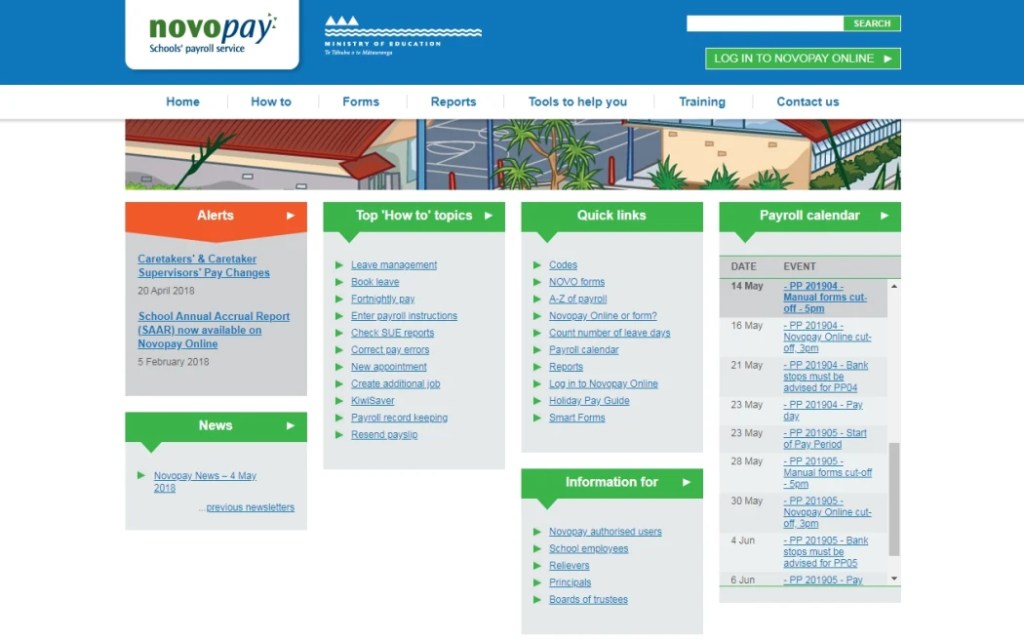
We have been here before. We called it Novopay. A system so confident in its own efficiency that it failed to pay thousands of teachers correctly for years. That was not a technology problem. It was what happens when you strip out the experienced humans, trust the machine, and call it transformation.
(And while we are on the subject: the ministry set up specifically to cut red tape has grown to be considerably larger than the agency it replaced. Apparently efficiency logic applies to everyone except those enforcing it.)
So let us be honest about what this is.
I am not precious about bureaucracy for its own sake. A public service that is less defensive, less siloed, more Treaty-capable, more regionally grounded, and more willing to share power is genuinely worth fighting for. So is funding community expertise properly and fairly.
But cutting thousands of jobs, merging agencies, abandoning the sectors most capable of filling the gaps, and hoping AI will cover the difference is not transformation. It is defeatism dressed as innovation.
We are not units of human capital awaiting optimisation. We are the people who hold this country together when the system retreats, and we are watching very carefully what you do next.