

Ngā Tangata o te Marama | Craig Pauling
Born and raised in Ōtautahi, Craig Pauling’s path has taken him through rugby, waka ama, iwi and community mahi, ecological restoration, regional government, and more than a few long-running efforts to bring native species and healthy waterways back into the places where people live.
Now, he’s standing for Parliament as the Green Party candidate for the Banks Peninsula electorate in the 2026 General Election.
In this edition of Ngā Tangata o te Marama, Craig talks about reconnecting with his whakapapa, what sport and voyaging have taught him about working together, the hope of hearing a dawn chorus in the city, and why politics should be about bringing people together to solve problems rather than just pointing them out.
Want to listen instead? The full audio is normally available only to TTW Members. But, with the election around the corner, we’ve made this one free for everyone. Enjoy.
You can follow Craig on Instagram, Facebook, and LinkedIn to follow his campaign’s progress.

Craig, can you tell us a little bit about yourself? Who are you? Where are you from?
Ko Ōtūmatua te maunga, ko Huritini te awa, ko Te Waihora te hāpua, ko Whakaraupō te moana, ko Kāi Tahu, Kāti Mamoe, Waitaha, ko Ngāti Mutanga ōku iwi, ko Craig Pauling tāku ingoa.
Kia ora, I’m Craig. I was born and raised in Ōtautahi Christchurch. I have whakapapa to Ngāi Tahu, Ngāti Māmoe, Waitaha down here in the South Island, and also Ngāti Mutunga, which is from Taranaki and Wharekauri, the Chatham Islands. But I’m also English, Scottish and Welsh, and very proud of all of my whakapapa.
I’ve been here all my life. I didn’t always know that I was Māori. That didn’t come to me until I was about 20, when I was at university. I slowly realised that was our family history, but no one really talked about it when we were young. That’s pretty common in Aotearoa and probably quite a lot of colonial or post-colonial places in the world. I really embarked on my journey from the age of 20 into my iwi, mainly Ngāi Tahu, and got right involved. I ended up getting a job out of university with my iwi.
I wouldn’t say it’s changed me as a person, but it has changed my life because I just know more than I did before. It’s had quite a big influence on what I’ve ended up doing in the environmental space. I think I was already on that trajectory, to be honest, because I was already at university doing environmental management when I discovered this. But it’s probably reinforced a few things and made me dig a bit deeper, understand the world from two different worldviews. That’s been useful and expanded my mind and my heart. That’s been a big part of my journey.
Can you give us an example of what you mean? I’ve heard similar stories from other people, but I’m curious what that looked like for you.
I grew up as a normal Kiwi kid, I suppose, but definitely on the lower socioeconomic side of the city. I grew up in Woolston and then Aranui. Nothing was ever spoken about in terms of our heritage, where we were from. I didn’t know anything really.
After high school, I went over to England. I played rugby over there. I was not a bad player and got an opportunity to go and play for the Leicester Tigers. When I was over there, lots of people were asking me where I was from. That really sparked it initially. I was like, ‘Well, I don’t know. I’m from Christchurch.’ That’s all I knew, which I thought was pretty average, to be honest.
When I came home, I did start talking. I was lucky all my grandparents were still alive, and I had two great-grandparents still alive too, so I went and spoke to them and found out more. That awakened something in me.
When I got to university, I was doing Māori studies in my first year of my environmental management degree, watching the lecturer, who was quite fair-skinned Ngāi Tahu man like myself, speaking te reo Māori. I had a few flashbacks about my family and my upbringing, and realised I was Māori. I just knew.
I went up to my lecturer and said, ‘I think I’m Māori.’ He goes, ‘Well, you’d better find out then.’ I said, ‘How do I do that?’ He goes, ‘Ask your mother.’
I was like, ‘True. Okay.’ That’s what I did. I went home, asked Mum, and it was on my mum’s side. She showed me a picture of my great-grandmother, Lou Whaitiri, who was born on the Chathams. Her mum was Ngāti Mutunga, her father was Ngāi Tahu, and that all started from there.
I was like, ‘Wow, what do I do about it? I’m 20 years old.’ I was pretty happy. It wasn’t as if I was unhappy in my life. I was doing well. I’d been to England, played rugby, and I was at university, so my life wasn’t bad.
I’d done really well for myself, but that knowledge was something that made me go, ‘Okay, why did this happen? Why did I not know? Why did my family not tell me this?’ Through my university work, I understood how history unravelled here in Aotearoa and around the world in terms of colonisation. It just opened me up.
It corresponded at the same time with me understanding natural history too, because I had no idea. I grew up in Canterbury, where we’ve got 0.5% of native vegetation left on the Canterbury Plains. My life was surrounded by sheep and willow trees, and I thought they’d always been here because no one ever talked about it. It wasn’t something we talked about.
We learned about Captain Cook and American civil rights. We didn’t really learn about New Zealand history. When I understood that through doing ecology in my first year at university, that also revealed a whole bunch of stuff for me around our natural history, and it corresponds with indigenous and colonial history.
Probably the main question I had was, ‘Man, what have we done?’ That’s really spurred me on to get involved in the ecological restoration stuff I do. It’s probably my main driver.
I worked out, ‘How come all of those native species I can read about in the book aren’t here anymore?’ That’s related to my Māori heritage in terms of mahinga kai, food gathering and the interrelationship between the natural world and our culture. It all made sense to me, and I was like, ‘Okay, we’ve got to do something about it.’
In those moments I was like, ‘I’m going to do something about it. I’m not just going to sit here and let it all be the same. I think we can be better, and those native species should be around us. There’s no reason why they can’t be, so let’s try and make them be back in our lives.’ That’s really what’s driven me a lot.
You strike me as someone who sees a problem and has to do something about it. You’re not one to sit back and talk about it. You’re right in the heart of the action. Would I be correct?
Yeah, I like to take action for sure. In my early years I was a bit more gung-ho than I am now, but I’ve learned to be flexible and adaptable because you can only push people so far or lead people so far. What do they say? You can lead a horse to water, but you can’t make it drink.
I believe in those things and I’ve learned they’re true. You can only go as far as people want to go. You can’t make them do things. You’ve got to make them want to do it. I’ve learned those skills over time.
Before we move on from playing rugby in the UK, do you still play casually?
I coach rugby league. I’ve just finished coaching my son’s grade, we won a few national titles with the South Island Scorpions and Canterbury teams. My son’s now playing rugby league over in Australia for the Gold Coast Titans.
You’re right in it then. What has rugby taught you about politics and working in a team? What has it brought to the table for you?
Sport in general, I suppose, because I stopped playing rugby in my mid-20s when I got injured and switched over to waka ama. Waka ama is outrigger canoeing. You do it in Canada as well.
I’ve been doing waka ama for 25 years, which corresponded with meeting cousins at Ngāi Tahu when I first started working there. They were like, ‘Come and jump in the waka.’ I didn’t even know what they were talking about. Now I’ve been a multiple national champion and world champion with my team.
Sport has taught me plenty about how to set goals, make a plan for achieving things and having outcomes, put that plan into action and work every day towards something. I apply that to all the trusts and charity work I’m involved with, my election campaigns, all my work. It’s the same thing. Rugby league, waka ama and all the sports I’ve been involved with have taught me that, and it’s fantastic.
Any sport is good, to be honest, but team sport in particular is very good for people. As long as people learn the lessons from how it can apply to life, I think it’s important to put that in perspective.
I do like to achieve. What does achievement mean? It means achieving the things you’ve set out to do. It doesn’t necessarily mean winning, although that can be an outcome. I’ve learned over time that you don’t focus on the outcome, you focus on the journey, but you do have an outcome in mind. It’s quite a subtle difference, to be honest.
I relate it a little bit to voyaging. When I think back about our Polynesian ancestors, looking beyond the horizon and you don’t know what’s there, that’s what a goal is to me. A goal shouldn’t be something you already know you can get or achieve. It should be just out of reach.
That’s what I’ve learned in my life. Make sure it’s out of reach so you strive for it. But if you don’t get it, it doesn’t matter either because things change. As long as you reflect and go, ‘What could I have done differently? And actually, am I still enjoying myself?’
You’ve got to realise, you’ve got to celebrate every step of the way too.

I’ve got a couple of rapid-fire questions to help us get to know you a little better. What’s your favourite movie of all time?
The Shawshank Redemption’s definitely up there. That really struck me when I was a teenager. I love the relationship formed between Anthony Dufresne and Red, and I still use it to this day.
Even when I was chairperson of the Regional Council last year, and we were trying to get Government to listen to us, I said, ‘Let’s do the Anthony Dufresne method and write a letter every week until they listen to us.’ I still believe that’s a good value, persistence and determination. That’s right up there.
What was the last book you read?
I’m in the middle of reading The Welcome of Strangers by Atholl Anderson, which is a Ngāi Tahu history book. I’ve read the original edition. This is a re-edition that was reissued just last year, and I’m still getting through it because it’s got heaps of new information and new graphics.
I’ve always got a book by my bedside. To be honest, even through my university career, I wasn’t a good reader. In high school, I never read a book even though I was meant to, because I was so slow at reading. University taught me how to read a bit better. In my adult life, post-university, I’ve become a lover of books for sure.
One of my favourite books is Guns, Germs and Steel by Jared Diamond. I like books like that. I’m not really into fantasy too much, although there’s a good series called Kawai by Monty Soutar in New Zealand. It’s semi-historical, looks at three generations of a Māori family around the time of European arrival. He hasn’t written the third one yet, which is into modern times. They’re really good books.
What’s your least favourite chore?
There’s plenty of chores I’m not very good at. I think my wife would say cleaning, actually cleaning rather than just tidying up. To be honest, Micheal, I’m happy to do anything, but I know I don’t always get the time to help out as much as I should.
Probably cleaning something really spotless, although I have my moments where I really get into it. It depends what it is, I guess.
I used to hate hanging out the washing when I was a kid because it was so cold. I remember having to hang out washing before school in winter, and I hated that. As an adult, I don’t mind. It’s all good.
Some of those frosty mornings in Christchurch, I can imagine it being pretty chilly with wet clothing on your hands. Sunrise or sunset?
Sunrise, for sure.
I love the dawn of a new day. I think that teaches you something. There’s always another chance. There’s a new chance to do something, to make a difference.
I do a lot of paddling. I get up pretty early, to be honest. My biological clock’s pretty set now. I normally wake up around 5:00, 5:30, and do a lot of paddling early in the morning. I’ve become used to that time of day, and I do love it.
Harry Potter or Lord of the Rings?
Lord of the Rings. I’ve never really got into Harry Potter too much, although I’ve seen all the movies. Not that I’ve read the Lord of the Rings either (although I have read the Hobbit) , but watching them, I’d probably say Lord of the Rings.
What would be your go-to weapon in the zombie apocalypse?
I haven’t really thought about that ever. I have no idea, to be honest.
Probably a handheld weapon. That’s probably more me, I reckon. Back my stealth.
What’s one song that comes up on your playlist that you never, ever skip?
There’s so many. Anything by Fat Freddy’s, Troy Kingi, Marlon Williams. Also Pearl Jam, Red Hot Chili Peppers. Mate, I grew up in the grunge era, so I still fully love that. Soundgarden, Audioslave.
More recently, all the New Zealand artists. I love them, especially our Māori artists. Black Seeds, Fly My Pretties, anything by them I won’t skip.
What would be your go-to karaoke song?
It’s funny, the first one that pops to mind is Purple Rain by Prince. I don’t know if I’d pull it off, but I’ll give it a go.
Last one: what’s your go-to unpopular strong opinion? Basically a hot take.
I suppose that I think we can do better, and genuinely we need to care about each other, but also about our fellow species a lot more. That’s what I’d be trying to help people understand. We’re nothing without the species we share this place with here in Aotearoa, but the whole world too.
Before we get into your Green Party candidacy for Banks Peninsula, what place has shaped you the most? Is that Christchurch, or somewhere else?
I read that question and thought Te Pātaka o Rākaihautū, Banks Peninsula, which is on the doorstep of Christchurch here, for sure. Ōtūmatua is a little hill just above where I live in Halswell. I’ve done a video about it recently on my Facebook page. It’s a place not many people know about, but I’ve become really attached to it. It’s significant for lots of reasons.
Te Waihora, or Lake Ellesmere as people call it. Taumutu, which is one of my marae. Rāpaki, which is over in Lyttelton Harbour. Whakaraupō itself, of course, which is in my pepeha, my mihi. Then Kawatea, over in Okains Bay on the peninsula. One on the opposite coast is Arahura, which is where my wife is from.
I’ve had a lot to do with Arahura. It’s a river that’s got the pounamu in it, which is one of my early bits of mahi I did for the iwi. It’s one of the rivers I’ve traversed the whole length of, from its source in the Southern Alps right to the sea. I’ve walked along it, I’ve paddled in it, I’ve swam in it. It’s got a special place for me.
We’re lucky enough to go over there because my wife’s from there, and we have a little whare over on Te Tai Poutini, on the West Coast.
This whole place, Christchurch, Banks Peninsula, even the Canterbury Plains, the whole place is home. I don’t really break it down. I do have specific places I know about, but I feel like the whole thing’s mine because I’ve done so much mahi across that landscape. Broader to the South Island, I’ve done so much work across it.
In our traditions, Te Waka o Aoraki, the canoe of Aoraki, that’s the creation tradition of the South Island. I feel real connected to this landscape, to this place.
How has that connection and growing up where you did shaped how you think, how you act and what you stand for?
One of the things that happened here in Ōtautahi, of course, is the big earthquakes in 2010, 2011. I already understood the history of the city in terms of how it used to be a wetland, or people call it a swamp, and how it was heavily drained by the Canterbury Drainage Board back in the day.
I lament some of those decisions, and that’s another driver for me. It’s definitely not about turning Ōtautahi back into a swamp. That’s not my goal, or the Canterbury Plains back into a native-only landscape. I’ve always been more interested in what’s the future we can have, and how we can get a bit of balance back in the landscape so there are places for those species to be, and to protect freshwater and wetland habitat.
That’s what drives me, making sure we can make good decisions going forward, because we haven’t always made the best decisions about our natural world. On the peninsula, if you drive from where I live in Halswell to Little River, Wairewa, and then over to Akaroa and Okains Bay, you’ll see the old tōtara tree stumps still sitting on the side of the hills, all topped off, and those forests are long gone.
Again, I lament why we had to cut every single one down, or that’s what it feels like. That’s what shapes me a little bit about this place: decisions we’ve made, what we’ve done, but the remnants of what’s still here and what they could be alongside us.
Pre-human, the whole peninsula was 100% covered in forest, give or take some rocky outcrops. That’s what they said. Māori, over that 800 years before European arrival, maybe removed a third, and then Europeans in the next 150 years removed another third, and there’s about a third left.
There is still lots of great stuff on the peninsula because it’s an old volcano, a couple of volcanoes. It’s a hilly landscape. It’s not flat, so it’s not easily tamed, if you like, especially for agriculture. The Canterbury Plains are different. They’re down to 0.5%, like I said, because it was flat, easily drained, easily cut down. That’s the story of what we’ve done.
I take the view that my European ancestors, because I’m European as well, and all of our European ancestors who came here, were coming for a new life, a new world. What they ended up doing on the Canterbury Plains and places like Banks Peninsula, they were proud of what they achieved. They saw a landscape that was foreign to them, but they turned it into something that could work for them.
I just lament that I wish they’d taken the time to learn some of the special, unique things. Some people did. This is a real generalisation, of course, because some people did protect places. The classic is Deans Bush here in Christchurch. Some people did know and learn that, but on the whole we didn’t as a society and culture.
That’s got a bit to do with how much interaction there was between Māori and Pākehā, especially in that post-Treaty period, and how things went. But I think we’ve got a chance now. Now we know all of that, we can look at the world and say, ‘Okay, we can do things differently.’ That’s what I’ve spent my career doing, pretty much.
Before we get into your career, was there an event or a person who got you caring about the environment? Do you remember a specific moment when you wanted to pay attention to this?
One person in particular is my old lecturer, or professor and friend, Keith Morrison, who just passed away recently. That made me think about this exact point, because his influence on me and others in our cohort was immense. He took us for systems theory. He’s a phenomenologist. Amazing intellect, amazing person. So sad that he’s gone, actually.
He really opened my world up in those first few lectures in 1997, when I started at Lincoln. I didn’t realise university could be the way he made it. Our first lecture, he gave us an assignment and said, ‘You can do a thousand words or a metre squared.’ I was like, ‘What’s this guy talking about?’ He did a whole lot of other amazing things.
He’d always do mihi, even though he wasn’t Māori. He’s South African, European South African, but he had an affinity to Samoa and the Pacific. He ended up marrying a Samoan and having Samoan kids. I was like, ‘Whoa, you’re allowed to do an artwork, actually??’ It was about your, what was it, birth experience or something. It was just out there.
I thought I’d be happy to write, study and read. He said, ‘No, it’s about thinking. You’re here to think and to be critical and to think about taking action.’ He really spurred me and my cohort on to do things. We set up activities and events. We never quite got a trust set up, but I’ve gone on to create other trusts through his inspiration. Keith was definitely very important to me.
Another professor, Ian Spellerberg, who just passed away as well. Along with him, we formed Te Ara Kākāriki, which is a restoration trust on the Canterbury Plains.
Then my uncle Donald Brown, who’s around 85. He might be a bit older than that now. He’s a kaitiaki out at Te Waihora, at Greenpark, at Lake Ellesmere, and he’s a fisherman, and a Ngāi Tahu expert in that regard.
He used to ride into the office when I first worked at Ngāi Tahu. He wasn’t the most favoured person because he was pretty cranky about wanting to see better things done for Te Waihora, but I absolutely loved him. He comes around and visits me every week, pretty much. Still drops me off fish. We keep scheming on how we can make that lake better. Uncle Donald’s one of my heroes, for sure.
What is one skill do you think people should have if they care about te taiao?
My immediate response is a whakataukī, quite a well-known one, and it goes:
Hutia te rito o te harakeke
Kei hea te kōmako e kō?
Ki mai ki ahau,
He aha te mea nui o te ao?
Māku e kī atu,
He tangata, he tangata, he tangata.
There’s a little bit more in the middle, but what you hear often is people only talking about the second bit. ‘What is the most important thing in the world? It’s people, people, people.’ I’m like, ‘But that’s only half of that whole thought, that idea.’
The first bit is about how humans interact with the natural world. It talks about, if you pluck the centre of the flax bush, where does the bellbird come to sing? That’s the most important bit of that whole thing because it’s saying, yes, humans are important. They’re important because they have the ability to destroy and/or create, or actually both. We do both.
You need to know what your impact on the natural world is. It brings up the connection between humans, the harakeke and the bellbird, and how you can destroy that for them, for the bellbird.
That’s the skill people need to have, that understanding of how we’re connected. That whakataukī does it perfectly. It brings in that idea of whakautu, reciprocity, giving back, dropping the human-only focus all the time and trying to extend that thought pattern.
I say give back, but I’m also talking about doing something. Do something. That’s what I learned a long time ago, and people like Keith, Uncle Donald and Ian taught me this. Don’t just read all the stuff and then do nothing, or understand an issue and then do nothing. Think about a solution.
Don’t come into the world with all your problems, throw them on the table and walk away. ‘I don’t like that because of this.’ I would go, ‘I don’t like that because of this, and here’s what I think we could do about it.’
It’s the second part that’s most important. What are we going to do about it? Then we work together on that solution. I’m not saying my idea’s going to be right, but I want to throw it out to the world and have interaction on that idea so we can create the solution together.
I think that’s a skill we lack, to be honest. It’s a skill people have lost. We’re in a world that’s more individualistic. You look after yourself and your family and try to get money, buy a house, and the struggle, versus what can we do together? There are actually a whole lot of cool things we can do together. How do we do those things?
What keeps you going when the work gets hard or tough?
It’s the hope of a dawn chorus. I didn’t tell you the story about how I went to Whenua Hou, or Codfish Island, during my university years. It’s a conservation island down near Rakiura, where the kākāpō were living, and I was involved in that.
That’s one of the pivotal memories I have. I went there, saw how native species can be thriving in a place like that, then came back to Canterbury and was sad about what we’d done.
Codfish Island, or what I really mean is that thriving ecosystem being at my home, that’s what I want. That’s the driver. I’d love people to have that experience and try to connect with it.

I want to get into your entry into national politics. You’re the Green Party candidate for Banks Peninsula, what made you want to do that?
It’s been a trajectory of what I’ve done with my life. When I was a kid, would I ever have thought I’d be on the regional council or going for national politics? Not at all.
Just like I never thought I’d work on something like pounamu, or other policy I’ve done around stranded marine mammals. All the work I’ve done in my adult life, I never thought anything about that as a kid.
It’s been the stories I’ve told you about what unravelled or unconcealed in me during my early adult years, reflecting on history and wanting to make a difference. It’s all led to where I’m at. If it wasn’t for my wife, my three kids and their encouragement, I wouldn’t be doing it either. It takes a lot. It’s not about me, really.
It’s similar to when I became chair of the regional council last year. Did I want to be the chair? Not really. Did I need to be the chair? No. But looking around the room and seeing people look at me and say, ‘Craig, you should give it a go,’ I was like, ‘Yeah, okay, I can do it.’
I really enjoyed it, don’t get me wrong. It was an immense privilege and honour. Just like when I stood for council, it’s been a step. I was like, ‘I think that’s the place I need to go next.’ It’s all been about testing the waters, to be honest. I don’t know if this Parliament MP thing is going to be right for me. Am I going to be effective? I have no idea. But I know I’ve got some skills and experience that I hope will be useful, because there’s a lot of things, especially in this last term of government, that haven’t been good, especially for te taiao and Te Tiriti, and the things I care about.
I’ve gone, ‘If I can help make it better, that’s what I’m going to try and do’. When I went on council, I went in to see if that was somewhere I could keep making a difference, because I already feel like I’ve been able to do that in my community, with my iwi and hapū and sports.
I know I’ve got the ability to help people move and inspire people. I like to look beyond the horizon, like I explained before. That’s easy for me, and I like to move towards that space. I know that’s not for everybody, but it is what I enjoy. I don’t mind being like that.
I get most frustrated when we can’t move forward together. That’s what most frustrates me. But I’m willing to be patient too. I’ve been involved in some projects for 20 years that are still in progress. One example is Osbornes Drain, a small drainage catchment near the Huritini/Halswell River that drains into Te Waihora.
It’s a small rural catchment with really poor water quality. Uncle Donald Brown was a big part of getting me onto that. I’ve been on a working group for over a decade, and we’ve just completed a wetland project out there. But you’re talking 15, 20 years into a process. I finally got some satisfaction from seeing a wetland being redeveloped and planted.
I haven’t even been able to see it yet. I’ve just seen some photos. I’m willing to be patient, but as long as things keep moving, I’m all good.
My desire is more to see the outcomes and the change happen. Especially because I take a historical view of things, I’ve looked backwards and seen what we’ve done and some of the mistakes we’ve made.
I’m trying to learn and help people go, ‘We can do better than that, surely. Why can’t we have a dawn chorus in the morning?’ We should be able to have that here in the city. There’s no reason we can’t. That’s what drives me, because I think we can have that. Let’s try and have it alongside economic activity and normal lives.
Politics is something some people love talking about, and others avoid at all costs. Considering that, what qualities make a good politician, and how do you embody those?
Mine’s probably very different to others, but I think being honest is pretty important. Being rooted in your community, actually understanding what’s happening to different parts of your community, understanding diversity and difference. Not just where you’re at, where you’re from and helping your direct mates.
It’s about having a view that we’re all in this together, and being connected to this landscape and this part of the world. I don’t know if that’s very popular, but it’s what I believe.
What is a politician? What is their role? If you’re an MP, you’re a member of Parliament, which is there to make laws and help us solve problems. That’s what I think. And to bring us together. I read something from Geoffrey Palmer recently, and that’s what he said about the role of government. Yes, you’re there to make laws, but your role is to bring unity in your nation. I think that’s really important.
That’s what I’m about, even though there are plenty of reasons to be divided, for sure. I can see that at the moment. But ultimately, I don’t see that. I don’t believe that. There are more reasons to be together and work towards a common goal.
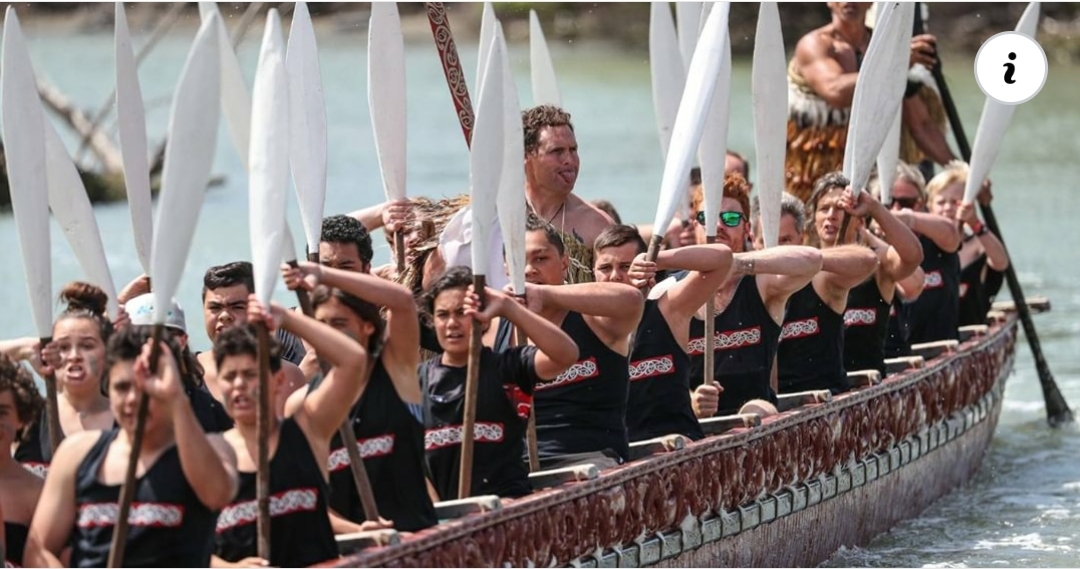
It brings up my waka background. Working in a canoe together, paddling together in time to move forward and get to a destination. All those analogies and metaphors are there because that’s what I do every day. I see it happening, see how it works, and know it’s possible. We can chuck anyone in a canoe and I can help them paddle together and get somewhere, even if they’ve never done it before. It doesn’t matter who you are, where you’re from, how old you are, whatever.
That’s what I believe the role should be. Politics is the battle of ideas. I love ideas, and I don’t care where they’re from. I’m most interested in the ideas that are going to help with problems we have, or help us have a good life, ultimately.
Of course, that environmental aspect. I want those species that are from here, our native birds, plants, fish and insects, they have a right to thrive here in their home. How do we make decisions that are good for them as well? That’s one of my strong beliefs.
What would you say to people who don’t think about the environment every day and just want to boost the economy? What role does the environment have in the economy and a better life?
I’d say, ‘Do you breathe?’
Step outside, breathe the air. Not everywhere is it fresh and clean, but straight away feel the wind on your face. Has the sun risen? Is the moon up? Are the stars up? Come on, that’s all around us. Whether you’re living in palaces or living in a struggle, I get it, but it is there and it is there for us.
It’s about knowledge too. We don’t get taught as much as we should about how to connect with the natural world. It’s all around us. Come on, I’m looking at it out my window right now. Everywhere you are, yes, you can. I know certain places around the world are heavily urbanised, and it’s not as prevalent, but it’s still there. Just out that window, it’s still there.
It’s about connection, knowledge, sharing that with people and making them realise nature is providing for us all the time and we can’t live without it. What can we do to improve it? What can we do to be in more harmony and have a reciprocal relationship with nature? That’s what I’m interested in, and it’s totally possible.
Whether it’s smelling the flowers or feeling the wind, watching the cycles of the moon, enjoying the sun rising and having the warmth on your face. There’s so many aspects of it. Birds singing, going for a swim at the beach or in the river, gathering food.
Especially if people are struggling, there is food out there that’s free, and I think that’s a human right. My people have customary rights for sure, but it’s a human right to gather food from the environment for free and have that be safe for you. You don’t want to be under threat because waterways or shellfish are polluted. That shouldn’t be a thing.
We should be able to deal with that. People should be able to go to any beach, any river, gather fish, gather food and do that for free. That’s a basic human right in my opinion. I think there’s a way to do it.
The way our modern lives are, more and more it can be focused on human stuff, human issues and problems, with a disconnect from this thing around us. I think we can bring people back to looking at that.
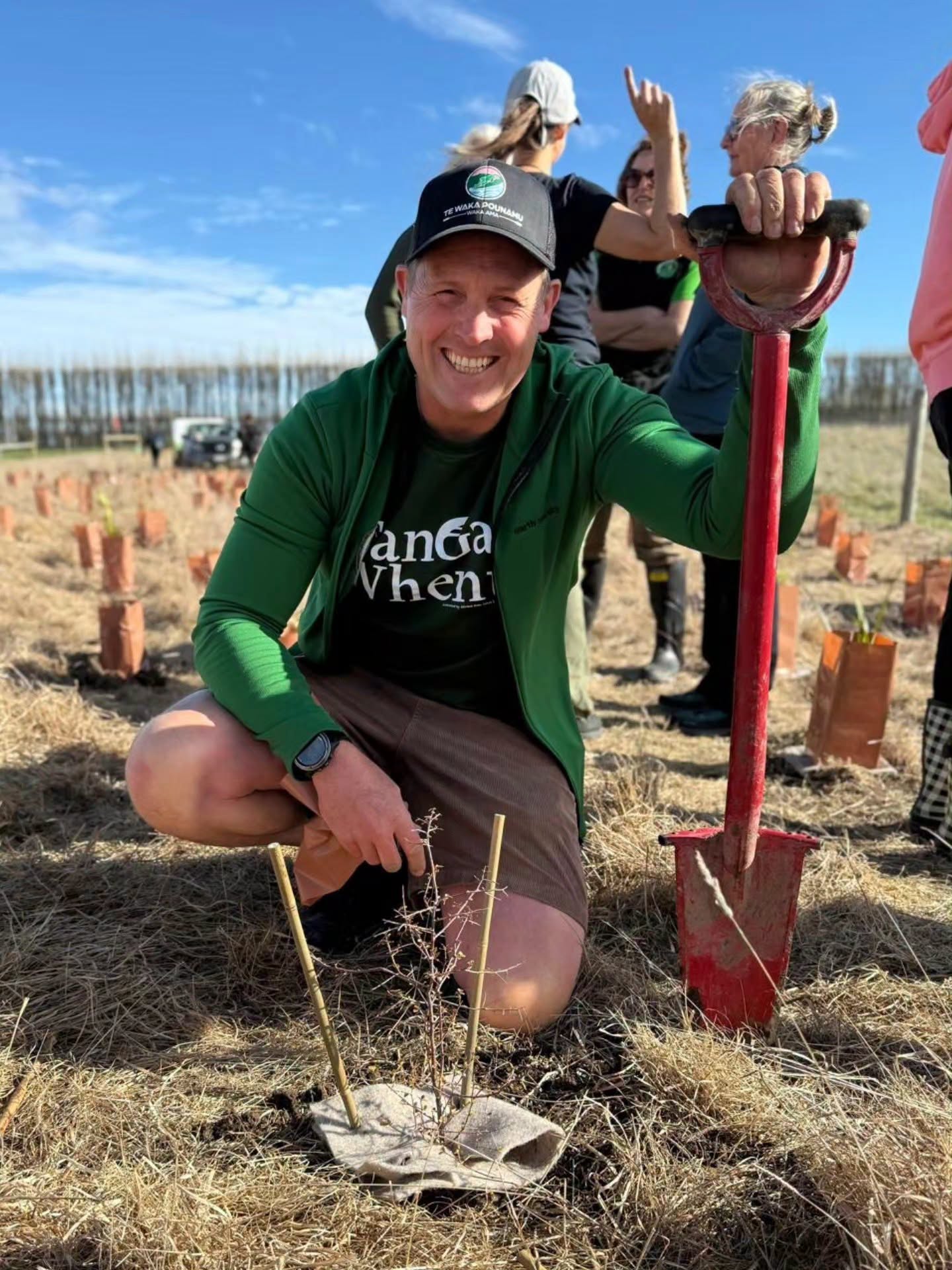
I’ve experienced this, especially through Te Ara Kākāriki and the work we’ve done around ecological restoration here in Canterbury. We get hundreds of people every year, mainly from Christchurch, coming out into the rural areas of Selwyn District and planting native trees back in the landscape with us. Why do they do that? I don’t know why they do it, but why do they?
Because they get it. They understand what’s happened here in New Zealand and probably around the world, and they want to do something about it. What their motivation is, who knows? I don’t know, but it’s happening, and more and more people want to do those things.
There’s so many planting days, especially in spring in Christchurch and Canterbury, and there are always people at them. They’re never empty. People can do it. They need to know how, though.
That’s one of the things I’ve learned lately. You can’t expect people to know what to do around ecological restoration or environmental management if we haven’t told them or given them some clues about what they could do.
I’ve been doing a bit of work on Te Waihora, Lake Ellesmere, a heavily degraded freshwater body, or brackish body, a massive coastal lagoon here in Canterbury. You’ve got a big urban centre like Rolleston, not far from Te Waihora, and it’s bigger than Timaru now.
We’ve got a job to do, and that’s what I’m trying to get involved with. There are so many beneficial things that could come from that in the future. If we do a good job to help it be in a better state, people could swim in it again. They used to. They can gather food out of it, which you still can do, but that’s a real value people could have only 10, 20 minutes from where they live. You’re like, ‘That’s amazing.’

I’m going to put you on the spot with a hypothetical. Let’s fast-forward to November and say the Green Party wins a majority. You go around the table, every MP is sharing their ideas, and it comes to your turn. What does Craig from Banks Peninsula bring in terms of practical ideas you want to see change in Aotearoa?
The biggest one is probably around the resource management reforms and the law that’s been tinkered with for so long. This government’s had another go at it. I think we should go back to the Natural Built Environment Act, which a previous government brought in, but it was only there for three months. Look at that and the good things from the current reforms, and try and figure that out once and for all.
I also think there’s something around freshwater management in particular, and potentially having a separate piece of legislation for water in Aotearoa, because I think that’s timely. And local government, because that’s a big area I’ve had expertise in. There are reforms going on at the moment which I don’t necessarily agree with, but I do agree reform and change are needed within local government. It’s more about the relationship with central government, about how taxes and rates are shared.
Local government plays a massive role in environmental management, so it’s connected to resource management and environmental management law. Those two things are pretty big in my mind. It links to conservation, ecological restoration, biodiversity and biosecurity management too. They’re all wrapped up together.
I’d love to lead some change around that. It’s not really a complete change, actually. It’s getting it into a system that can work for people. One idea I’ve raised through my submissions on the RMA process was the concept of whakautu, or reciprocity. I’m interested in how we could convince people, especially in the commercial sense, that every development we do, which often happens through the resource management process, how people can be compelled to consider reciprocity for that development.
Whether that’s a subdivision, building a new factory, buildings, building new farms, how can they consider reciprocity? It’s actually already happening. They just don’t know what the concept is. How can we get that built into the process so every economic activity has a biodiversity, biosecurity or environmental benefit?
I don’t think it’s that hard, but it’s been made really difficult, a big fight and a big deal. Whereas I think if we were all on the same waka and went, ‘Yes, we do have problems with our native species, so everything we do is going to be about trying to help them alongside helping us make our money and have our economic activities for us humans.’ That’s what I’d love to see. Whakautu is the idea here.
Sticking nationally for a second, the Crown’s relationship with Māori, iwi and hapū over the last couple of years hasn’t been great. What suggestions would you bring for how that relationship should improve, should the Green Party get a majority?
I probably should have said that with my last answer. It’s all inherent to me, but the Te Tiriti partnership is part of all of what I just said, local government, environmental management. It goes without saying.
It’s at the heart of it, for sure. Again, I don’t think it’s that hard. I’ve spent my whole career, and displayed in local government, that it’s not that hard to have good relationships with mana whenua and uphold Te Tiriti. But you first need to accept that and accept it’s important. I think what’s been happening lately is that it’s been undermined. We’ve got to get back on the trajectory we were on prior to this term of government.
We’ve done amazing things together. Yes, there’s history that’s tough to deal with, but the Treaty settlement process, the Waitangi Tribunal process, has been an amazing thing we shouldn’t be dismissing. We should be celebrating that we’ve done a good job. We’ve settled so many issues, not just for iwi and hapū, but for things like fisheries.
Water is another space. That’s why I believe we should have a separate piece of water legislation, freshwater, wai Māori legislation, because it’s contentious. The rights to water and how it’s used are very contentious, especially down here in Canterbury. Iwi are right in the heart of that. My iwi’s taken that to the High Court to challenge the Crown around how they’re upholding what was promised to us, not only under the Treaty but under our Treaty settlement legislation.
I’m not afraid of that. I think it’s a great thing to get into and try to deal with so we can move forward together, make the most of our freshwater resources, protect and restore it. I don’t think it’s that hard, to be honest, but I know it’s complex, for sure. All environmental management is complex. The environment is complex around us, but so are humans. That’s not a reason not to do something. It’s a reason to put even more effort in.

What would be your elevator pitch on why people should vote for you?
I do this every Sunday when I do door-knocking. But I’m more interested in why you would vote for me, because we turn it around a bit and want to hear what people have to say. I know what I can do.
It’s about being a person in our community who’s honest and has a track record. I can tell everyone all the things I’ve done well. Cool, that’s amazing. But I don’t think it’s about promising anything other than being a good representative, a good lawmaker, and trying to solve some of the problems and create solutions for us.
That’s what I’d say to someone. Look at what I’ve done, hear me and see that I’m honest and upfront, that I’m willing to be at people’s doorsteps every week.
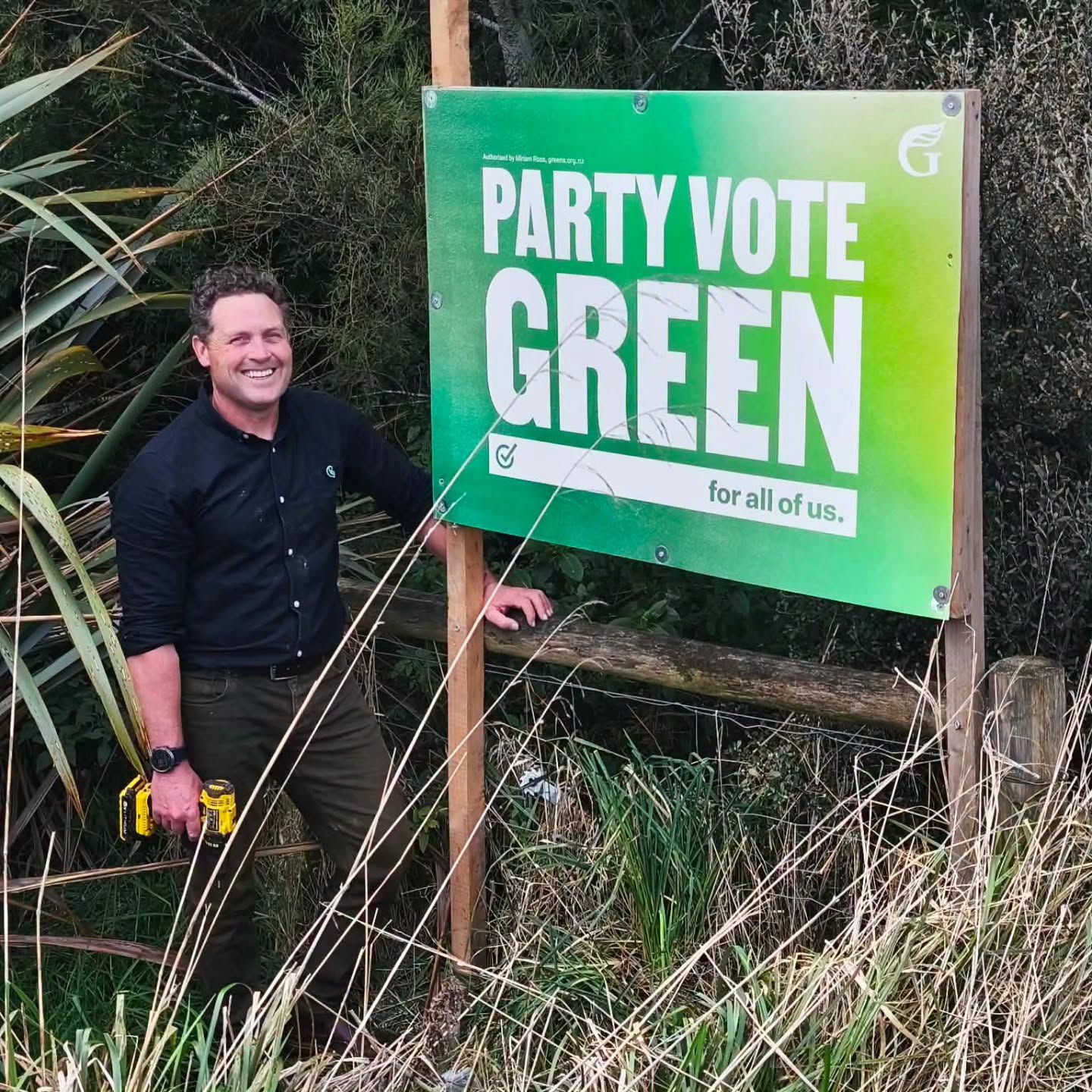
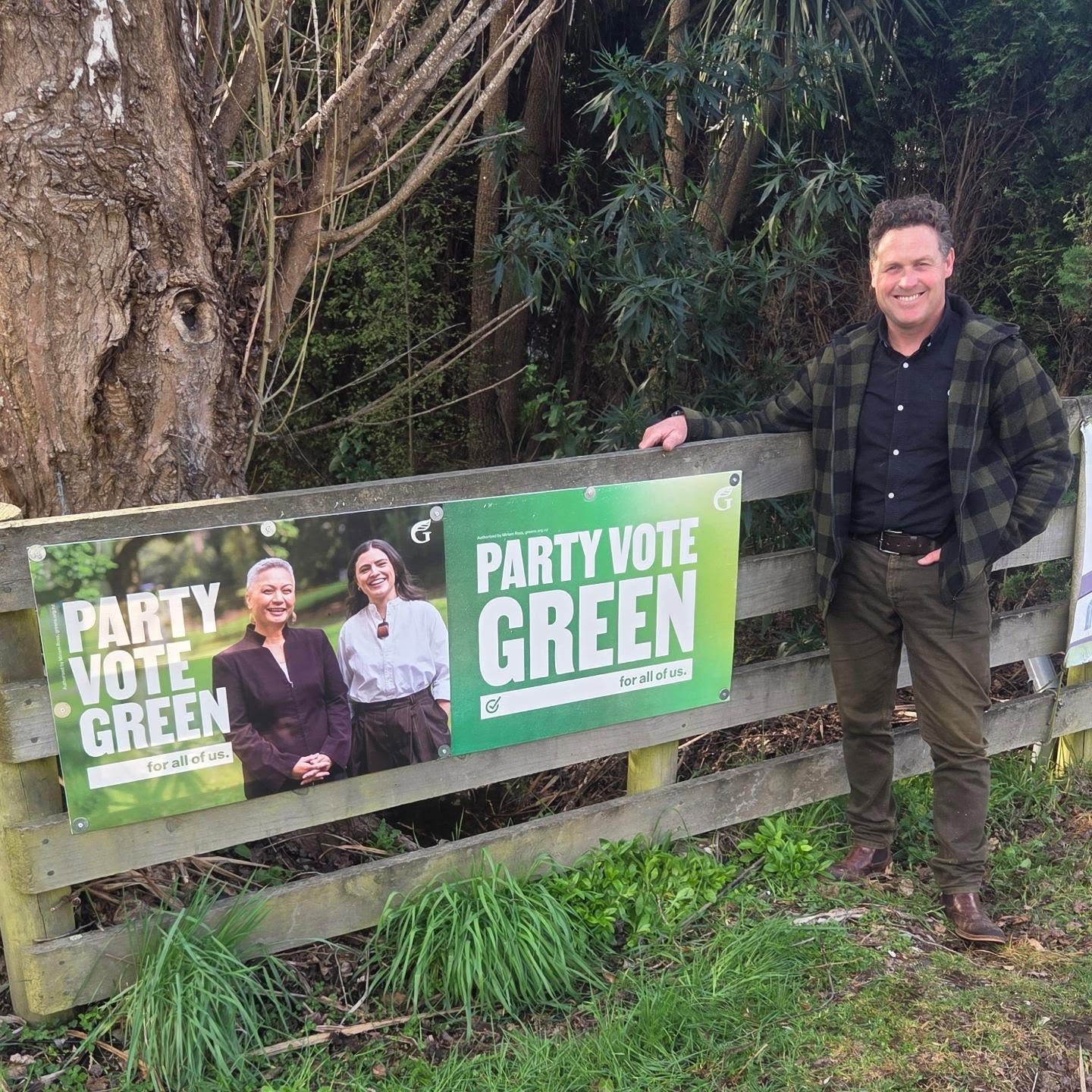
It’s interesting with elections because we have two votes in Aotearoa, party vote and electorate vote. While I’m standing for Banks Peninsula, it hasn’t been my goal to win Banks Peninsula straight away. If I did, that would be phenomenal. But it is about the party and what we can offer our government and Aotearoa.
That’s been my main thing, the ideas we have. We’ve been solid for 30 years as a party in Parliament, and that’s what we’re saying to people. Look at the policy we have. We’ve done comprehensive policy, and we’re not just about the environment, but that’s a strong thing for me personally and for the party as well.
Look at the ideas we’ve got and make the decision whether those are things you can see. Don’t just write us off because of what you’ve read in the newspaper or heard other people say. Listen to us, give our stuff a read, and if that fits with you, back us. Because if we can be in a government, we can try to get those things happening.
It’s not really about me, to be honest. Like I’ve been saying to people, and like I said earlier with my sports stuff, yes, that is a goal. Of course it would be great to be a member of Parliament and get into that position in government. But that’s not what I’m focused on right now.
I’m focused on the journey, doing something every day in my community to get people to vote and be enrolled. At the moment we have a challenge. You used to be able to rock up on election day and vote, but you can’t this year. The government’s changed those rules, which I don’t think is great because it’s going to knock people out of the game. We’re having to help people make sure they’re enrolled, not even trying to tell them to vote for us at the moment.
We want people to be enrolled so they can vote, and then to exercise their vote. I meet a lot of people in the community, knocking on doors, who are disillusioned. They say, ‘You’re all the same. I’m not going to vote for anybody.’ I’m like, ‘Hey, those people are making rules and laws for you and all of us. Don’t you want to have something to say about that? Who would you rather have in there doing that? Because someone’s going to do it, mate.’
Do you want someone like me, who you’ve met and who cares about this place and our people, or people you don’t know? I’m trying to get them to come forward a bit. It’s not bad, we’re getting a good response, but there’s a lot of disillusionment and apathy out there.
That’s the challenge. It’s not even about policies and ideas. We don’t get to that because people are where they are, and like you said, they’re struggling as well. At the moment, I’m trying to say, ‘Make sure you exercise your democratic right to have a say about who makes these rules for you.’
We can do some real cool things too. We can create amazing solutions and opportunities for our community. There’s been plenty of that throughout history, and we should celebrate the things our country has done really well. The Matariki holiday is one that comes to mind. What a cool thing, more recently. It’s one example of many things a proactive government can do.
We like to end these on a positive note, as the world is chaotic sometimes and can feel hopeless. Right now, Craig, what’s giving you hope or joy?
Generosity. People are generous. They give up their time to talk to me on their doorstep. People have given up their time to allow me to use venues for free, which is amazing. Volunteers have come out to help me on the campaign. I know there’s generosity there.
People actually care. People do care, despite what you hear.
And there’s a lot of hope. People do have hope that things can be different and better. That’s what gives me hope. I see it in people, hear it from people, but you don’t necessarily see that if you’re on social media all the time or just watching the news.
It’s about real connection with each other and the natural world. I think there’s something in that, but we’ve got to have the opportunity to talk about it a lot more.