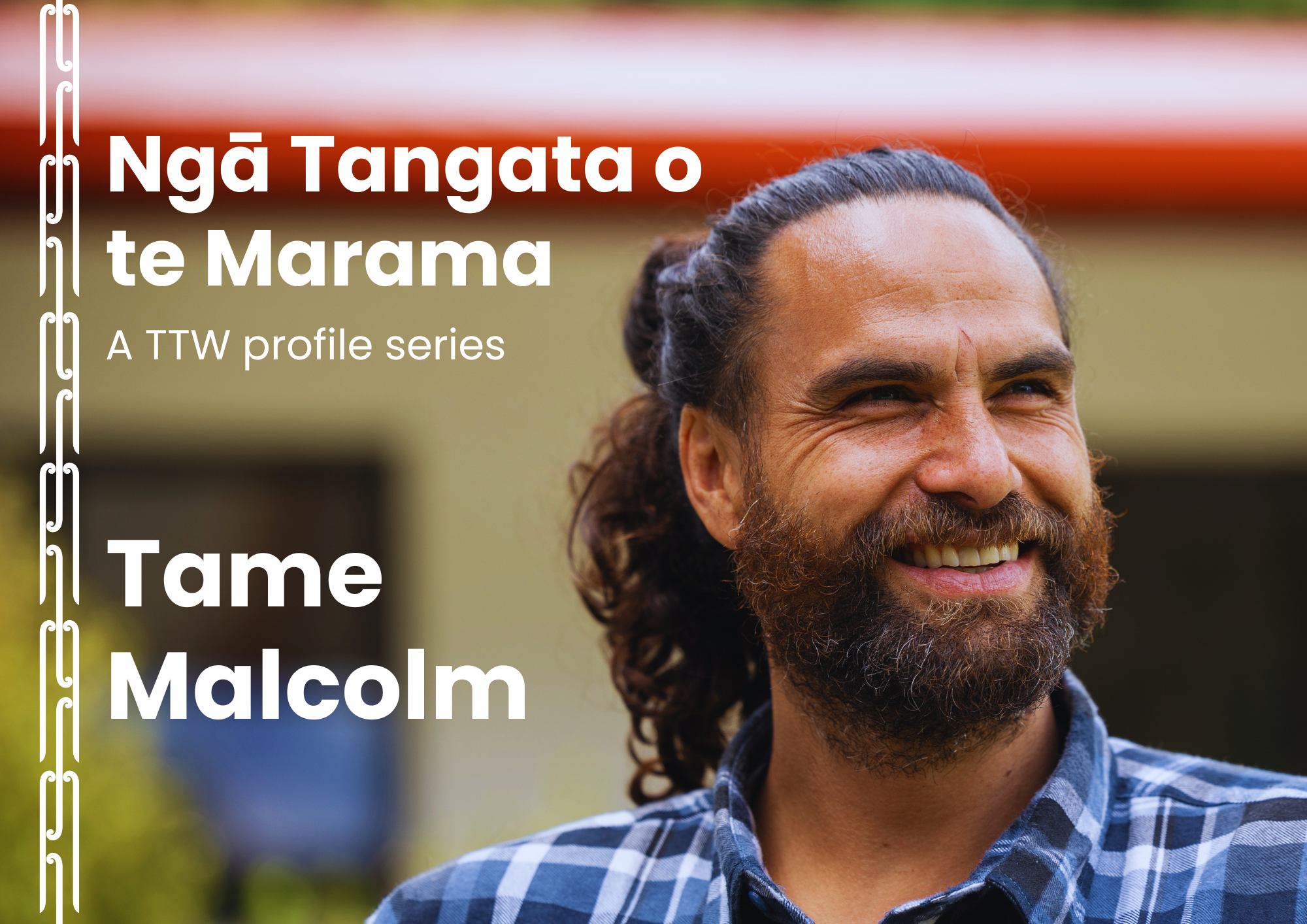
Ngā Tangata o te Marama | Tame Malcolm
This week, we’re returning to Ngā Tangata o te Marama, a refreshed profile series from Te Tira Whakamātaki about people doing thoughtful, practical, and stubbornly hopeful work for te taiao.
Across Aotearoa, people are protecting the environment in many different ways. Some are in the bush, some are on the water, some are in research, policy, iwi spaces, classrooms, communities, or behind the scenes keeping the work moving. This series is about their stories, their relationships with place, and the different forms environmental work can take.
This week we’re featuring Tame Malcolm, whose mahi moves between the ngahere, pest control, iwi responsibilities, policy tables, and the hard conversations that come with conservation in Aotearoa.
Tame talks about learning from the forest, the realities of pest control, the limits of the current conservation system, social media, 1080, kaitiakitanga, and why the work always comes back to te taiao, whakapapa, and responsibility.
It is a strong place to begin again. Practical, plain-spoken, rooted in place, and full of the kind of curiosity that keeps the mahi moving.
Want to listen to this profile? Click below.

Tell us a bit about yourself. How would you introduce yourself to someone you’ve never met?
I grew up in Rotorua and did all my schooling there. From a young age, I knew I wanted to work in the bush. I was fortunate to have whānau who supported that interest and exposed me to as much taiao mahi, research, practice and tikanga as possible.
I volunteered with DOC as a trapper from about the age of 16. I was voluntold by my uncle, and from then on I worked for DOC every summer. On weekends, I would work for DOC or go trapping and hunting. I went to university because I thought that would get me a job in the forest, then left university and started working in the forest.
I have dedicated my entire career to conservation, forest conservation and forest ecology through the use of mātauranga and tikanga.
About 10 years ago, I was invited to attend a wānanga where Melanie Mark-Shadbolt and Amanda Black were presenting the concept of starting a Māori Biosecurity Network. Up until then, my entire career had involved doing Māori biosecurity and making as many friends along the way as I could. It seemed like a prime opportunity. About a year later, I quit my job, joined Mel, hitched my waka to hers and have been here ever since.
We’ve got some rapid-fire questions to help people get to know you better. Let’s start with your favourite movie of all time.
The Lord of the Rings has to be up there, or The Hobbit. I know that seems very cliché. The Two Towers does it for me. I think I was in high school, but I really became a cinephile after that. I started thinking, ‘Movies can be so cool.’
Favourite book?
Anything by Conn Iggulden. Historical fiction. Probably The Winter King, which is ironically the sequel in his series as well. It’s about King Arthur, a loose fictional historical account.
Least favourite chore around the house?
Putting the washing away. Standing at 6’6”, everything is low for me. Any time I have to bend down and put things away, it becomes a chore.
Most of our dishes and cutlery, I try to put them up high. My wife gets a bit angry at me for that.
Sunrise or sunset?
Sunrise. I’m a morning person. I’ve always been an early riser, and the forest and hunting just lend themselves to that. Up early, get out there before the sun hits you.
Star Wars or Star Trek?
Star Wars.
What would be your go-to weapon in the zombie apocalypse?
Outside of a lever-action .223 rifle, I would go with a tomahawk, a hatchet or a toki.
What is a song that comes on your playlist that you would never skip?
Payphone by Maroon 5.
What is your go-to karaoke song?
I’m not much into karaoke, but if I had to, The Gambler by Kenny Rogers, because you can get the crowd involved.
What is your biggest pet peeve?
Littering. I struggle when I see people litter. I have to call them out on it.
Favourite native species in Aotearoa?
I’d go with the huia, even though it is extinct. So much of our kōrero comes from it. It gives such insight into the culture, our connection with te taiao and the ecology of the huia. You learn so much from it.
I looked at moa and huia back in the day to see how we interacted with different species, what practices came from those relationships, and how they could guide or inform practices around introduced species today.
What would be your go-to hot take?
If I was at a party, my hot take would be: is it bedtime? Can we go to bed now? That gets me in a lot of trouble. But when it is seven o’clock in the morning and I’m up while everyone else is still hungover, I’m grateful for my decision to leave the party.
What was your very first memory of being outside?
Probably swimming in the local river. Those were fun times. My parents still live by that river and we still swim there every now and again. Those are fundamental childhood memories.
The memory I talk about most, though, is my older cousin Tehini taking us out regularly, maybe once a month, on hīkoi. He would talk about different rongoā and plants. When we were about 13 or 14, a bunch of us cousins were heading out for a hunt. Someone said, ‘Go by that big tōtara,’ and another asked, ‘What’s that?’ I said, ‘Don’t you remember Tehini telling us when we were seven?’ They didn’t, and I realised I could remember it vividly.
I can almost remember who was standing where and what we were wearing. To them, it was another chore we had to do. Equally, some of those cousins remember other moments aligned with their passions. It highlighted for me that I love the forest. That’s why I remember it so vividly.
Who or what got you passionate about the forest, the bush and the environment?
I’ll start with my kuia, my grandmother. She couldn’t speak much English, so she spoke Māori. She was close to being confined to a wheelchair and had diabetes, so she wasn’t well. She would look after us. As soon as my parents left, she would send me into the garden to get different foods and ingredients, then she’d have a big feast. I’d get in trouble with my parents and we’d repeat the process. Sneaking her tomatoes, cutting them up, and putting sugar and salt into a saucepan for her.
That set me on my journey of liking to disobey my parents and being out and about. My dad brought the hunting, fishing and trapping. My mum is a nurse and always followed up with the science side of things. On weekends, she’d take us to the library. She would study, help us with our homework, and encourage us to learn. Between them, I got scientific knowledge of plants from books, and my dad brought it to life. My parents were a big influence.
In fifth form, when I was 15, my first biology assignment was on how to trap possums. My sixth-form assignment was on toxins for possums. By the time I submitted my final biology assignment, it was on natural selection of possums in Aotearoa. Possums and pest control always featured.
I remember Mum and Dad saying, ‘Let’s go get some possums. Let’s trap some possums or see if we can find some.’ Then Mum would go to the library with me to look at different books. This was before the internet was really a big thing. Now I’m doing my PhD on Māori approaches to possums.
What comes after a PhD on possums? What are you going to keep doing?
There’s always more to learn. Possums continue to affect our forests. I want to bring that PhD to life. At the moment, we are trapping through winter on iwi land. As my PhD has progressed, I’ve incorporated the learnings into that work.
This coming winter, I want to do more around sound lures and deterrents, using lures based on the maramataka and what is flowering and fruiting. Just bringing my PhD to life.
What place shaped who you are as a person the most?
It has to be home, Rotorua. That’s where I was born and where I’ve lived. I’m living elsewhere at the minute, where my wife is from, but Rotorua is just where home is.
I grew up learning about the forests and the species that call them home. When I go elsewhere and see a species, I think, ‘We don’t have that here,’ so I learn more about it. Or I might say, ‘This is what our relationship looks like with this bird back home,’ and people tell me what that relationship looks like where they are. It provides insight into other people’s relationships, or the relationships their iwi and hapū have with te taiao.
I’m working back there for the iwi at the moment and loving it. That is the anchor. The goal is to move back there this coming summer.
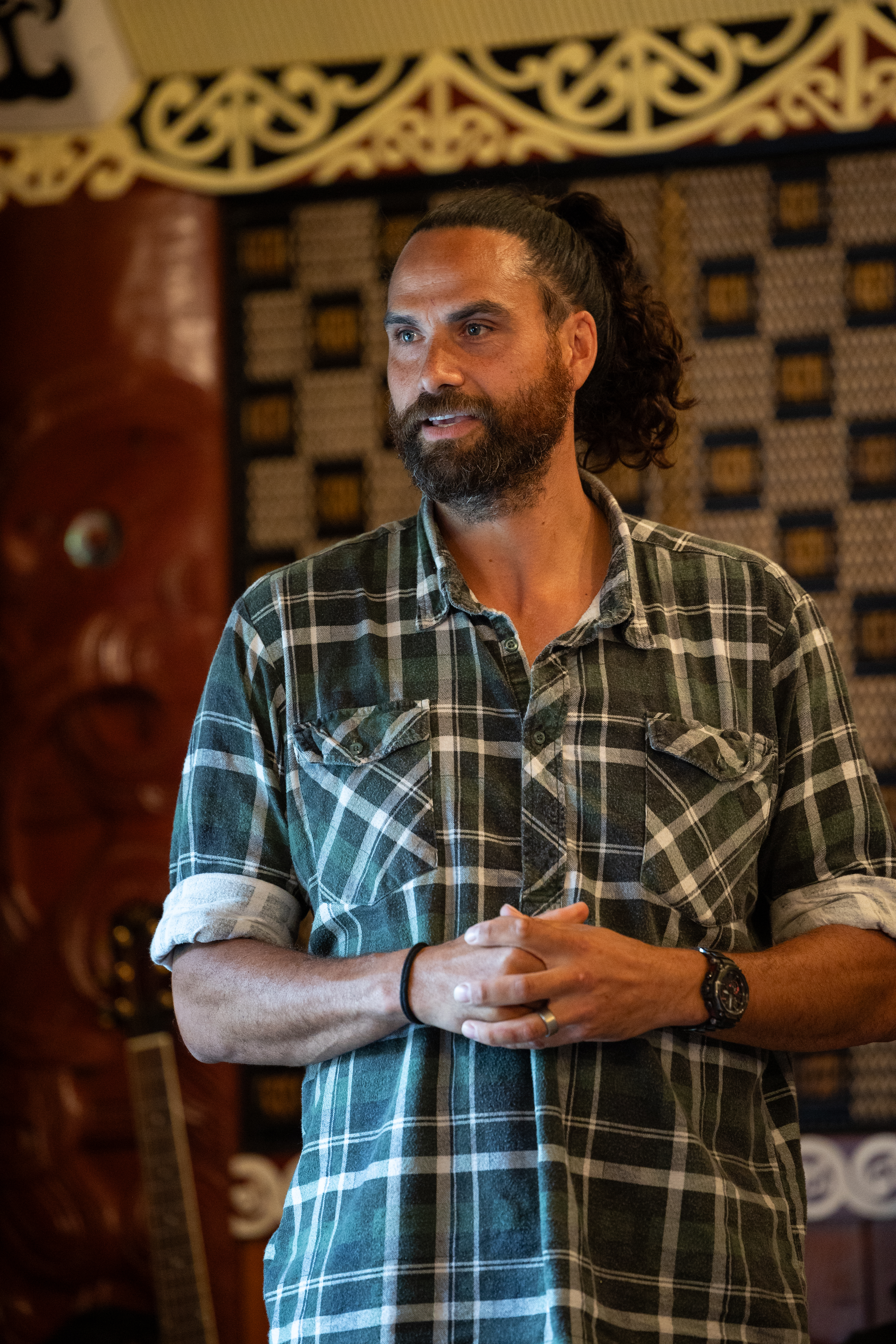
Was it working for DOC on weekends and during the summers that got you into hunting and trapping, or was it something else?
Parents, whānau and friends had always hunted and fished, though not so much trapped pests. Growing up, my dad was always doing things to get kai. We’d be fishing, eeling and hunting. By the time we got to high school, his hearing had started to go and he couldn’t hear the dogs as well anymore, so he put hunting aside and thought, ‘Let’s just focus on your sports.’ He didn’t want us out hunting on weekends instead of playing sports or focusing on our studies.
Through high school, hunting was a luxury we could do only if we’d finished our chores, our homework was good and our grades were good. Ironically, a couple of years later he joined me working in pest control, despite trying not to get us too involved in hunting. It just couldn’t be helped.
What is it about hunting and trapping that you love and that fulfils you?
I think of hunting and trapping as a means to an end, and the end is learning. When I was seven, I vividly remember learning the whakapapa of different trees and plants, how to tell them apart, and what they could be used for. That’s where I got hooked.
We went hunting and trapping from that age, but that was secondary. I loved and enjoyed it. It gave me a chance to get outside, experience the physicality of it, and engage with the mental and spiritual side: learning about the plants and our relationships with them. That has always been the main thing.
There are still times now when I go hunting and, if I am unsuccessful, I still call it a success because I’ve seen a new plant or something flowering. That’s the buzz for me.
What do you do for work?
I am the General Manager of Te Arawa Lakes Trust. It is one of the oldest Māori trust boards in the country. In 1918, Te Arawa took the Crown to court over breaches of our rights and interests. In 1924, the Crown signed an agreement and passed the Te Arawa Māori Trust Board into law, which would oversee Te Arawa rights and interests pertaining to the lakes. For the next 60 to 70 years, the Crown breached that agreement. In 2006, they signed a new settlement that apologised for those breaches and reinforced and reaffirmed our rights and interests. I came on as General Manager in 2025.
At the moment, we are focusing on what the next financial year looks like and how we continue to protect and enhance the mana and mauri of our people and lakes. Going into winter, things are a little quiet, but a big risk is the introduction of invasive gold clams, so we’ll prepare to prevent them entering our lakes over summer.
We also do a lot of work with schools, advocating and educating around taonga species in the lakes. We have a big science fair coming up that will get our kids involved in science and mātauranga, and what they can use to help protect our lakes.
Day to day, we’ve got staff all over. They could be out on the water, diving, checking catfish nets, meeting with government officials or ministers. It varies every day, which keeps it entertaining and keeps me on my toes.
While this work is at a very local level, it is similar to TTW in that there is always something new going on, but it all lends itself to protecting the rights and interests of Māori.
What experiences have you taken with you from Te Tira Whakamātaki and DOC that help you today in the biosecurity system and in your day-to-day work?
One of the biggest things I took away from Te Tira Whakamātaki was to always keep learning. When I went into TTW, I’d been very operational in my career up to then. Boots on the ground, trapping, shooting, hunting and running dogs. Moving into a role where I was sitting in policy meetings and developing research was a change, but it reaffirmed and reinforced the need to continue learning.
In every role since, I’ve kept in mind that just when you think you know something, there is always something more to learn. Start from the position that, ‘I’ve got to learn something.’
Secondly, I saw this huge, I won’t say untapped, potential shared interest among Māori across Aotearoa. Māori are not homogeneous. Different iwi, hapū, whānau and marae have different whakaaro. But we can probably all agree that te taiao is fundamental to our identity. I use that to guide my work, from Te Tira Whakamātaki through DOC and now in my own iwi space.
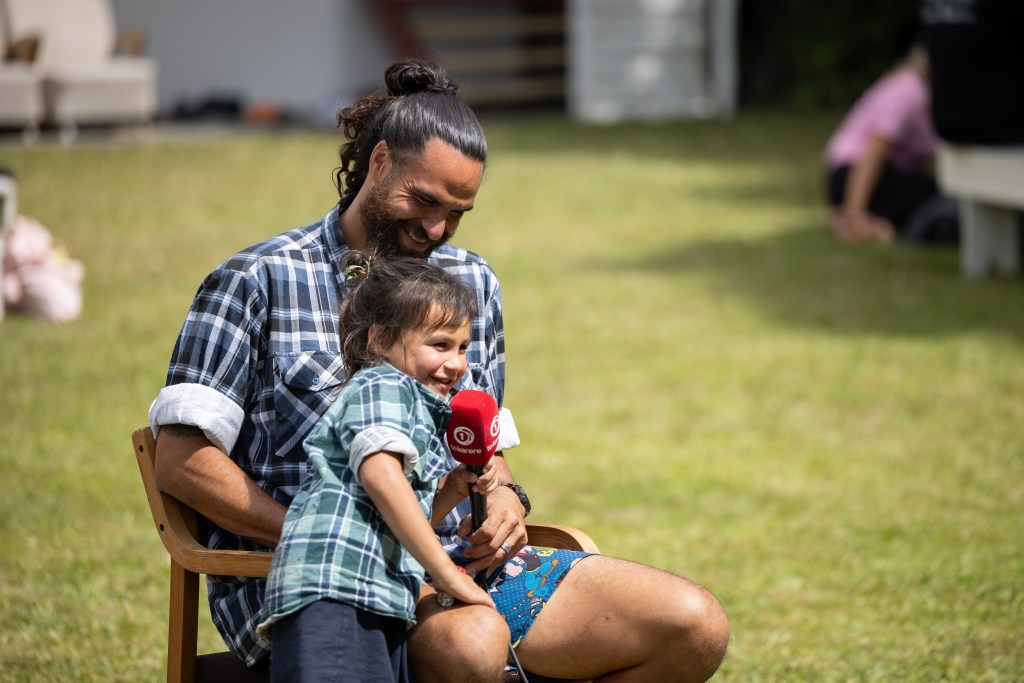
What did you learn about working within a bigger system that you are still using today?
The system was not designed as an Aotearoa conservation system. When my Pākehā ancestors arrived, they brought their understanding of Westminster law, European policies and legislation, and applied it to Aotearoa. Since Te Tiriti o Waitangi, it has somewhat evolved and adapted, but the foundation was very colonial.
The biggest learning I took from the DOC space was that we kept putting plasters on it. Everyone can agree that we need to modernise the conservation system. It needs to reflect, first, our taiao and, second, our identity, which is based on Māori and everyone who comes to Aotearoa. The hardest thing for me was that the foundations of the conservation system were too insufficient to be genuinely beneficial or have a meaningful impact for Aotearoa.
What does that look like on a practical level right now?
When our European ancestors came here, they were escaping the United Kingdom, where the local lord owned all the deer and land. They found this paradise and found what they wanted. Access for all, with few responsibilities, where they could hunt or do whatever they wanted. That’s the foundation I’m talking about.
Today, people want to protect that. You have people wanting free access to parts of te taiao that were wāhi tapu for some iwi. Locally, we may say, ‘That is where our ancestors and tīpuna are buried, but let’s have a conversation about that.’ People respond, ‘No, you’re breaching our rights. We should have free access to anything.’ Although there are some changes coming around paid access to the conservation estate.
Then, of course, you’ve got the herds of special interest. Legislation goes above and beyond what we currently have to protect introduced species. Under this new law, there will be greater protections for introduced species than for native species on the brink of extinction. You can find deer on every continent, I think, except Antarctica, whereas some of our species are only found in certain regions of Aotearoa, let alone the whole world, and have less protection than deer. It is fundamentally and morally incomprehensible.
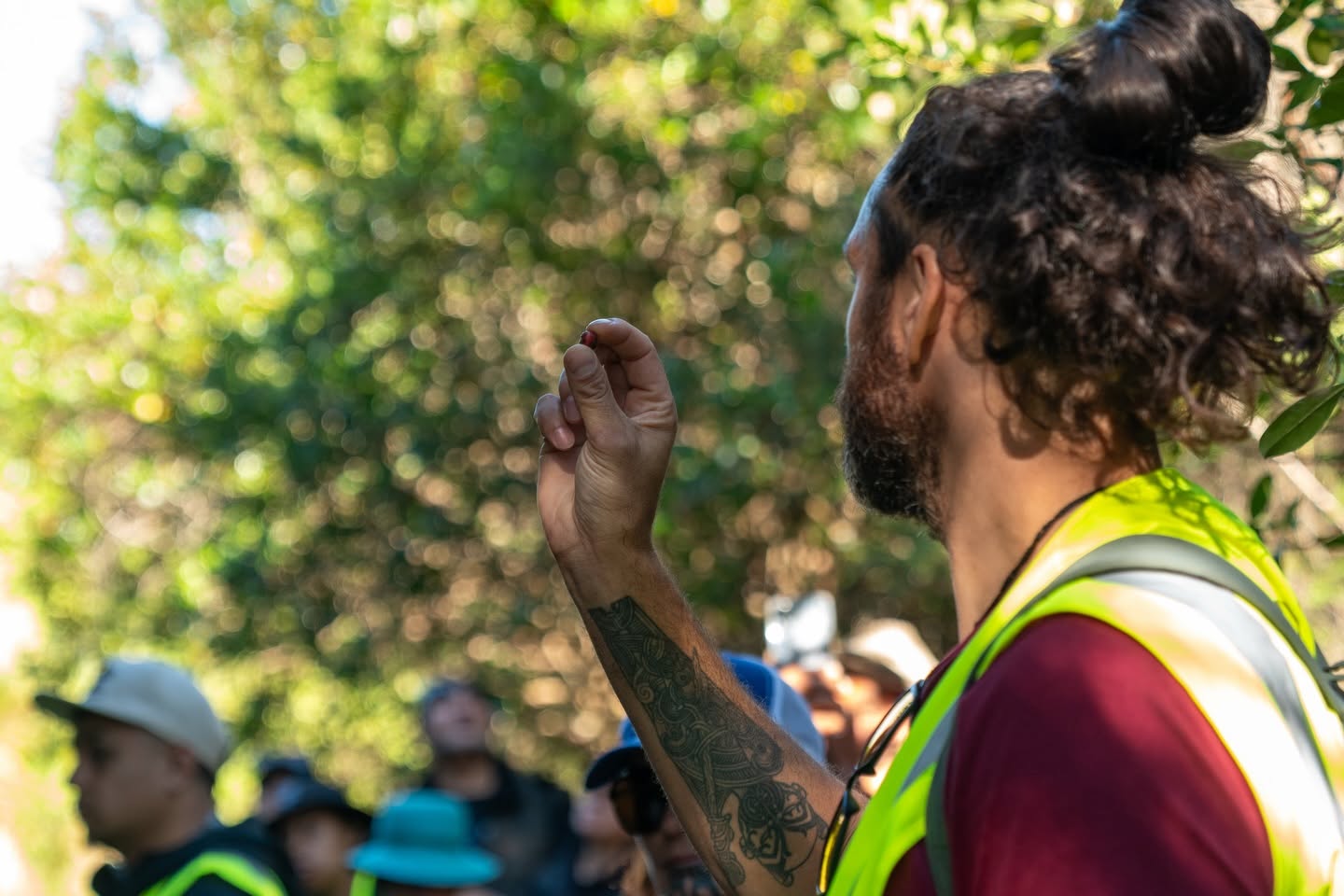
What do you see as the next steps we need to take to plan something better?
The Conservation Act is currently being amended for the first time in almost 40 years. It took 40 years to amend it. What we really need is to throw the whole thing out and start again.
We know our taiao is in dire need of protection. Aotearoa is seen as a pioneer and world leader in certain aspects of conservation, such as island eradication and predator control. Starting again and creating a conservation system, with legislation and policy using the best of what we’ve got to protect the best of what is left, would be a huge effort, but it would be well worth it.
Across all your experiences and roles, what is one skill you found unexpectedly useful?
Conflict resolution. I’ve always enjoyed making friends. I love talking to people and learning more about them. I can ask someone I’ve just met a million questions.
I found myself in a compliance role involving pest or feral animals that we had to control or put down. Some people considered those animals pets or felt they belonged to them, so we had to learn how to de-escalate things. They put us on a one-year conflict resolution certificate. When I came out of it, I thought it would help with that job, but those skills have been useful far beyond it.
I use them to this day. When I meet someone and can see the potential for conflict, I start from the position of: why are they upset? Why are they angry? How did it get there? I genuinely try to understand their perspective. Once people feel heard, you can start a conversation pretty easily. It doesn’t always work, but it has helped me big time.
I don’t always get it right; my wife will be the first to say that. But it helps in a range of situations, especially at the Treaty-Crown interface, where people are often talking over one another and feeling unheard.
When the work feels really hard or slow, what keeps you going?
Truth be told, everyone needs a break. Resilience helps big time, but discipline is also a big asset. Knowing when I need to tap out for a bit. Work has been heavy and intense the last couple of days. Come Friday, I’ll cash in all my brownie points at home and ask my wife whether, once the kids are down, I can shoot off for a night-time hunt.
That’s my decompression time. It tops up the energy enough for me to come back Monday, get straight back into it and carry on. We often tell ourselves to push through and keep going, but you have to ask whether that will be effective or whether it is worth taking a break.
Simon Sinek talks about two foresters who go into the bush each day to fell trees. One works the whole time. The other stops for a two-hour lunch break, yet the second one chops more. The first asks how he keeps doing it, and the second says, ‘I go home and sharpen my axe.’ Sometimes it is worth taking two steps back to take five steps forward.
What advice do you have for young Māori who want to get involved in biosecurity or biodiversity?
It’s a good question because I get asked it quite a lot, especially about hunting. People ask, ‘How can I do what you’ve done? Be on a chopper shooting animals, or get paid to go pig hunting?’ That’s the glory stuff that comes around once a year. People who only want that soon get disheartened by the industry and sector and leave to do other things.
I ask them, are you interested in this space? Are you interested in everything? If you are genuinely interested, you have to be interested in learning because it changes day to day and week to week. Do you like hunting? Pulling weeds? Using a chainsaw? Picking up rubbish? If the answer is, ‘No, I just want to do the hunting,’ then that’s a hobby.
But if someone says, ‘I’m actually into picking up rubbish. I love reading a book about picking up rubbish,’ I ask hard questions about the mundane parts to see where their interest lies. Once I feel that they are interested, they don’t actually need me. If you’ve got the passion, you’ll find a way. I can point you in the right direction, but once I see that they’re keen, nothing will stop them.
To get started, start locally. People ask whether they need to go to a particular university or travel somewhere else. There are heaps of volunteer opportunities. Reach out to local hapū and iwi, see what they have available, and turn up ready to help wherever you can.
What importance do you see in social media and storytelling in environmental work and conservation? How have you used it so successfully?
I remember posting random facts I found interesting and sharing them with whānau and friends. I think my sister started my first Facebook account for me, and I used it to post things I found interesting.
It wasn’t until I posted that I was doing my master’s on the social economics of pest control and looking quite a bit at 1080, the controversial pesticide, that things shifted.
As I interviewed and talked to people for my master’s, I realised there were many misconceptions and a lot of misinformation. I made a quick clip about 1080, put my phone down and went hunting. The next day, I had hundreds of thousands of views and just as many messages. I responded to every one of them.
I realised that 99% of people saw someone who walked and talked like them: a pig hunter and trapper speaking objectively about 1080, its benefits and its risks. I wasn’t trying to sell it. People messaged me saying, ‘You’re shit. You’re lying. This is propaganda.’ I said, ‘Look, I’m not. If you want to come and join me, you’re most welcome to.’
Ninety-nine percent of them said, ‘You seem like a normal guy, or someone I can trust.’ It opened the door for people to explore a little more. Some came out the other end saying, ‘I still don’t like 1080.’ Cool. You have a more informed opinion about it.
That was the moment I realised there is power in this. Whether they agreed with 1080 wasn’t the goal. The goal was that they could have conversations about it. Some of my cousins, who were my biggest defenders at the time and told everyone to stop cussing me out, still don’t agree with 1080. We can have healthy conversations like that.
From then on, the goal was to use social media to start positive or hard conversations.
What has social media led to for you?
Networking, including finding experts who agree or disagree with me and have since become good friends. Networking has been awesome. Social media is socialising and creating opportunities for others.
Sharing stories from my life has brought me insights from other people, which is always cool. I hear that they are interested in getting into this space, that they have explored other things, or that they want to share their knowledge. All of that has been beneficial.
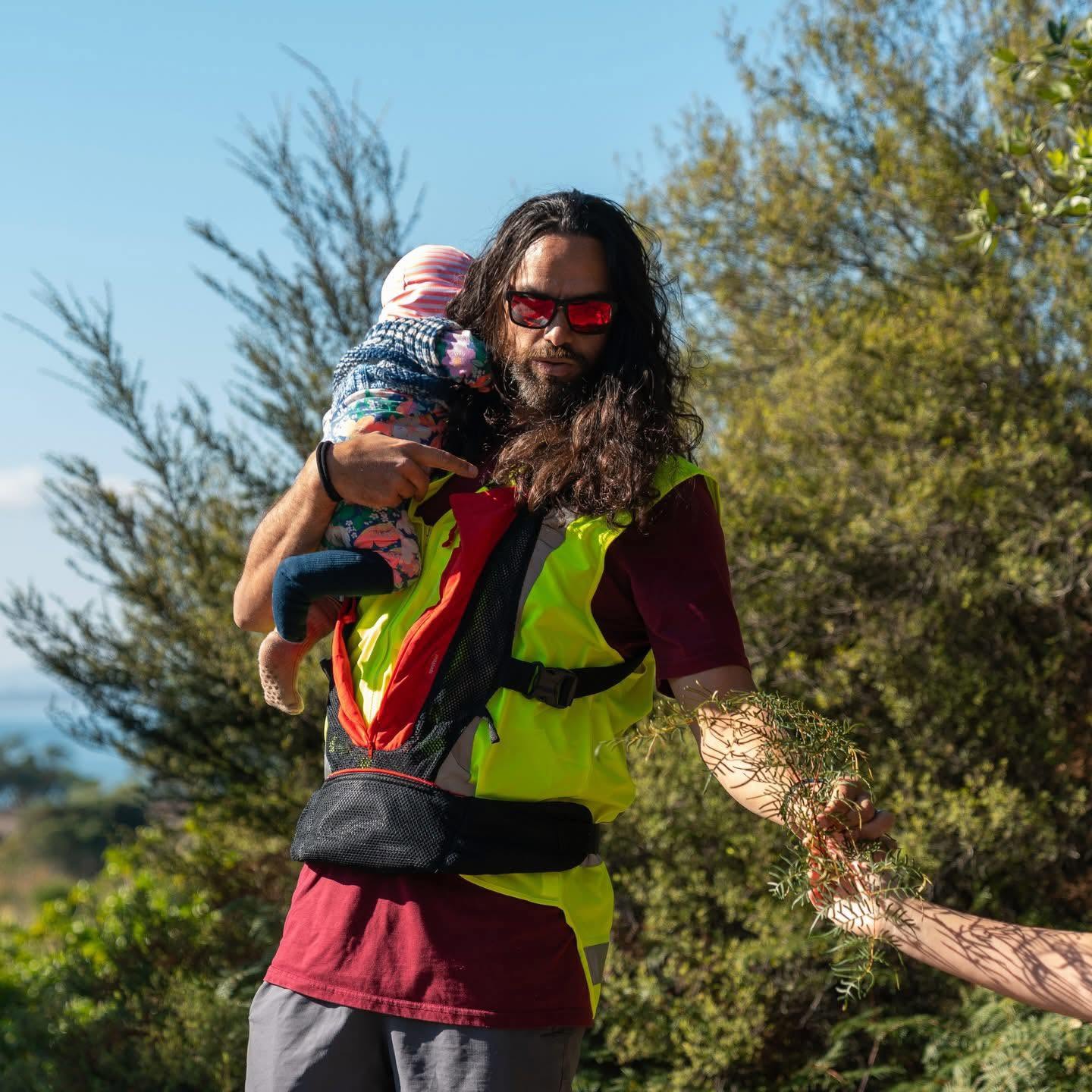
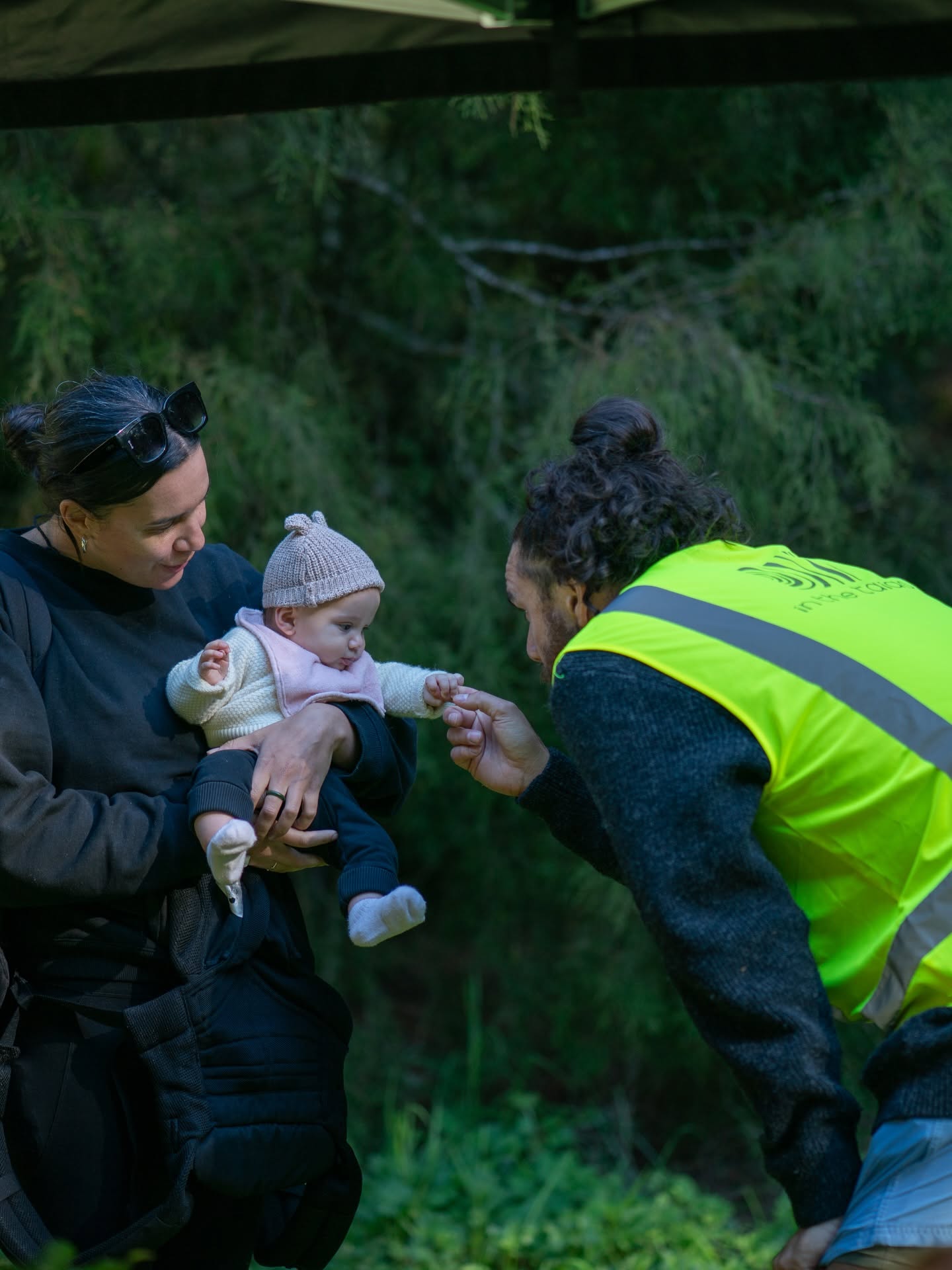
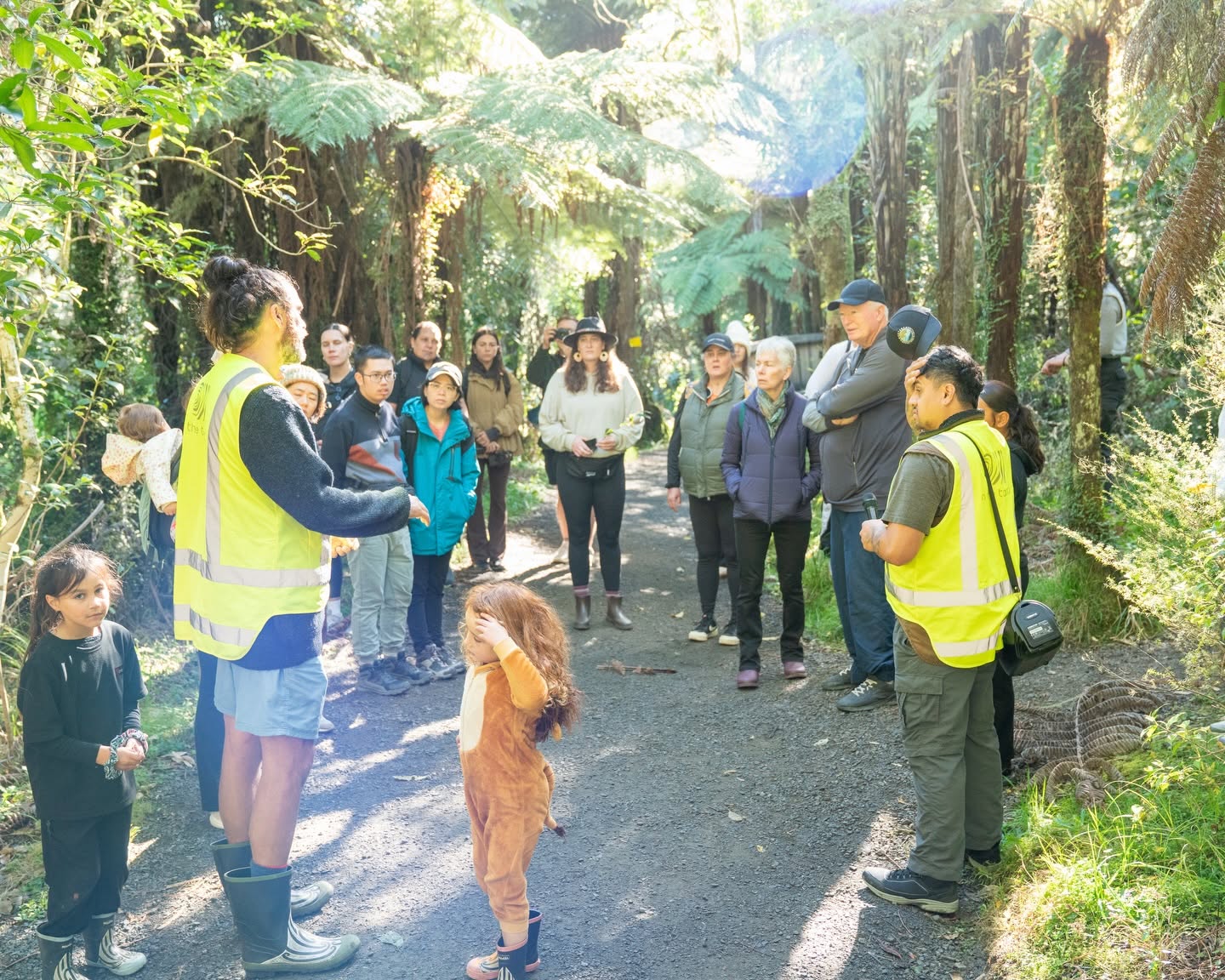
Lately, we have used social media to get people along to our events. We run free events where we go into the forest, te taiao, share knowledge and share food. They’re fully funded from external sources. All the funding goes towards coffee and food, which are two big ingredients for success.
We bring together people interested in this space. More often than not, they have kids, and a secondary bonus is that their kids speak Māori, so our kids have friends rather than just hanging out with us all day. It grows the network in real life among people who want to do some of the same things.
Follow Tame on Instagram here.
How can people find the next event?
I always put them on my social media pages. In the Taiao is the event and page where we host them. We get funding from the local council and a range of sources. We tailor the walks or expeditions to the funding that comes with them, then set them up. We normally try to cap attendance because the events are catered.
One time, we capped it at 60 because, with the funding we had, we could feed 60 people well. Then 120 people turned up. They all still got fed and it was very successful. We realised it might be better to put on a bit more food. The food comes from te taiao. We harvest kai, whether it is a pest species or a native species we can use sustainably.
Te Tira Whakamātaki has been exploring what kaitiakitanga looks like. A lot of people have a very specific view of it, but we think it takes many forms for different people. What does it look like for you day to day and in the bigger picture?
What I’ve come to learn, understand and now know is that Māori culture centres on regulating our interactions with the environment. I think most cultures do, but when I say environment, I mean other humans as well, because we are part of it. We don’t sit outside it. It is about regulating our interactions with the environment for sustainability and survival.
When our tūpuna first arrived in Aotearoa, they brought Polynesian culture with them. When they realised some of their interactions were having negative and irreversible impacts, we saw a transition to Māori culture. A lot of that was about ensuring our interactions with te taiao supported our survival.
Kaitiakitanga, to me, starts with regulating our own actions and behaviours so they have less or no negative impact on te taiao, and rectifying the impacts we do have. If we have littered, kaitiakitanga means not littering or picking it up. If we have felled too many trees and harmed the forest, it means replanting them. Kaitiakitanga is about regulating our behaviour to prevent or rectify negative impacts.
I don’t want people to think Māori culture, and kaitiakitanga in particular, means locking up te taiao, throwing away the key and not interacting with it. Nor does it mean we can’t use resources. The more we use resources, the more we care for them, and hopefully the better able we are to bring them back from the brink of extinction. It is about realising our place in the world and acting accordingly.
What is giving you hope right now?
Technological advancements. Lots of people treat technology as this scary boogeyman, or think AI is taking our jobs. But technological advances have huge potential to shift conservation efforts in Aotearoa, whether that is in the controversial gene-editing space, new and novel toxins and control tools, or engagement.
We need more people in conservation and more people to care. Technology is helping big time with that. We talked about social media and getting people interested that way. That gives me hope at a macro level.
At ground level, I said I’m going hunting on Friday. I’ll take the drones and I have thermal scopes on my rifles now. Ten years ago, I’d spend days in the field shooting wallabies and trying to find them with spotlights and dogs. Now, in one night, I can do what used to take me 20 days. These new thermals and drones have boiled a whole month’s work down to one night.