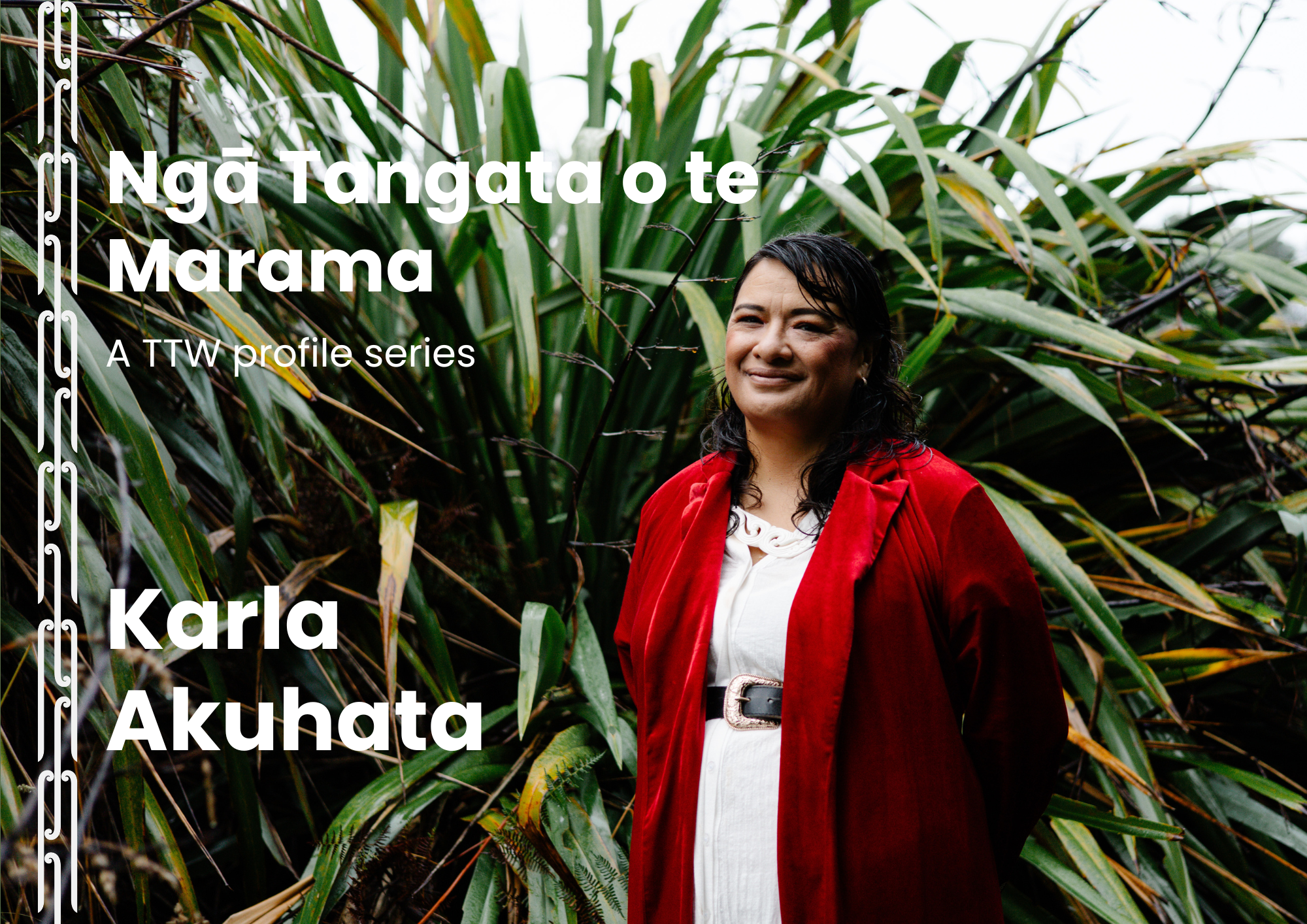
Ngā Tangata o te Marama | Karla Akuhata
For Karla, story is not just something written down after the work is done. It is part of the work itself.
A writer, former journalist, communications specialist, and storyteller at heart, Karla’s kōrero moves between Whakatāne, Ngāti Awa, te taiao, fiction, whakapapa, conservation, and the slow work of finding her way back to joy.
In this profile of Ngā Tangata o te Marama, Karla talks about writing as a way of understanding the world, and about the stories that shape how people see themselves, their histories, and their responsibilities to place.
This is a kōrero about writing, relationship, faith, and the power of stories to make visible what systems often miss.
Want to listen instead? The full audio is available to paid TTW members. Log in or explore membership options to listen.

Tell me a little bit about yourself. Who are you? Where are you from? How would you describe yourself to a person you’ve never met?
I grew up here in Whakatāne until I was about eight or nine. That provides my foundational basis. And the iwi here is Ngāti Awa. It affiliates to the Mataatua Waka. I have affiliations to iwi across that waka, but because I grew up here in Ngāti Awa, that’s how I would identify myself, as a Ngāti Awa woman.
Upon that foundation is who I am as a person.
Over my lifetime, I’ve always loved writing. I never realised that I could have a career in that. In fact, I’m transforming my career space at the moment into something that I’ve always wanted my whole life, which is to write a book.
I started out by going to uni and studying accounting, and then I figured that wasn’t for me. Then I went back to polytech and I got a graduate diploma in journalism, and I became a journalist and a reporter.
I wrote for the Waikato Times. Eventually I moved home to Whakatāne and I wrote for The Beacon here. Then I became a comms specialist because there’s no money in journalism and it’s a dying art. I moved into comms and public relations.
Now I am transforming myself into a novelist, hopefully. But I was always a writer. I’m a writer at heart. And I enjoy writing about Māori subjects.
The short answer is, I’m a storyteller.

I didn’t know you were an accountant by trade. What made you decide that wasn’t for you?
I worked at the IRD for a period of time, and I was a debt collector there. I always thought I would want to be an auditor in that space. But the mundane work, the four walls. I never realised it then, but I was always looking for a vocation that would allow me to be in amongst life.
That was not happening in an accountant’s office for sure.
So, journalism was that turn to being amongst life a little bit more, being out in the community, being with people?
Being with people, being out of the office, but still having an office component to it.
Because I’m not a hands-on person. I don’t willingly get dirty and I’m not into manual labour much, but I am curious by nature. And so I want to experience the world.
What thing in this world shaped who you are the most, would you say?
I would say reading.
My grandmother, my father’s mother, she had a great love of reading. She was a teacher, and she encouraged us to read from a really young age. She encouraged us to write her letters.
It was reading and being able to explore the world through words. That was the foundational point.
What kind of books did you read growing up?
All sorts. I had a time of Mills and Boons. I had time with John Grisham. I tried to read the great literature. I read Once Were Warriors when I was about 10 or 11. Didn’t quite get it back then, but read it again and got it a little bit more. Anything and everything, really.
What do you read now?
Currently, I’m listening to an audiobook, which is The Bronze Horseman. That’s historical fiction, which provides me with some inspiration in the literature space. I’m also reading the Tūhoe book. It’s pretty heavy going, so I take it in bits and pieces. But I enjoy Tūhoe. There’s so many great stories in there.
I have some rapid-fire questions to help people to know you better.What’s your favourite movie of all time and why?
Friday. I love the movie because I watched it growing up with my family. It’s a cult classic in our family.
Favourite book all time?
I don’t have the great one yet, but probably the book that is in my mind the most at the moment is called Yellowface.
It’s commercial fiction, and it’s clever. It’s so witty. It’s so well written.
Your least favourite chore?
Vacuuming. It’s the last job on the list. You got to do everything else and then you finally get to the vacuuming.
Early bird or night owl?
Definitely an early bird. I was up at five o’clock this morning. That’s my body clock.
Beach, bush, or mountain?
In the past, I would’ve said beach straight away because that’s where I grew up. But actually what I’ve realised is I really like the bush.
What’s your go-to takeaway order?
If it’s my choice and not the kids’ choice? Vietnamese beef soup, some spicy beef noodle soup.
Pineapple on pizza, yes or no?
I don’t have strong feelings about this. I will eat it if it’s on the pizza. I’m not disgusted by it. So many passionate people out there about pineapple though. I don’t get it.
What’s your biggest pet peeve?
Not doing what you say you’re going to do. Or in a minute. My 19-year-old, if I give him a job to do, he will take forever.
What’s your go-to karaoke song?
I don’t sing karaoke. I’ve only ever sung once on karaoke in my life. And it was Bon Jovi when I was 18 or 21. I don’t sing in public.
This one’s a bit of a tricky one, but what is one app on your phone that you should probably delete, but won’t?
TikTok, for sure.
What is your go-to hot take?
I can’t tell the difference between Marmite and Vegemite. Tastes the same.
What is your first memory from being outside?
It would be out with my pāpā, my grandfather, and my dad shucking kina. I’ve loved kina my whole life. I would’ve been about three or four, outside with all the gunk of shelling kina, just acting like a seagull really. That’s my first memory.
Would you say that’s also your favourite memory from being outside, or is there another one that you could draw on?
It’s my favourite foundational memory, but I have a really lovely memory.
Ngāti Awa harvest the grey-faced petrel out here off Moutōhora. We reinvigorated that practice with DOC about 16 years ago maybe, or 15, 16 years ago. In that early period, a group from Cape Kidnappers approached about taking some of the manu from here and relocating them down to Cape Kidnappers.
So that happened and it was successful. They managed to establish them there. Then it wasn’t until about three years ago that someone asked, wonder how those manu were doing. And we had never gone back to check.
So in 2024, in December, we went down there. They were doing a banding exercise with the manu kuia. So myself, my friend Dallas, and one of the DOC workers went down there and we spent two days down there with the Cape Kidnappers people.
On the second day, we went out to check out these manu and they had artificial burrows, and it was really weird. It was really weird. But it was also really beautiful.
I remember lying in this harakeke, because we don’t have harakeke on Moutōhora. That’s not where the manu kuia are hanging out, but it is down in Cape Kidnappers. And I remember I was the note taker. We were banding, a couple of my mates were doing their thing, and I was just waiting for them.
I was lying under this harakeke and the sunlight coming down, dappling down through the trees and singing this waiata that I just learned. And it was the happiest I had felt in a long time. And that was the moment I knew I was going to give my job up.

What about that moment drew that out in you?
I don’t think it was just one thing. It was everything about that moment, the sunlight, the weather conditions, the knowledge that these manu were being so looked after, even if it wasn’t in the way that we would’ve done it.
That there was this continuation of mātauranga, that there was this continuation of relationship, even if it had taken 12, 13 years. But that it was eternal and that it was the most connected I think I have been to our ancestors.
Looking throughout your life, who or what inspired you to pay attention and care as much as you do for te taiao?
I think growing up, being around my grandparents and the people of home here, it was always kind of there. I just didn’t understand it.
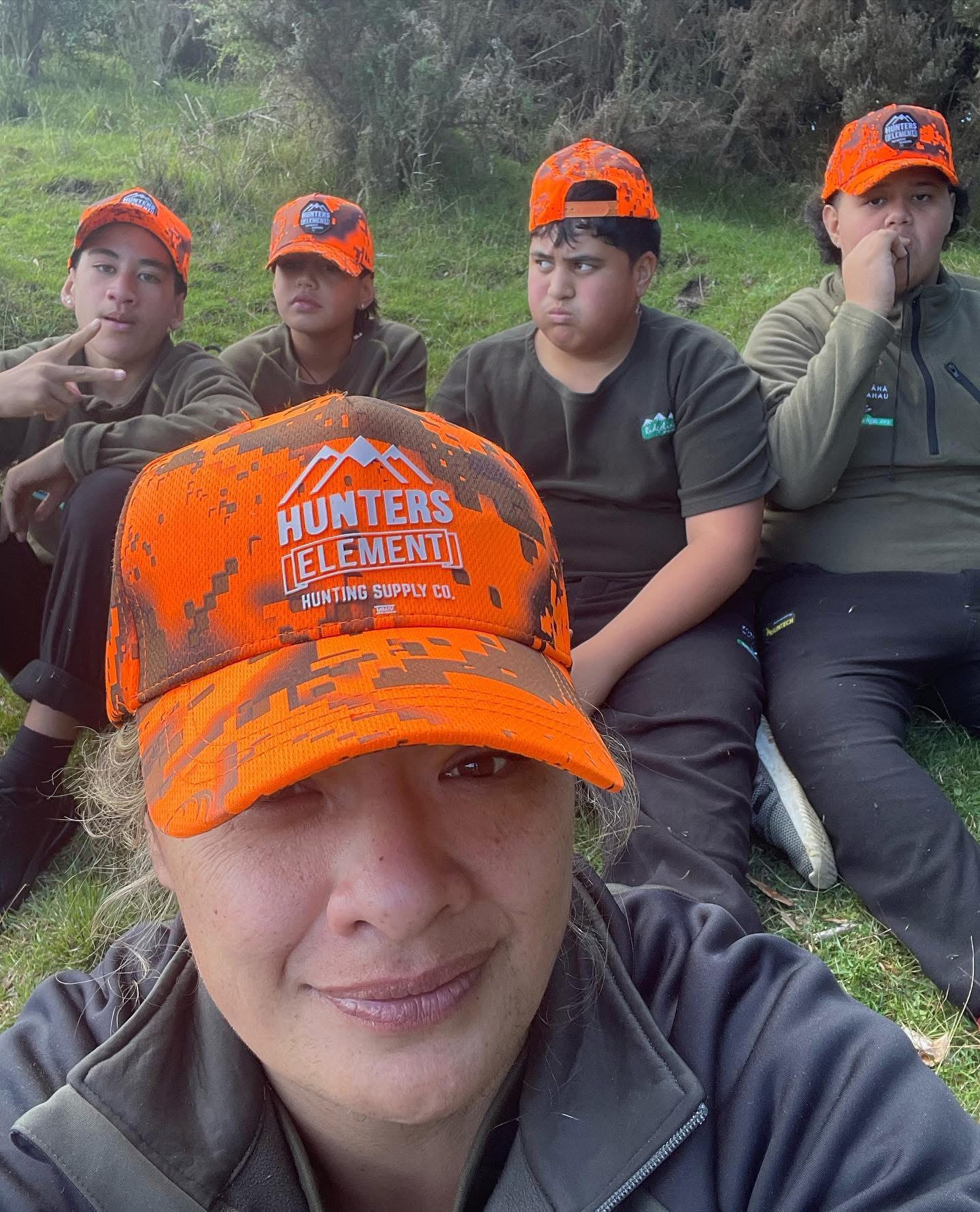
But then the friend that I went down to Cape Kidnappers with, Dallas, I’ve known him for 15 years now, and we both come from the same marae. He has a really different perspective on life than I have ever had. He’s kind of a bit more go with the flow. He likes getting his hands dirty, but together we’ll go and chase an adventure.
It was in our times of adventuring and going down to Cape Kidnappers, or we’re going over to Moutōhora for the manu kuia, or whatever it was, that I started to realise that it wasn’t just the outside. It wasn’t just the outdoors. There were outdoorsy people who liked to hike or whatever it was.
It was everything, and everything is everything. It is the nucleus that makes us up. It’s the interconnected web of everything. And I started to see nature differently and understand all the little bugs have their place and it’s all interconnected. So my place within it is interconnected with them.
It was a change of perspective from him. Then meeting people the TTW crew, Puke Timoti and Phil Lyver and all the taiao nerds. Rawiri (Walsh), he’s a prime example. First night I met Rawiri was in a pub and we ended up talking about rātā and pōhutukawa.
I can’t point to one single person apart from Dal. It’s only that he would challenge my perspective on life and through that would crack it open so that I could see the deep depths of things.
How does that realisation and those experiences shape your understanding of what kaitiakitanga is? What does it look like to you on a day-to-day basis and in the big picture?
In my learning, I’ve learned that kaitiakitanga, it’s a verb, right? You got to do it, and it’s the relationship between yourself and the natural world.
On an everyday basis, it could be as simple as being out there and going for a walk to quell my mind of all the racing thoughts around my book. It can be coming home from that walk and having the description for the colour of the sky that I want in my book because I saw it out there when I was walking.
For me, it’s growing the relationship with the natural world and allowing that to impact on you as well. You don’t just impact on it, but it impacts on you.
It’s a nice Saturday morning. You wake up and you find you have nothing planned for the day, it’s completely open. What do you do that day?
I would probably spend more time on my book at the moment. That’s different from what I would have chosen previously. I would be buried in my laptop, unfortunately.
I’m consumed. It’s all I can think about.
Speaking of that book, you touched on it at the beginning of the interview, but can you tell us more about what you do for work?
I’ve evolved lately. I still have a few clients that I write for, that I put comms together for. But at the moment, my focus, my professional focus, is on writing this book and transforming myself into a novelist rather than just a writer.
Actually, I’m giving myself a bit of grace.
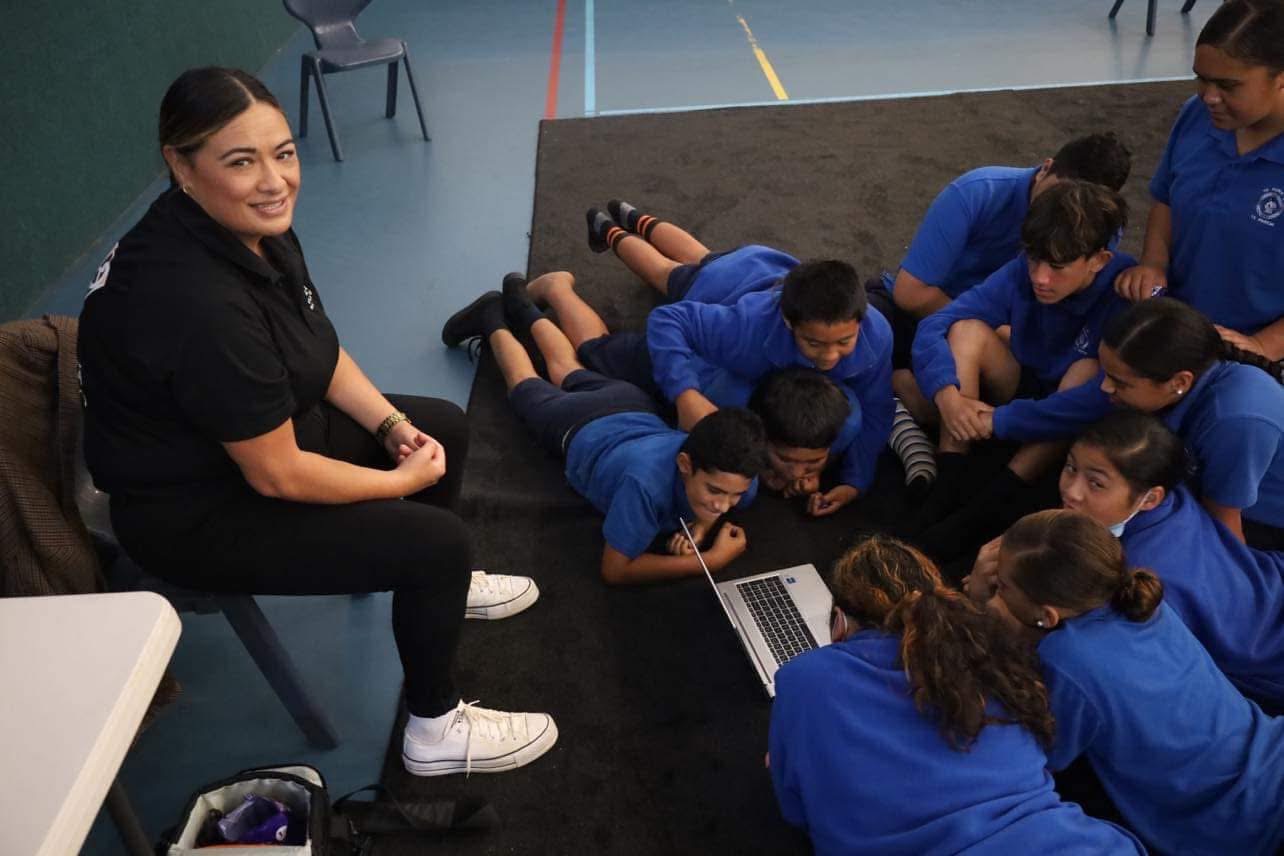
I’ve been doing this for a whole year since I left my last nine-to-five job. I go to the gym, I drop my little boy off at kōhanga at nine o’clock in the morning. I go to the gym, see if there’s some inspiration, and then I come home and I hop on my laptop and I do the jobs that I have to do, like the ones that pay.
Then I pour myself into learning about becoming a novelist, what I can do to take my book to where it needs to be so that it can be published.
What would you say is the difference between a writer and a novelist? What are the key differences between the two?
Only that they have published a novel. That’s the point of change.
Having published a novel gives you a reputation to be able to move on to other projects or to evolve. I will transform my website because I am over being a communication specialist. I’m over writing for other people and not finding joy in the writing myself.
That’s why I do it, because I enjoy it and I’m looking for that again.
I went to a writer’s retreat and I realised that I hadn’t written for 10 years for pure enjoyment. All my creative writing was a lot of poetry, really self-important poetry and things like that. And I hadn’t done that for a really long time. I’d just been writing social media copy or media releases, and the joy wasn’t there anymore.
I don’t know if it’s ever going to be there again for that type of writing. I’m really over the commercial communication space.
That’s why I want to transform myself.
How have you been finding that transformation?
When I went to that writer’s retreat, I met a lady by the name of Nadine Hura.
She’s a poet and a writer, and she spoke about journaling. And prior to that, I had thought journaling was something like an Instagram vibe, social media type crap.
But when she read her work, I could hear the joy in her words. She encouraged us to write every day in a journal, just to stretch your muscles.
After that session, I went back to my room and started writing. And then in the morning I woke up early, as I do, and started writing again.
While I didn’t realise that that was the beginning of the novel, I had the idea, but it wasn’t necessarily in what I was writing on those pages, but it was what it was bringing up. It’s funny how it’s transformed into these other things that combine to make this book.
I’m enjoying the joy.
Tell us about the novel. What’s it about? Does it have a title?
It does have a title. It’s called Miriada: A Love Story and it’s based on a pūrākau here.
An ancestor of mine was living on the shores of Ōhiwa Harbour with her father and her people, and she had married a man from Whakatōhea to be a peacemaking situation. And during the time her and this man, whose name is Kape Tautini, had a baby.
Eventually he sneaks out one night, one early morning and he joins his people down on the spit, and Whakatōhea are going to invade this pā.
The story that’s given to us is that only her dad, an elderly man, and a few others were at the pā at the time, and so they were absolutely going to be overwhelmed. Instead, Miriada, this ancestress, takes the baby and she holds the baby out over the rocks and she yells down to the Whakatōhea. And she says, ‘If you proceed, I will drop this baby on these rocks and his blood will be on your hands forever.’ And so they stop and they don’t invade and the people remain saved.
But what I’ve discovered in my little journey is that the first telling of that story was by a man who used a pseudonym Kotari and his name was Kingsley Jones. Some pākehā guy that wrote about our history and romanticised it so much that I don’t even know what the truth is.
Then because Ngāti Awa had largely lost our culture, we don’t know what the truth is, so we repeat the story. It’s a truth to us now. That’s how I learned about it, but we don’t actually know what the realities of that story are.
So that’s the premise of the novel, exploring the colonisation even of our stories. But it’s split over three timelines. Current day, 1914, which is the World War I period, 1914 through to 1920-ish, and then 1874.
But in 1874, they look back to 1820s and they discuss how the guns came to Ngāti Awa and the colonisation of Ngāti Awa, the raupatu. So it’s historical fiction.
But in the current day story is the journey that I had within the predator free stuff, and the impact of that on me, and my discovery of where my value system lay. I really believed in what we were doing and what Mel (Mark-Shadbolt) talks about. She’s inspirational. And so it pretty much documents in a fictional form the real life version of what happened as a result of that for me, the disillusionment, which is what led to this year and a bit of taking it easy for myself, finding the joy again, putting myself back together.
With that perspective, I look through to the historical features of it, making sense of this fairytale that is our tribal history. But yeah, is it even? Is it reality?
There’s of course a love story in there. There’s a love story of Miriada and Tautini, but Miriada goes on to marry my tīpuna, who was an Englishman who came out from England in the early 1870s. His father had lost their fortune. They were the owners of a castle back in the day, but his father lost his fortune through gambling. There were 11 siblings. My tīpuna was one of the younger ones, so he pretty much had to go and find his own way in life and deal with his own disillusionment. And then he meets Miriada.
So it’s an exploration of myself for sure. But it’s a version of New Zealand history. It talks a lot about partnership. That’s really the love story, partnership, not just within a nation, but between people, between a father and a daughter, between a husband and a wife, within a country.
So hopeful.
Where are things at with the novel now?
Because I met a publisher at that writer’s retreat and she got me to pitch the novel idea, and I hadn’t secured it in my own mind. I kind of knew little bits and pieces, so I stumbled through this. And then she gave me a card and she told me when I’m ready to send her something, to send her something.
So I came home and I wrote the first three chapters. I had no idea how you pitch. So I didn’t know what a synopsis was then. I developed what I thought was a synopsis, which was 65,000 words. That’s not a synopsis. This is meant to be two pages.
But what that did for me was lay out every chapter of my story. And so I am really secure in what it is now. I wasn’t back then.
I sent her stuff that wasn’t a pitch really, but it was my pitch. And she gave me an agreement in principle, but they wanted to read the full manuscript. So over my summer, I wrote 150,000 words to complete this manuscript. It’s really loose.
What I have learned in that space is that 150,000 words for a debut novel, even a multi-timeline novel, is far too much. And so I’ve sent it to them, to the publishers, but I’m currently with my version trying to knock out at least 30,000 words and just tighten everything up.
As I go through it, I can see there’s lots of fat that can be trimmed out. I was giving myself no boundaries and writing to my heart’s content. And there are some places that it is massively overwritten.
I’m in this space now where I’m waiting for the publisher to come back once they’ve read that version of things and to see where we go. And that’s a really hard space to sit in.
That’s why I go to the gym at the moment: what if I’m not good enough? What do I do? What if they don’t want to publish it? What if no one wants to publish it?
I talked through with one of my friends who’s also a writer. She asked me, ‘What happens afterwards? Do you still write?’ I say, ‘Yeah, I still write.’ Well, then you are a writer, so you just keep writing.
I literally overwrite. I’ve always overwritten. Even when I was in Waikato Times Newsroom and they were really disciplined about it, I could write for days, and if they let me, I would fill a whole page. So it’s really, really hard to be critical of my own words. I think every bit that I put in there deserves to be there, but it’s honing this discipline that I could still tell the same story. I just need to be tighter about it.
What’s the experience like actually writing the novel? Like you said, you get up, go to the gym, do what you need to do, but when it comes down to sitting down on your laptop, what’s that experience like?
So because I was having to juggle paid work and writing this novel, what I found myself doing was doing my paid work at my desk here at home and then going to the cafe and sitting there for a couple hours.
Everything else would fall away and I would just be in this world that I was creating. And yeah, it was a blur. I would barely notice people walking in.
I liked the ambience of it and I liked that there was some noise going in, and I’d always have my AirPods in and listening to whatever music, but I liked the movement around me. I liked being amongst people, but I was not engaged with anybody at all.
It’s like painting. You see when people paint landscapes and they just layer and layer and layer and layer, I was doing the same thing.
It’s where I’m really grateful for my time with Te Tira Whakamātaki and Korehāhā Whakahau, because I formed a real love of te taiao and an understanding of what te taiao was to te ao Māori, and the species, being able to describe species and know what their signs were, what time of the year they were turning up or doing whatever they’re doing, the rākau. And it was all the conversations I’ve had over that period of engaging with taiao people, with the taiao nerds, that informed it. And so I would find myself laughing at times in the cafe to myself about a conversation that had influenced a piece of writing that’s out on the page.
What’s the one skill that’s unexpectedly useful for writing? Would that be it? Or what’s the one thing that you have that you weren’t expecting to use while writing this novel, but you do every day?
The wairua component, because the novel discusses this too. And so I’m reluctant to say it because I’ve got this take. My own personal take is, I don’t even want to talk about that stuff because then I’m going to sound crazy. And so I try and avoid that.
But absolutely, the serendipity of life, all the bits, and having faith. That is teaching, particularly at the moment, having to wait, it’s teaching me patience and it’s teaching me the value of patience.
Timing is everything. I didn’t always understand that, but now I do.
It’s that innate component within te ao Māori that we have. We just have faith that even if we’re the most colonised people, we have faith that we’re going to be okay, that our taiao is still going to be there. Having faith, that’s underrated.
Even though the government and the world can feel grim, there are still people out there doing cool stuff.

What keeps you going when the work feels slow or hard, or you’ve got a writer’s block? Is it that faith or is it something else as well?
It is absolutely that faith.
I’m learning to put things down. I’ve been an A-type personality since forever, and I have thought that you could organise your way through anything and you just need to work harder. You just need to keep going. And so that’s been my nature in the past.
But what I’m learning in this is if it’s not flowing, it’s not that day. Just put it down and move. Go do something else, find a bit of joy, give yourself space and things will click into place when it’s time. And yeah, I’ve never been that person.
You could be doing other things that are far more productive for yourself than trying to stress over getting that one thing done.
What role do you think storytelling, journalism and communication should play in environmental protection?
I think it has an integral role in environmental protection.
I still write for Predator Free Trust stories, and that’s the big challenge in that space, in the predator free space. It’s getting everyday people to understand not just the vision, because I think we all get that. It’s how it happens and what their role is in it.
So if you’re not telling those stories and people don’t understand, you’re never going to build a movement. And so you’re never going to build change.
It is the thing that changes whatever situation you’re in, is the storytelling, giving people hope.
What are the tips and tricks you can give TTW audience on how you should be telling stories about te taiao?
My personal opinion is you have to be authentic.
We’ve had 10, 15 years worth of curated information being pushed at us through the internet. Prior to that, the generations before us had the 6pm news and it was all curated.
I think now, with the world the way it is and with people able to access information the way they can, you can’t get people to believe something that you don’t believe in. So I think first and foremost, you need to be authentic.
I think that’s what works with communications. He’s authentically who he is. He’s not putting on a role. He’s just being who he is and then telling the stories that inspire him and inspire that passion in him. That’s what he wants to tell people. So I think that’s why it works so well.
I think organisations like the Department of Conservation, when they try to put out comms about the environment, sometimes it works a little bit. But the reason it’s not greatly taken on board is because it’s a machine making the communications.
It’s not people talking to people.
What’s your opinion in the role of AI in that kind of storytelling?
AI is a tool.
AI is a tool, but it’s never going to replace human connection because when you have a powerful comms campaign, it’s because you’ve connected with the people that you want to connect with, your audience.
AI can’t do that. AI can feed you back whatever you want it. It’ll tell you what you want, but it won’t connect with you. It won’t understand the emotions.
It hasn’t written my novel, but it has helped. Can you give me some information on this? It makes research a lot easier.
What practical writing tips do you have for people writing creatively or writing for their jobs? What have you found works for yourself?
Just write.
The reason why I say that is write it out, whatever it is. It doesn’t need to be perfect. Just get it out, see what it is, put it on the page, and give yourself space to write where you’re not being critical of it, where you are just letting it flow.
This is what I learned in the journaling thing. Just let it out and then go back through with a critical eye on certain things and what you want to achieve in it. But if you’re not writing, you’re not doing anything. You’re stuck with a blank page.
As a writer, when I was a journalist, I had this habit of not being able to write the story unless I had the intro. And so I would get stuck on that for ages.
When you’re writing, you start work at 7am in the morning and your first deadline’s half past eight. You’ve got to crank some stuff out. But I would always get stuck, and that was with me my whole journalism career.
It’s only now that I can say, just write it. The first scene I wrote is not the first scene of my novel, but it is in there, or a version of it that is definitely in there.
Nothing has to be perfect on the first go. And when you learn to allow yourself that, there’s a great deal of forgiveness and it takes away the angst of putting those first words on the page and getting it right. And it helps with writer’s block.
Write something. Even if it has nothing to do with what you’re meant to write. Even if it’s that thought in the back of your head that won’t get out, but it’s still got nothing to do with what you’re trying to write. Just put it on the page and see where it goes.
Where do you think the biggest opportunity is for Māori-led environmental work right now in our current political climate, in our chaotic world?
I’ve been thinking a lot about water and the protection of it.
I think Māori can offer any number of contributions to te taiao or to conservation and preservation of the environment, but the water situation is dire in New Zealand.
I think that’s because we’ve been viewing it through a lens of a very systemised view, a very academic systemised view, and that the Māori way of thinking could absolutely lend itself to a different way of taking on those situations.
Given the flooding and the climate change components of our world at the moment, I think water would be a nice place for Māori to focus.
I know we’ve had through MfE and things, and I think it was a great start, but it got lost in the politics, and I think we need to put it back on the table for sure, maybe a different version of it.
I think about these things because here in Whakatāne, we’ve got a new flood wall going in along where I live and things. And the council are doing what they’re required to do and reaching out for consultation, but I fundamentally disagree with what they’re doing and I just can’t find anything in there that I can back.
It makes me feel real disillusioned and lost, and how do we change this thinking?

What would be the obstacles or the barriers that you would have to remove for that ideal situation to happen?
All the barriers that exist within conservation and environmental protection anyway, the colonised thinking, the thinking from the system that it’s right and it has all the answers. That’s absolutely what’s blocking it here.
We’ve got regional council and district council making their decisions, and they’ve made their decisions before they even come and speak to tangata whenua. So it’s making that change, which is the same change that we need to make as a country when it comes to predator free work, to any of it.
We are so colonised as a country that we can’t even see an alternative perspective. We think there’s only one way collectively, but there’s so many ways we could do this, right?
Would you extend that to conservation as well as a concept, as a system?
Absolutely. It’s what made me disillusioned with the system, or with trying to participate in the system, is that the idea of conservation is pretty fucked to begin with.
The idea of conservation is to keep it pristine and remove it from people, which is removing the relationship, which is removing the kaitiakitanga part. So I just don’t get it.
If you only think about conservation in terms of saving nature, then yeah. But if you really think about what conservation is, that’s not what you’re doing. Right.
Absolutely. It needs to be torn down and restarted.
What is giving you hope right now?
The next generations, for sure.
So I have a 19-year-old and I have a four-year-old, so they’re probably in two different generations. But between my parents’ generation and myself, there’s been some evolvement. Between myself and my 19-year-old, there’s been a whole lot of evolving, and between him and the four-year-old is more to come.
What I’m learning about in my place in this life is, well, particularly in te ao Māori, you come to power when you’re a kaumātua, really, and that’s when you get your time to do what you want to do. Up until that point, you have to learn all the things you need to learn to be a good kaumātua.
What I can see in the next generations is that they don’t carry perhaps the same mamae that the previous generations have. They’re also digital natives, so they’re not scared of what’s coming. They adopt it really quickly.
We can have all these conversations about AI, and we need those conversations, but I don’t think our kids are going to be as confused as we are about the position of AI and how you can’t let it create for humankind, how you must use it as a tool rather than as a replacement.
I think the way they view life, whether that’s the optimism of youth or because they’re evolving, gives me hope. The generations are evolving, and one day we’re going to get to a point where we are enlightened. We’re a long way off, obviously, but one day.
I think that’s what our tīpuna understood too, how they could get to a point where they could leave the islands and search for new lands, because they’d finally evolved to a point where they could do that.
