
Ngā Tangata o te Marama | Marcus-Rongowhitiao Shadbolt
In this profile of Ngā Tangata o te Marama, we kōrero with Marcus Rongowhitiao-Shadbolt, whose work with Te Tira Whakamātaki is focused on seed banking, seed collection, training, ethics, protocols, and the practical questions of how Aotearoa prepares for a changing world.
This is a conversation about curiosity, science, fatherhood, future-making, and the quiet power of keeping something alive before it is urgently needed.
Marcus’s pathway moves through biology, philosophy, applied science, forestry science, Predator Free 2050, and now the growing seed and biobanking kaupapa at TTW. His work asks what it means to hold genetic diversity safely, how communities can maintain mana over their species and seed collections, and why resilience needs both local seed banks and wider backup systems.
Want to listen instead? The full audio is available to paid TTW members. Log in or explore membership options to listen.

Who are you, where are you from, and how would you describe yourself to someone you have never met?
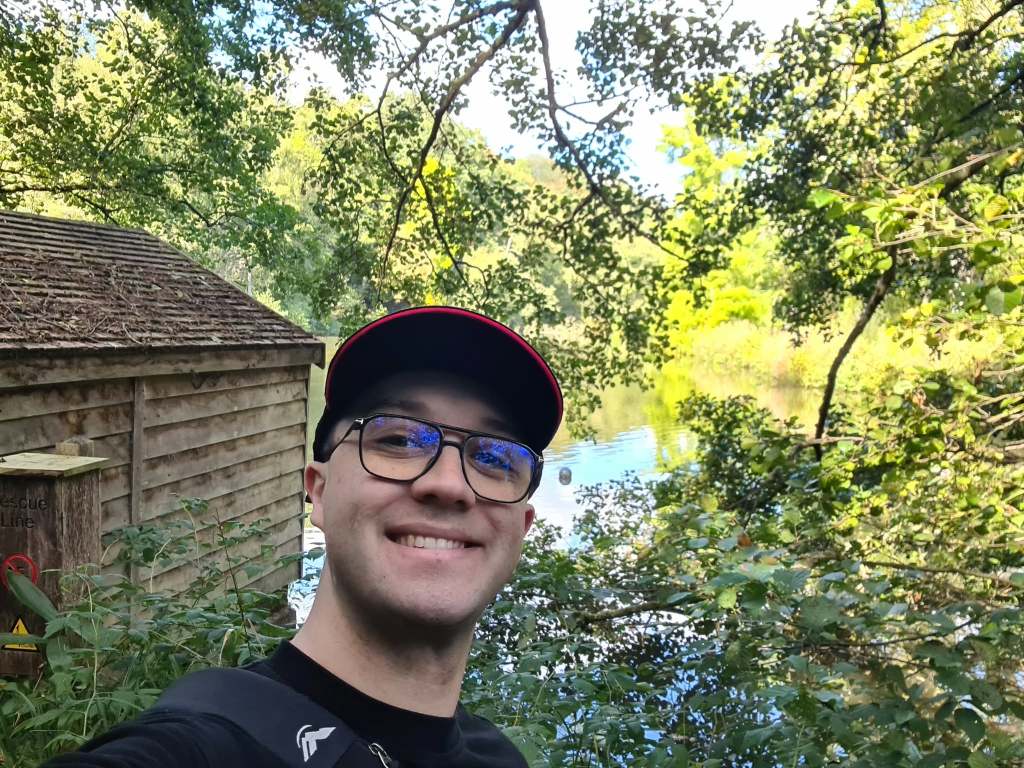
Well, I am a father. I have two babies, Kaia and Taiwera. Taiwera, who is here ambushing the call and interview today. I whakapapa to Ngāti Kahungunu ki Wairarapa, Ngāti Porou, Te Arawa, Te Ātiawa. I think that is it for that side. And then on my dad’s side, I whakapapa to Ngāi Tahu, specifically, Te Rūnanga o Moeraki and Te Taumutu. I live in Rangiora in North Canterbury. I have done most of my study in the Canterbury area as well. So a biology and Philosophy degree at the University of Canterbury, post graduate diploma in Applied Science at Lincoln University, and then a Masters of Forestry Science, looking at seed banking, both from a practical and ethical, appropriateness, and legal perspective at Canterbury University as well. I have also, for the last few years, on and off, worked for Te Tira Whakamātaki since i think 2020.
I think I started mid year 2020 during the COVID lockdowns and have been here ever since. Even if I’ve gone up or down in hours, or have gone off and done other things back and forth. In that time, I have done a lot of work for Predator Free 2050, the government programme, sitting on advisory groups, planning groups, everything from the admin side of organising conferences through to science advisory.
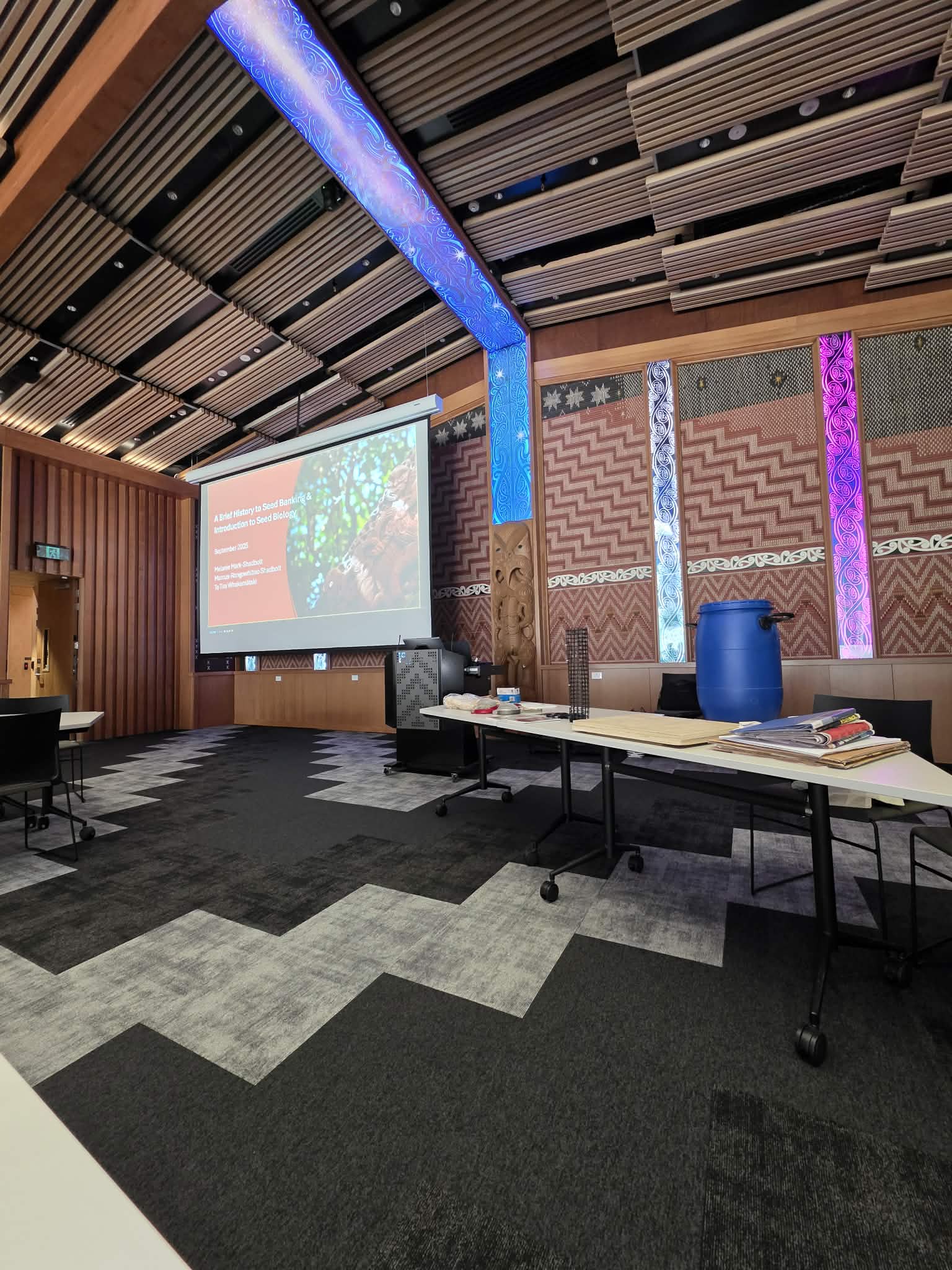
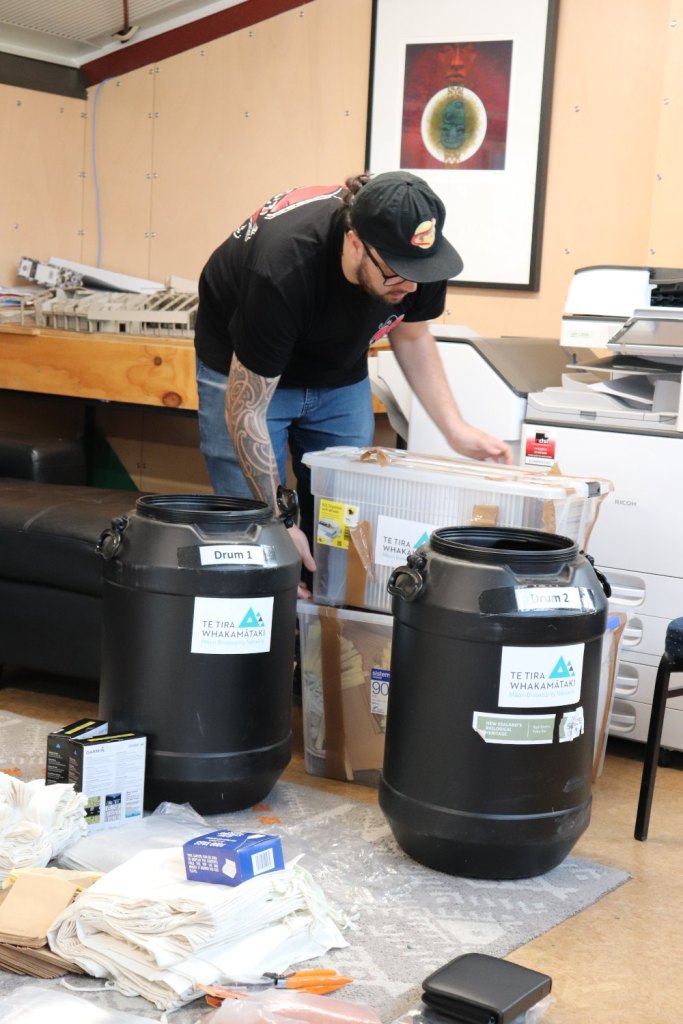
Now, my work is more focused on seed banking. At the moment that looks like lots of trainings around the country, teaching people how to do seed collecting and banking and what it means and how it looks globally. It has also been a lot of writing, ethical documents, legal documents, recommendations, protocols, all those cool things.

I have a few rapid fire questions so people can get to know you better. Let’s start with beach, bush or mountain?
Ooh. Bush.
I like the water at the beach, but I don’t really like the sand and the last time I was at the beach, the kids just ate all the sand. And it is fine, but you do then have to kind of pour water all over them to wash the sand out.
I like the mountains, but they’re kind of the opposite of the bush really. It’s so sparse. It’s nice when you are up there and you can look around. There’s really cool plants that I like up there, but I much prefer the bush. Plants everywhere, understory, canopy, everything in between.
Favourite movie of all time?
Well, I genuinely like pretty terrible movies, so it can’t be a very good movie. This the hardest question you could have possibly asked!
The problem is that the one that is coming to mind first is the one that jokingly for years was my favourite movie, which is the speed racer live action. No I would say Pokemon 2000.
What is your least favourite chore?
I don’t know if it’s really a chore as such, but probably the one thing that happens in our household that I just cannot do for the life of me is baking. I just cannot bake. I’ll cook anything. I’ll make all my preserves and everything, but I can’t bake to save myself.
Go to weapon in the zombie apocalypse?
Well, I’m quite partial to the barbed wire baseball bat. Don’t have to re-charge it. Don’t have to sharpen it.
Biggest Pet Peeve?
I think my biggest pet peeve might be someone eating with their mouth open because I used to do that all the time and I trained myself to stop doing it. So now I notice when other people do.
What would your go-to karaoke song be?
Kiss from a Rose by Seal.
Harry Potter or Lord of the Rings?
Lord of the Rings. It’s just much better world building.
What’s your go-to hot take?
I have a lot of hot takes. Maybe something like, I don’t think money should exist.
I always try to explain it to people and then they either just get confused or annoyed or just agree off the bat and then the conversation ends there. I would say to anybody who wants to know how I imagine it looks like, the best description I’ve ever seen of it is in the TV show, The Orville.
It’s like a sci-fi comedy sort of satire show loosely based on Star Trek. But they have a bit in it where they talk about how when they invented this technology that allowed them to just print food and water whenever they wanted using air. They suddenly had no need for a global economy because everybody could just produce whatever they needed instantly. And so money fell over overnight. But what people actually had was a desire to prove themselves. When I think of a desire to prove themselves and rank themselves through an economy of what they describe as prestige instead of money, I just think of the original Māori economy, economy of māna or prestige where we have resources, and we use them as we need them, where we need them. Food and water is a part of those resources and we use them where and when we need them, we distribute them to people, we feed people, give them water, give them shelter.
That whole desire of, well I’ve done better, I deserve more, just comes from that innate feeling of knowing you did well. And that becomes your driving force. I think their example is whether you’re the greatest scientist, explorer or you’re the best chef in the world, it doesn’t matter what that thing is. And so my hot take is that I think the world would be better without money.
What would you do on a Saturday where you had nothing to do?
Well, I guess there’s the children’s answer and there’s the no children’s answer.
With the children, I wake up at home, it’s just me and the kids. I roll out of bed at 7.30am as they’ve woken me up. We have a nice little breakfast, coffee. Then by about 10.00am, probably go to the park, run around for a couple of hours, come home, they have naps. Then we have something fun for lunch. Maybe go out somewhere, get another coffee. Then hang out at home in the afternoon, watch a movie. And then in an ideal world, put them to bed early, 7.00pm and then I stay up and play video games for three hours.
If I don’t have the kids around, I would probably sleep in a little bit longer. Then maybe go out for brunch or something with my partner, come home, hang out, play more video games earlier in the day for the rest of the afternoon.
What place in this world has shaped you most as a person?
Well, I can give you the answer that my parents tell me they think I came back and was a different person. When I was 17 I think. I spent a month in India and in that month I spent two weeks in the Kolkata slums working in the Mother Theresa homes there. So I was in a disabled children’s orphanage and we’d get there pretty early in the morning. We’d have 4.30am masses, be at work shortly after that, finish up about 2.00pm in the afternoon. The nuns then just stick around and put the kids to bed. But in that time you’ve done all their washing. Some days you’d do physical therapy with them, fed them lunch, all those sorts of things. And then the rest of the time we spent there, we just kind of toured around India. We had a pretty memorable train ride, which from memory was 38 hours long.
The train had no windows. There was no separation between standing and the seats or the beds. So we had these little bed cubbies that were sort of three beds high, but then the train would just randomly stop usually to let a bunch of cows go past over the tracks and then there’d be thousands of people waiting on the side of the tracks who would just get on the train and just start standing in your sleeping area and everything. And the first three times it happened, slightly alarming. Then you just kind of realise that it’s just what happens. The only time we probably got alarmed on the train was when a friend of mine was given three babies and then the mother disappeared and came back an hour later.
I don’t know if at the time I necessarily thought I was changing that much or my view on the world was changing particularly. I’d already been to China at this point when I was 14 on a language scholarship and spent a little bit of time there and saw some not so nice things, nothing particularly dramatic. And so I think a lot of the stuff in India didn’t surprise me as much as I had thought it might. My parents often talk about how they thought I came back a bit more grown up than when I left. And I think it did definitely leave the impression of, wow, we do some cool stuff in New Zealand. Okay. My life could be significantly worse. I don’t know if it made me completely go from, oh my god, every piece of food and drop of water I have is a miracle and everything I have in life in amazing.
But I did certainly have a bit of a “Oh, it could be a lot worse.” I could be in this leprosy colony that I’ve just gone to visit, or I could be disabled and abandoned by my family and left to be looked after by a whole bunch of nuns.
That’s probably been the most impactful.
How does that play out today for you in your everyday life and in your big picture life as well?
Well, I don’t think it plays a major role in my day to day life or thinking or anything. And I don’t want to pretend like it was some amazing, I went to the other side of the world and look at the change I made because I really don’t think that my two weeks over there made a particularly huge impact on the world or the state of anyone’s life. But I think when I reflect on the state of the world I can never not imagine anymore what it’s like to live in a really poor place, a poor, dangerous, dirty place. So when I do see news stories of riot here or war breaking out on this border or examples of people in the likes of refugee camps or anything, I can directly picture that. I can associate it to a smell, a look, a vibe, and all those things. And so I think it does just give me that reference point for when I see bad things happen, which I think informs in a large part my views on social justice and ethics and the like.
What is your first memory from being outside?
My earliest ones would probably be around North Canterbury. I was born and raised in North Canterbury. I distinctly remember spending time, and I think it was one of the common places we’d go for a walk, around two particular parks in North Canterbury. There’s Matawai Park in Rangiora, and that’s a small restoration planting forest, very nice place. My parents had their wedding photos there, and I vividly remember the look and feel of that place. And the other one is the Kaiapoi wetlands. There’s several lakes through Kaiapoi. There’s some nice walks through there. I remember those. I remember Mount Thomas, which is nearby my place as well. I’ve walked up there a few times. A little bit later, I have a lot of memories of mountain biking. My brother, dad and I used to go mountain biking quite a lot, particularly around Hanmer Springs, and McLean’s Island.
And then when I was a little bit older, most of my outdoor memories come from my grandfather and the Wairarapa, and staying at his farm over holiday breaks quite a lot with my brother.
What would you say is your favourite outdoor memory?
I did really enjoy a lot of the times that my brother and I spent at my granddad’s place. He has a semi-decent plot of native bush that drops off the back of his property, which is on the top of a hill. And we would quite often just run off down there and disappear for a couple of hours and move logs around and make seats and huts and all sorts of things with whatever we could find. I do remember when my brother and I were quite young, going paua hunting with my uncles, and we went out around the shoreline and I got a strap knife for my leg, which I thought was the coolest thing ever, and pry them off the rocks. And then when we took them back home, everybody else would come over, my uncle’s partners and cousins and everyone, and everyone had this conveyor belt going, grinding the paua, mixing the paua, flattening it into patties, and then someone frying them at the other end. And so I vividly remember that as well as an early outdoors memory. So those would be my two probably favourite ones that I think of in terms of really enjoying it.
I think the paua one, it stands out quite strongly because it was the first time I remember catching or gathering my own food and then preparing it and eating it all on the same day. And I really like eating.
Then I think the one at my granddad’s place was that, I always remember, and my mum will talk about it, that my brother and I were pretty much allowed to do whatever we wanted when we were there, but there’s not that much to do generally inside on a farm. So you’re forced to go outside and then you go, “Okay, well, what do we do?” “Okay, well, we just go run through the chickens and go feed the sheep for no reason, or let’s go run around in the bush on the back of the hill.” And so we just were doing whatever we wanted all the time, and that was fun, and just making stuff up and figuring out what we were doing.
How do you think that shaped what you’re doing today?
If I was to think about how it linked into my interests and work now, I would say that it actually kind of comes from a slightly different angle as well. At high school, I always liked science and I actually probably in high school liked physics and chemistry more, I would say. And I definitely did a lot of physics papers and really enjoyed physics, but when it came time to go to university, I kind of went, “well, I think I want to do a science. What science do I genuinely think is the most interesting to me?” And when I started to reflect on my own values at that point and what I was interested in and the types of research I would like to do one day, if I continue down the science path, it was the biology that was really obvious and more specifically it was ecology.
It was ecosystem sciences that I really related to and thought was interesting. So I wound up kind of running off on this tangent back towards biology, which I’d almost left behind to a degree at that point. And I think that was informed by a lot of my memories. It was when I started to think about what was important to me, where would I like to be doing research? I thought, “Well, I don’t want to do astronomy and be sitting in an observatory all the time. And I don’t want to be sitting in a lab running maths equations all the time. I wanted to be able to go outside.” And that became really obvious when I got to the end of my first year and did my first summer scholarship programme and actually got to just go outside for the whole summer, catch grass hoppers, catch many other bugs on the side of the road and take them back for experiments and the like. That was really fun. I like science to be useful and to me, useful is environmental a lot of the time.
Was there a person that made you pay attention to the environment?
Well, in the first place, it would have been my family. My mum now very strongly works in the environmental space, but that’s a more recent thing. When I was younger, she didn’t so much.
My dad would always have a really strong focus on getting us to go outside and do things. He’s the sort of person who says, “You have to play a sport or do some sort of physical activity because you just have to.” And he’s right. That it is good to be outside. It is good for you. It is good for your brain and everything else. I think the point where I really started to genuinely care about environmental outcomes, the health and state of the environment would have probably been through my second year summer scholarship that I did through the Bio Protection Agency when I was at University. And that was with Dr. Jamie Ataria and another student who we were working with at the time, Jodanne, and we went up to Te Urewera forest, to Tūhoe, met a Kaumatua there, the late Jim Tahae Doherty. The classic story was it takes two hours to walk a hundred metres down his property because that’s how much kōrerō he has about all the plants and everything that you walk past. And I think it was when we walked around with him the first day and he broke down the names of every single plant we walked past and why it was important and how it connected to a different one that I really had that ‘holy shit moment’ and went “I knew this, obviously, and if I thought about it for more than 5 seconds by myself, I could have put the pieces together.” But actually being here and talking and hanging out for a few days opened my eyes to it a lot more and connected all these dots that had not really connected themselves yet by that point.
What keeps you interested and motivated to keep on working in this field?
Just that innate scientific curiosity, wanting to ask questions and know why things happen or why things interact in the ways that they do. I also think that the world, to be a bit gloom and doom, is changing in huge ways. I don’t have any particular faith in our ability to slow or stop climate change to any real extent. I don’t think we should give up on trying to make efforts to do so, but I don’t expect that we as a people or a planet will ever do enough. And so I think we’re destined to have the world change in pretty huge ways. And if we can bring as many other species, methods, techniques, foods, whatever, along with us for the ride, then that’s good. I think that’s why I lend myself towards the seed banking interest because it’s that kind of buffer in the changing world, the idea that if we do need something slightly different we can access it or we have it.
We don’t know what we’re going into. There’s a lot of research that predicts and suggests what the world might look like, but we don’t really know what it’s going to look like. We can’t see the future and we can’t see exactly what’s going to happen.
So I think a lot of my investment in it, is that idea of not so much really protection for future generations. I hear that a whole lot, that we need to protect things for the generations to come. I don’t think we need to protect things. The world’s always changing and it’s changed every generation and no generation ever has the same lived experience as the next one, never has the same species around, the same food around. It’s always changing, but making sure that there is a future is important, making sure that there is something for them to eat. There is a bush to go to. There is something around.
Can you tell us a little bit more about what seed banking means to you, and what it looks like in Aotearoa right now?
Seed banking is the idea of conservation outside the environment, this is effectively what it has historically been. Well, one half of seed banking is conservation outside of the environment. The other half of it is agricultural safeguarding.
So generally, the work I’ve done in seed banking has come from the conservation outside of the environment angle. We call it ex-situ and that is about saying, Well, we’ve had this thing called myrtle rust arrive as a not so hypothetical hypothetical. We are aware that it is going to cause local extinction around the country. We need to go collect some seeds so that when we eventually deal with it in whatever way we deal with it, or it is dealt with or it disappears, that we still have that genetic diversity saved somewhere so that we can replenish it. If you don’t replenish genetic diversity, you get, as an example, something like the takahe, a bird that was down to four individual members. Every single takahe that exists now is going to be descended from those four individuals and that genetic pool is a hell of a lot smaller than a species that you say have a hundred individuals for at the beginning and it’s going to suffer from all sorts of inbreeding related problems there.
Now, if we had stored in a bank somewhere, some two, three hundred year old takahe, genetics, sperm, eggs, whatever, that had different genetics to it, we could effectively use that in an IVF process and create, this is pretty loose science at this point, but there are a couple examples of it being done. It was done with Blackfoot ferrets where you can use an IVF process and reintroduce old genetics into a family. And you can do the same with seeds. If you have old seeds stored, then you can reintroduce that much more simply actually than an IVF into a living animal back into an environment and replenish that genetic diversity. So from that perspective, I see seed banking as a really good way to preserve genetic diversity so that if we do have ice caps melt, sea levels rise, temperatures increase, disease increase, rusts increase, and then we realise that actually the species, the genetics that have been dominant in an environment thus far are not the best genetics anymore for the changing situations. We can go find what those best genetic are and top it up. Now that applies to agricultural food crops as well.
And seed banks for agriculture are, if anything, more so homogenised. They are storing seeds for the next planting season. Take your carrot crops, all those seeds, keep them for the next season. But they are effectively identical because we’ve found the perfect carrot crop that grows the straightest, the quickest, the biggest. But that doesn’t mean it’s the most frost resistant. That doesn’t mean it’s the most drought resistant or the best at being submerged in water for a long period of time without dying. It doesn’t necessarily mean that it is the best at all these other things. And so if we do have changing conditions, it might not matter how big or straight it grows because it just gets killed by the new conditions. And a lot of seedbanks, particularly in New Zealand, don’t store the relatives of those crop species. They’re just storing enough seed for following seasons and cycles.
But that’s where the majority of seed banking is done in Aotearoa and is in that agricultural space. And even there, it’s not diversified plant conservation. The conservation system, there is a couple very small seed banks around the country, but they’re nothing major or significant in any real way.

What would be Te Tira Whakamātaki’s vision around seed banking? Is it any different from what’s currently going on and what does that look like?
Well, our vision focuses most strongly on conservation methods. So while we’re absolutely interested in kai and food crops, that’s not where our expertise or vision lies at the moment. Saying that many of the species that would otherwise be considered conservation species, we can eat anyway and would eat anyway if we had to. Kahikatea, is very strongly considered a conservation species that is not farmed anywhere in the country that I’m aware of, but we can absolutely eat those berries. And that applies for so many other plants as well. Mamaku would be a conservation plant, but we can absolutely eat that. Karamu is a conservation plant, but we can absolutely eat and grind that up into coffee. So many of these species I will preface by saying, while they’re considered conservation, we would focus on them from a conservation angle. They’re absolutely edible and they absolutely have a potential as food sources at some point if they needed to be. But that aside, the TTW vision would be to, as we talk about and have videos about. That idea of small regional seed banks all across the country, where individual communities, hapu, whatever groups are appropriate, hapu whanau groups, iwi are able to maintain their mana, their right to their species and the products of those species with the acknowledgement that a seed banking robust system requires backups.
So we would like to be able to run a major seed facility somewhere in the country, maybe one, maybe two, where we can handle research, we can handle backup storage. By backup storage, for example on banks peninsula, they have a seed bank where they are storing their species and then a tsunami comes in, rolls through, flattens it, all the seeds washed out to the ocean. When they want to re-establish, they can come to our main hub seed bank and we can replenish their supply with the backups that we held of their species so that not everything is lost. And they can then replant that, grow the plants, harvest seeds of it again, vice versa as well. If we have, and the main seed bank the backups of everyone, then that means that everyone already has the originals. And if we had a major event happen at our big research seed bank that might also be housing, for example, more advanced storage techniques like cryogenics and the like, then if we have a major disaster come through like an earthquake, or hit by lightning or whatever, then we can also be replenished by all the other banks that we would have a relationship with around the country.
And so by doing that, TTW’s mission in that regard is to create a robust seed saving system where we are resilient to changes, not only in what we need to supply in the genetics of our plants, but also resilient to disasters that might destroy infrastructure. And we want to do that so that we have a robust seed stock for the changing future.
What about seed banking right now that you’re doing is exciting to you?
Lots of people don’t know what seed banking is. Well, I say that quite often, but what I actually mean is most people don’t realise they know what seed banking is already. It’s a pretty basic concept really, but I quite like that about it. It’s a science that is a complex as you want it to be. It can be as simple as drying seeds in the sun, putting them in a jar and sticking them in a hole in the ground. It can be that simple. And then it can be as advanced as liquid nitrogen, cryofreezing stored in an underground vault on the other side of the planet, built into the permafrost. So it can be both extremes of science. It can be a backyard gardener, and it can be 10 Scientists, all trying to figure out the best methods for something. And I like that. I like that there’s a ground floor entry and it only goes up. And so when I talk to a lot of people, they go, “Oh, yeah, well, I’ve got a 200 year jar of onion seeds in my garage that my great grandfather left me and I don’t know what to do with them.” Or they say, “I’ve been doing that for years, or I don’t even use the seeds, I used the tubers.” You hear all sorts of stories all the time, but the term seed banking just hasn’t proliferated itself around Aotearoa very much lately. I also like that the place where the name comes from is out of Russia in the early 1900s around World War 1, and all of the issues that they were trying to address are the exact same issues now.
So at the heart of seed banking, the science comes from trying to store resilient plants for a changing world. Their changing world was just famine, cultural revolutions and world wars, whereas our changing world now is climate change and wars and famines and political uprising. So many not so dissimilar really.
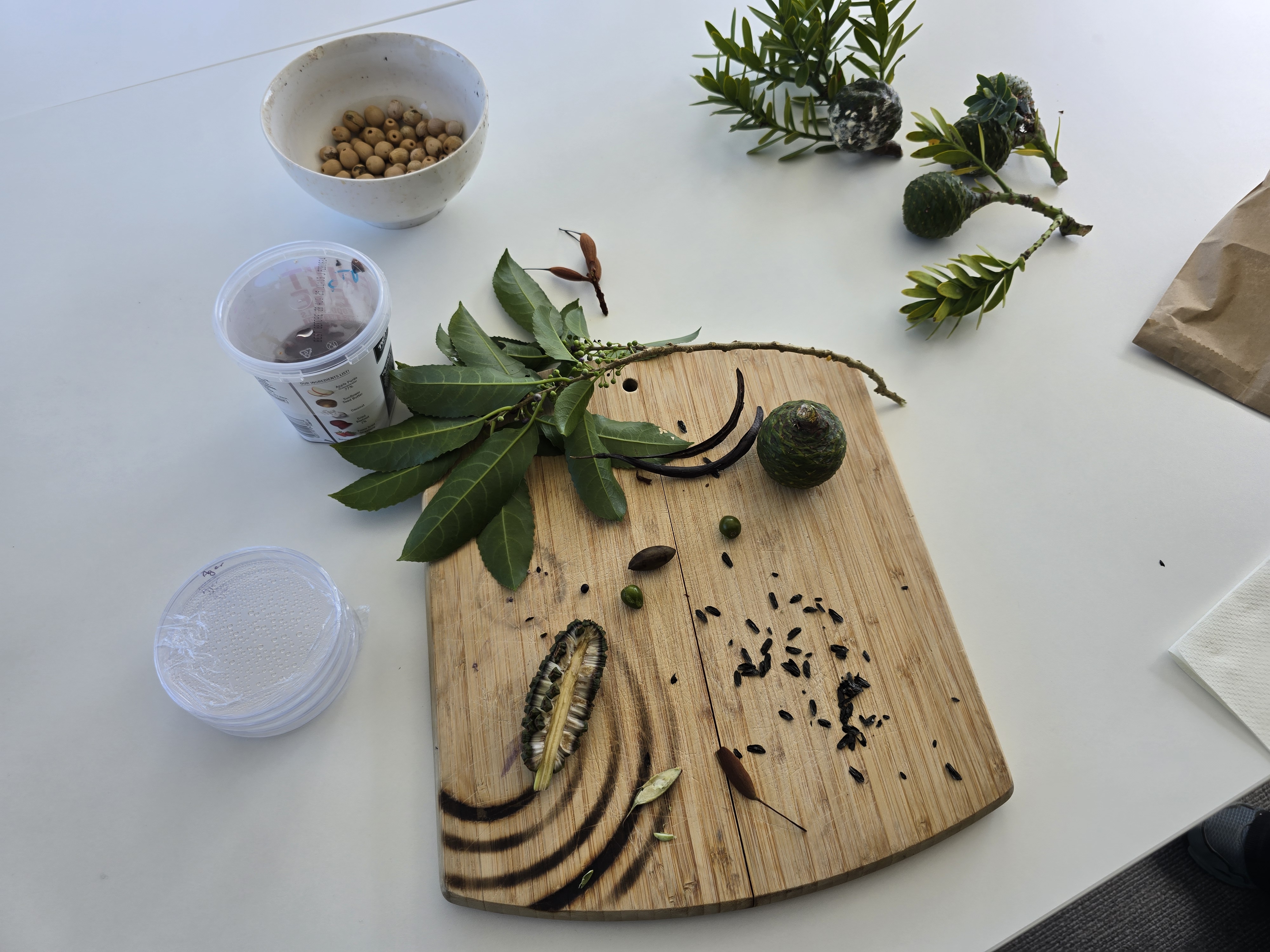
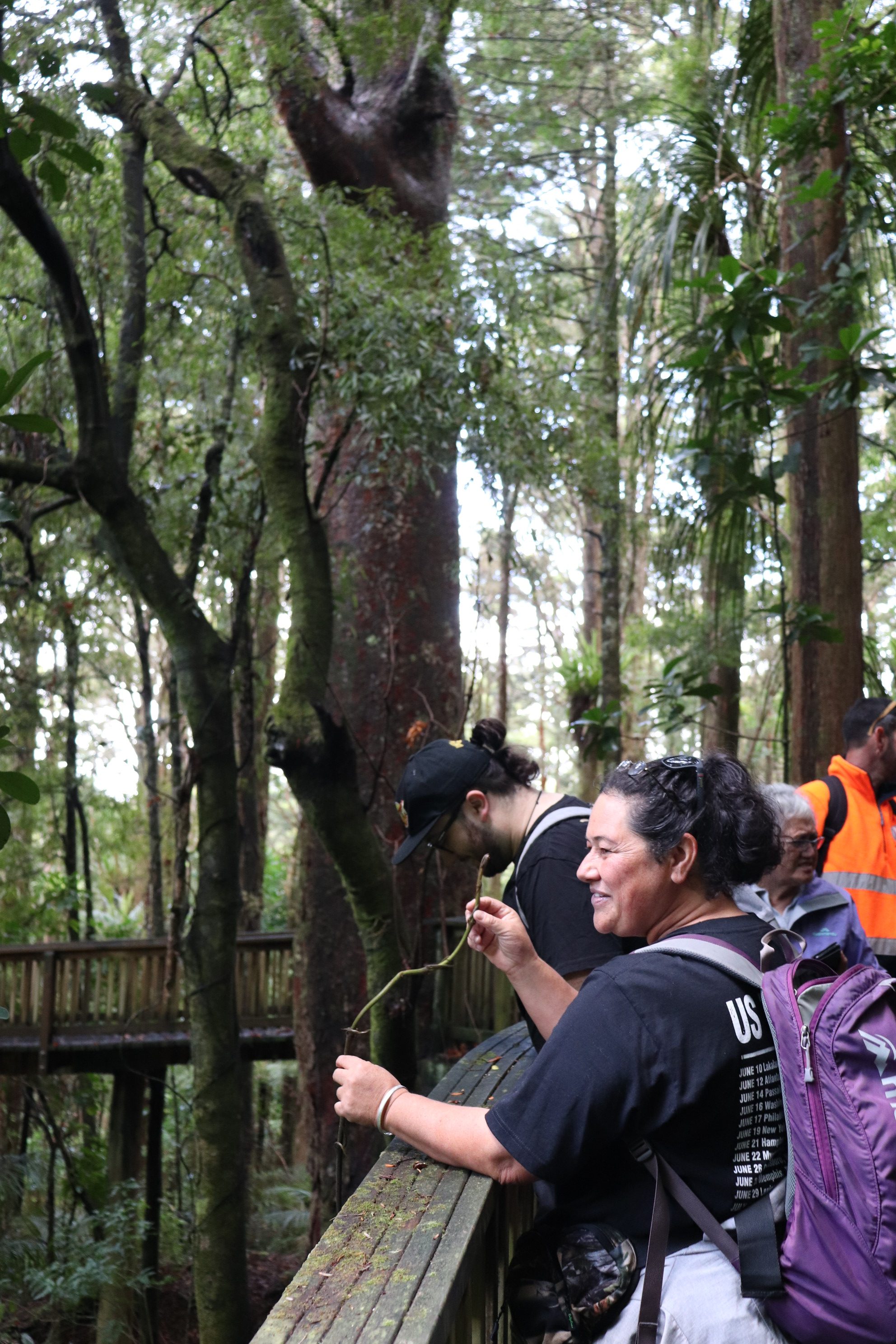
And so I feel like it resonates with the times, it resonates with people. People are aware that the world is changing. Some people might not believe that climate change is happening, but they believe that the world is changing. And so that fundamental crossroads of it all is “Well, what are we going to eat? What are we going to do?” And I think that’s where the interest around it is, and that’s what I enjoy is the conversations with people. And more so to your question around what we are doing at the moment that I’m really enjoying is our trainings. So going out into communities, talking to people at their homes, going into their bush, seeing what they have, and in some cases, telling them what they have because they don’t even know. I recently did one with another one of our colleagues where we had a couple members of a local rongoā group and of course spent a lot of their time making rongoā solutions and the like, but didn’t even really know how to identify the plants a lot of the time, couldn’t tell the different between adult and juvenile forms, could maybe only identify them if they were fruiting, not if they weren’t or couldn’t tell what they were based on the fruit and all sorts of things.
And so being able to share that information is really cool, but it can also be a little bit confronting because my bush, my rakau are not the same as theirs. There’s been lots of intermixing between plants and people over the last 200 years, but it’s still their bush and rakau. And so it can be quite a confronting experience to go into somebody else’s place and tell them what they don’t know about their own things. But done right, which I felt like we did, that can also be really rewarding because you’re in a way bringing back knowledge that may have been lost to a group or a person.
What would you say to backyard gardeners, the mums and pops, uncles and aunties who want to get started in seed banking, but don’t really know what to do? What advice would you have for them?
Well, soon we’ll have some online training videos where they can learn a little bit more online if they want to.
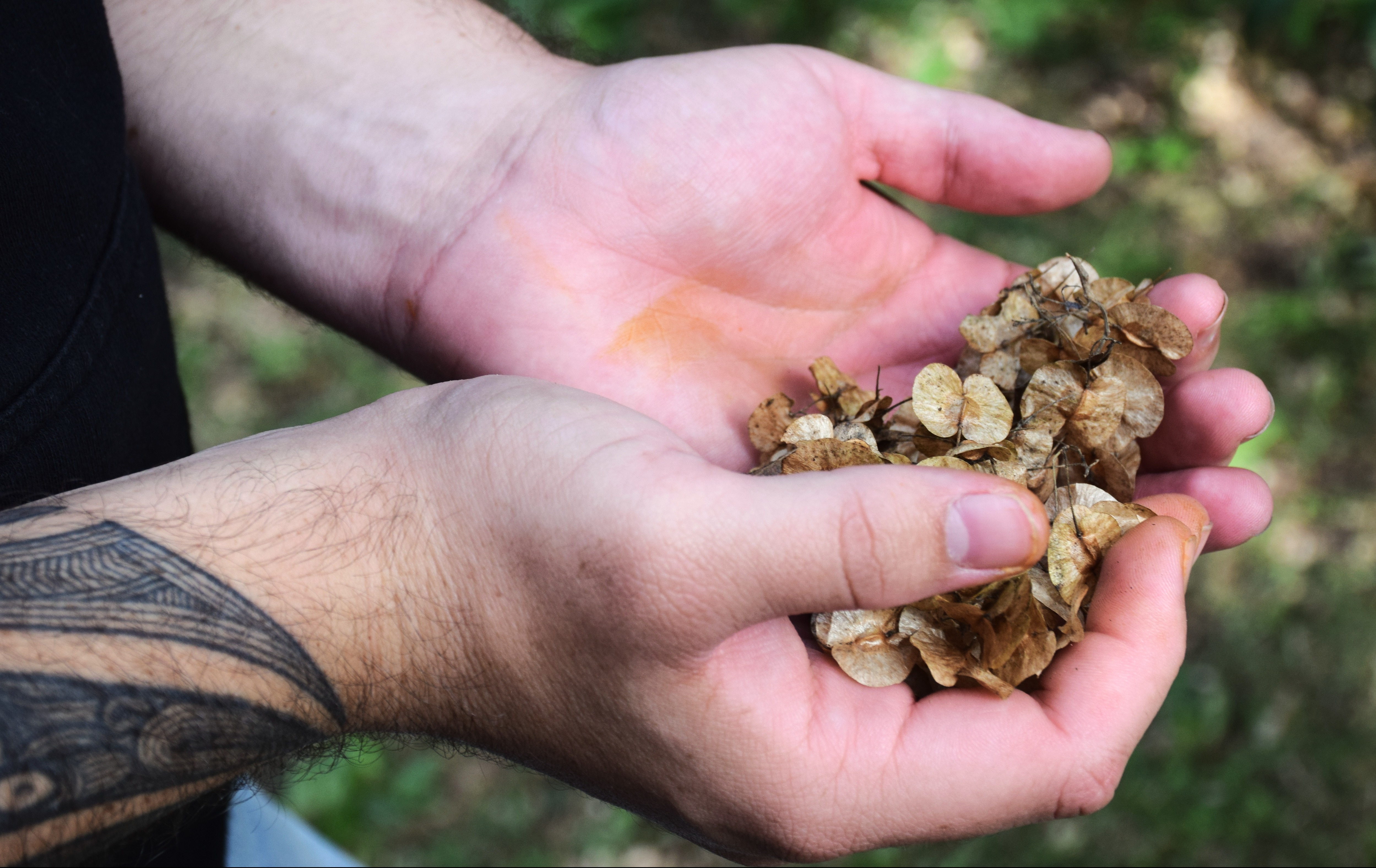
One part I’d say just keep doing what you’re doing. You’re probably doing seed banking in some form. You’re probably keeping seeds and propagating new saplings and the like. We will very soon have a series of videos and trainings up on our websites where you can watch and get some more details and information. There’s also a huge amount of resources elsewhere that aren’t specific to the Aotearoa climates and crop species and the like. There’s a Hawaiian based company called Terraformation who have a whole lot of videos and really good information. Granted, that is for more of a tropical climate, so it does apply more so for there. Again, Kew Millennium Seed Bank also have a lot of information on their website, again, geared more for their climate and methods, and also geared more towards probably a higher calibre of science understanding than your average person might have.
My challenge for them might be, if you are a backyard gardener or a casual person and you always get your plants from Mitre 10 or Bunnings at the start of each growing season, try and keep the seeds next time. So when you harvest your tomato, keep the seeds from it and just see if you can grow them in the first place, because the first stage to seed banking is just to grow from seeds in the first place. If you can’t grow the seeds, then they’re not going to store very well. And then if you find that you’ve actually collected a huge amount of seed and you don’t have anywhere left to plant all the cool seeds you’ve collected, have a go at storing it. See if you can dry those seeds out and keep them and then try to grow them again next season, just as a challenge to yourself. And with a lot of food, it’s really easy to do.
A lot of our food species have been selected and chosen. The standard things, the likes of carrots, capsicum, those sorts of things, they are the dry resistant ones. And so they should store fairly well anyway. Just dive in, why not?
What keeps you going when the work feels slow or when it feels hard?
I don’t really know what else I would be doing to be honest!
I wasn’t always like this to be fair, but in the last couple of years, I get bored really easy. So if I do get bored, I just want to find something to do and that might be, okay, you know what? I’ve got nothing to do. Kids get in the car, we’re going down the road and we’re going to grab some seeds or find other things to do. There’s always something new to learn. Recently, I’ve started getting into herbarium presses and herbarium slips, so kind of like the slightly more complicated version of a flower press in a book. And so there’s always something new I can do. You’re right, there is slow bits. I try to keep finding something to do, keep busy.
I haven’t really had a chance to slow down just yet. I think the thing with seed banking here at least, is that we know pretty much nothing. We have very short history of research.
It feels like it’s not something that we can just ignore. I’m not saying that I’m the only person doing it, but there’s not a huge amount of people in New Zealand who are engaged in seed banking. There are absolutely some experts out there. I’ve met Karin Van der Walt, a few times, fantastic researcher, done some incredible work in the myrtaceae family, that’s the likes of manuka, kanuka, kawakawa, ramarama, post myrtle rust, especially. Really awesome work in a really cool lab at Ōtari-Wiltons Bush in Wellington. So there’s absolutely other people out there doing fantastic stuff. And most of them are smarter than me. Most of them have PhDs who’ve been doing this for a lot longer, but there’s not heaps of us. And so any work that gets done is really important. And any work that gets done is helpful and builds on that knowledge base.
There are some areas in science that I feel like are over researched, like we’ve gotten down to the real nitty gritty of some stuff. Seed banking methods in Aotearoa are not like that at all. There are still huge gaps. The last paper I saw, which I’m absolutely certain has changed since then suggested that there are still about 70% of our species that we don’t know the storage behaviours of, and we still need research for, and that’s not something that you can just figure out on the fly when you need to. It takes a while. You have to wait for the seeds to grow. You have to wait for the plant to grow. So it’s not a quick thing. It’s not a quick fix. And we saw that with myrtle rust. We wanted it to be a quick thing and then the seeds weren’t easy to store.
They needed more advanced methods. And so suddenly this quick, “Oh, just go out, grab them and we’ll store them” turned into a huge deal and it was a largely unsuccessful collection. So yeah, I guess that’s what keeps me going.
Seed banking isn’t a new field, but it is here, and it’s been one of the blind spots, I think. I mean, we talk a lot about global north, global south research, helicopter research, all these sorts of terms. It kind of seems like it was a bit of a blind spot in the historic cases of global north scientists coming here. It wasn’t something that was looked at in huge detail, that they looked at it for species they cared about or were interested in or thought were easy, but not many others.
In your work, your life, your sphere around you, what’s giving you hope right now?
This always sounds cheesy because I feel like I’m not that old, but I also don’t feel like I’m that young anymore. I’m 27, and that’s the age I think where people younger than you think you’re old and everyone older than you says you’re still a baby.
But I think it is young people. It is the children. It is when I go off and do a seed training and somebody has brought their kids along, that is really hopeful because we can talk all we want about preparing the world or making sure that there is a world for our grandchildren or for the coming generations, but we have to bring them along for the ride as well. It’s all well and good to make this world for them to live in, but they have to be there to live in it as well and they have to know how to handle it and maintain it and keep things going. And so I think that is where the hope comes from. It’s the hope from watching my daughter, she’s now slowly starting to recognise plants. We walk past the kowhai and she says the name and wants the kākano off it. She can tell that’s a kowhai, and that is the seed on it.
And watching her learn all these things at a rate much quicker than I ever did is very hopeful.