
Times Like These
Written by: Micheal Heimlick (Te Tira Whakamātaki)
Like I’m sure you are, I am eagerly waiting until 27 November for the official results. In the meantime, I’ve been thinking about what it’s taken to get through the past three years, and what will keep us going through whatever comes next.
My conclusion? There’s been a whole lot of bad, and hope has been hard to find. But (spoilers) the people around me have a talent for reminding me why this work matters, even when I’m struggling to see what difference we’re making against a system that keeps working against us.
I don’t think it will come as a surprise to anyone when I say that things have been hard in our space. We’ve seen intentional and repeated attacks on our incredible environment and on the protectors of the places that sustain us, Māori. Science budgets have been cut, and social science has been spat on, kicked, and thrown in the trash. The almighty dollar has been unashamedly valued before people’s health, wellbeing, social cohesion, trust, let alone the environment.
As an organisation that embodies te ao Māori, social sciences, and the environment in the work we do, we’ve had to scratch and claw just to survive these past three years. It has really taken energy away from the work we’re here wanting to do (we’ve made more policy submissions this past year than in the rest of TTW’s history combined). And I know plenty of people across our networks have had a similar experience.
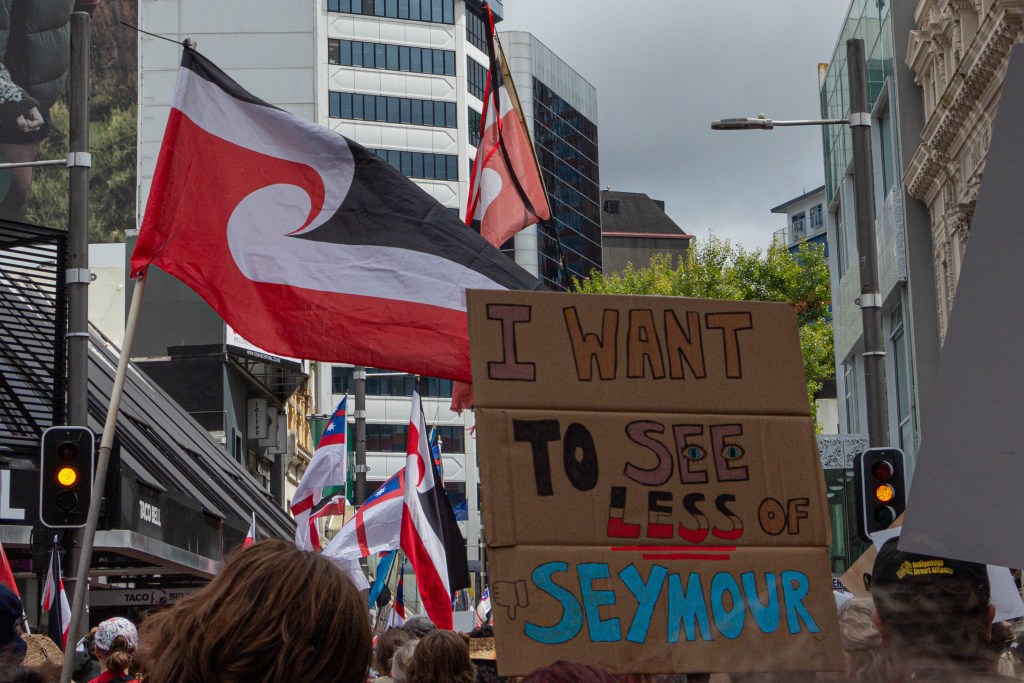
We have always made the point at TTW that this system I’m speaking about is actually working as it was designed. There’s nothing ‘broken’ about what’s been happening and what we’re seeing now is not unique to us, this time in history, or even our place in the world. The systems we live in were, after all, set up by colonists who had one purpose: to rape and pillage the land to supply an empire, making a select few very rich in the process. Those foundations still hold up the house we all live in today. Yes, changes have been made, but those same foundations are at the core of the laws, decisions, and resourcing decisions we make.
But, those colonial foundations have always been challenged, too. People have fought to protect their whenua, maintain their knowledge, language, and tikanga, and look after each other even under the harshest of conditions.
I do this work because I want to make a better world for my kids and the people around me. It sounds corny and performative, but I promise you that’s why I’ve stuck around. Looking after our environment in a different way is the best way I can tell my kids that I did what I could and TTW provides a legitimate avenue to do that. So, when we’re told through Crown budgets, the actions of our ‘leaders’, and the narratives pushed to us that nothing really matters except our bank accounts and the health of the economy, I get pretty pissed off and discouraged.

I’m preaching to the choir here. I know that. But the reason I’m writing this is, and I’m surprising myself in writing this, because I want to provide you with a glimmer of hope.
If you’ve been paying attention to TTW’s work lately, we’ve been putting a lot of effort into telling the stories of good people doing cool things for our environment through Ngā Tangata o te Marama, our profile series. I’ve led those interviews, and they’ve helped pull me out of my cynicism and reinvigorated my motivation to keep fighting.
I’ve had the privilege of talking with artists, kaitiaki, systems thinkers, storytellers, authors, and activists from all sorts of backgrounds. These are the people right in the thick of it. The people sharing knowledge with the next generation, looking after their communities, and fighting for a better future in their own ways.
There have been a lot of commonalities between these stalwarts, despite their different backgrounds. Selfishly, I’ll admit I began using these conversations to explore what made them care about the environment in the first place so I could instil that in my kids. I wanted to know why they were fighting so hard, and what makes them keep going despite a system that so often works against them.
Again and again, they told me stories about being outside early and often as kids. About someone in their life who taught them what they knew about the environment around them. That all of this helped them see the metaphorical forest through the trees, or the bigger picture if you will. That is, the importance of a healthy environment for us as human beings is as true a principle as gravity for them.
The Ngā Tangata o te Marama series has also reminded me that the work we’re doing has a strong and storied history. Someone helped these people learn to care for a place. Knowledge, responsibilities, and ways of looking after each other were passed on, and now they’re carrying them forward. The resistance we need today draws strength from people and struggles that came before us.
Grid
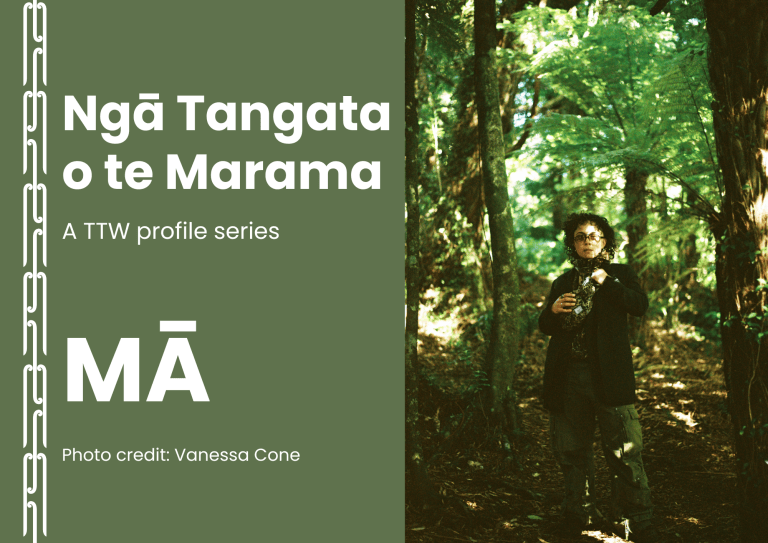
Ngā Tangata o te Marama | MĀ
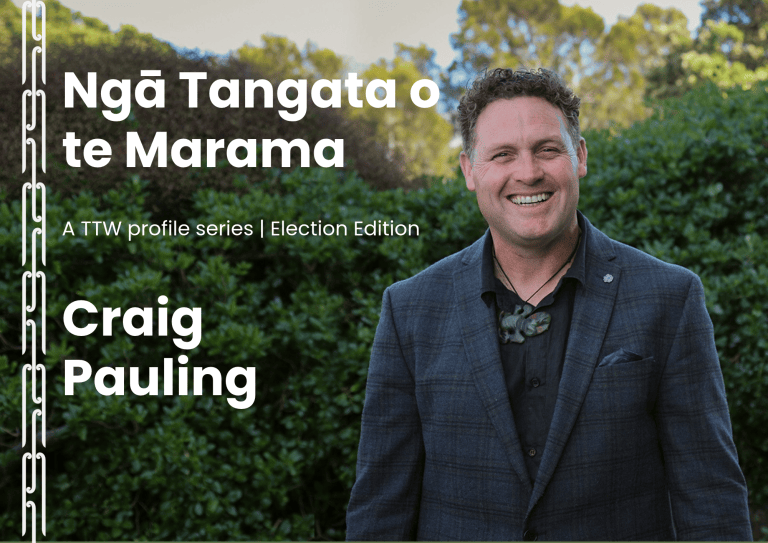
Ngā Tangata o te Marama | Craig Pauling
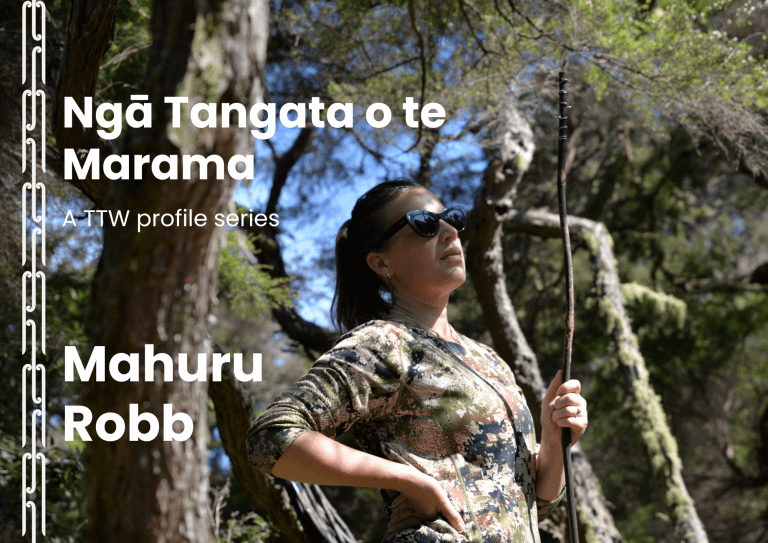
Ngā Tangata o te Marama | Mahuru Robb
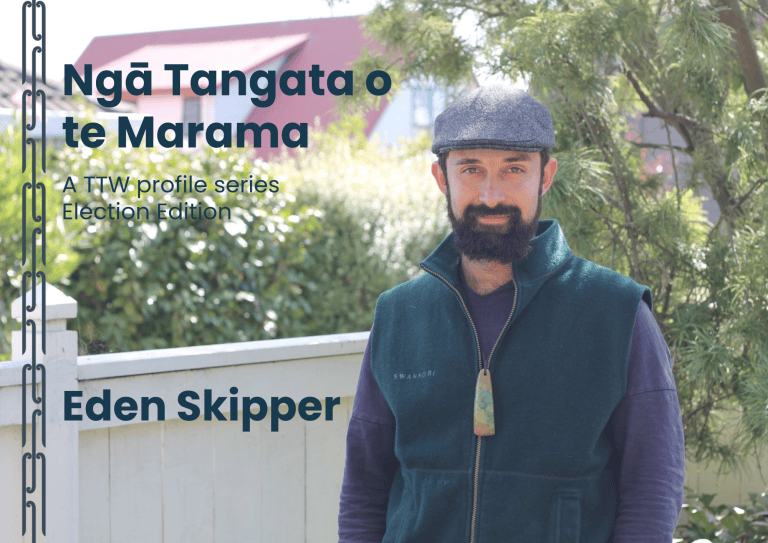
Ngā Tangata o te Marama | Eden Skipper
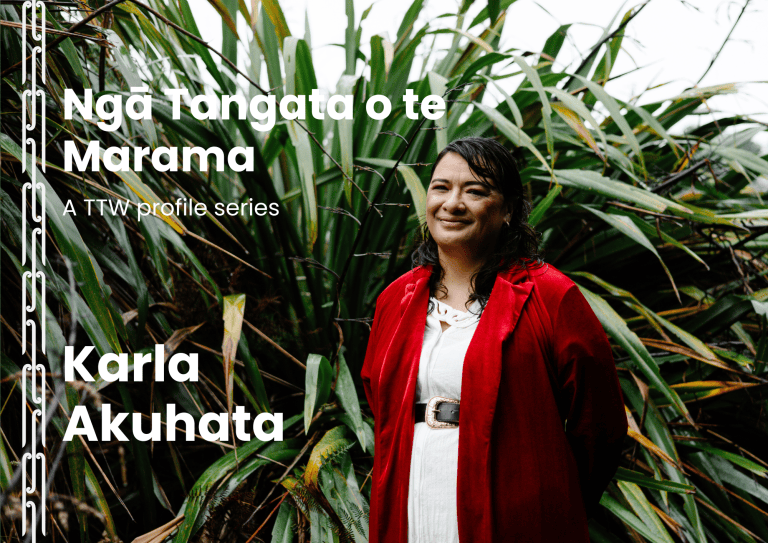
Ngā Tangata o te Marama | Karla Akuhata

Ngā Tangata o te Marama | Marcus-Rongowhitiao Shadbolt
Environmental work is hard, plain and simple. So, I made a point of asking each of them what was giving them hope and, without hesitation, most answered that it was the people around them. Our kids, communities, networks, and individuals getting on with the hard work despite the obstacles in their way. That was the fuel for their fire and the reason they kept going even if things seemed hopeless.
But I don’t want to pretend that you haven’t been worn down. As I said, we have been at TTW and I have been personally. And admiring what people have managed to do should never mean accepting what they’ve been required to withstand.
We shouldn’t have to fight this hard just to keep doing work that matters. Nor should anyone reading this feel that needing to step back means they’ve let the rest of us down. As Tame Malcolm told me in his profile, a lumberjack who sharpens his axe once a day is much more effective than one who keeps swinging through their exhaustion.
What you’ve already done still counts. The knowledge you’ve shared, the people you’ve supported, and the places you’ve cared for matter, even when you’re no longer able to give as much of yourself. You, the TTW network and the communities you represent, are the ones giving me hope and keeping the fight alive inside of me.
One of my favourite songs of the last year has been Times Like These by the Foo Fighters (the acoustic version, of course).
These lyrics specifically:
It’s times like these, you learn to live again.
It’s times like these, you give and give again.
It’s times like these, you learn to love again.
It’s times like these, time and time again.
This song tells me that we, and those who have come before us, adapt to continue the fight, despite the odds being stacked against us (but a special shoutout to Slow Dance by John Legend, which MĀ turned me onto in her profile, for also giving me something help make sense of the world around me).
Whoever forms the next government, we will face further threats to the people and places we care about. History gives us plenty of reasons to expect that. But, remember that it also gives us the people who have fought back, the knowledge learned through those struggles, and relationships that help us face what comes next. We aren’t starting from scratch every time and we (I) need to find our (my) footing in that.
Whatever the final result, there will be more to do, and we’ll need to keep finding ways to support each other in doing it. TTW will be right here, doing what we can.
Just know that I’m grateful to the people who came before us, and to all of you carrying that work forward. You’ve helped me find some hope again. I hope this helps you recognise what you’ve given, too.